Posted On: Jan 13, 2026
Author: Jason H.
water heater plumbing home-maintenance
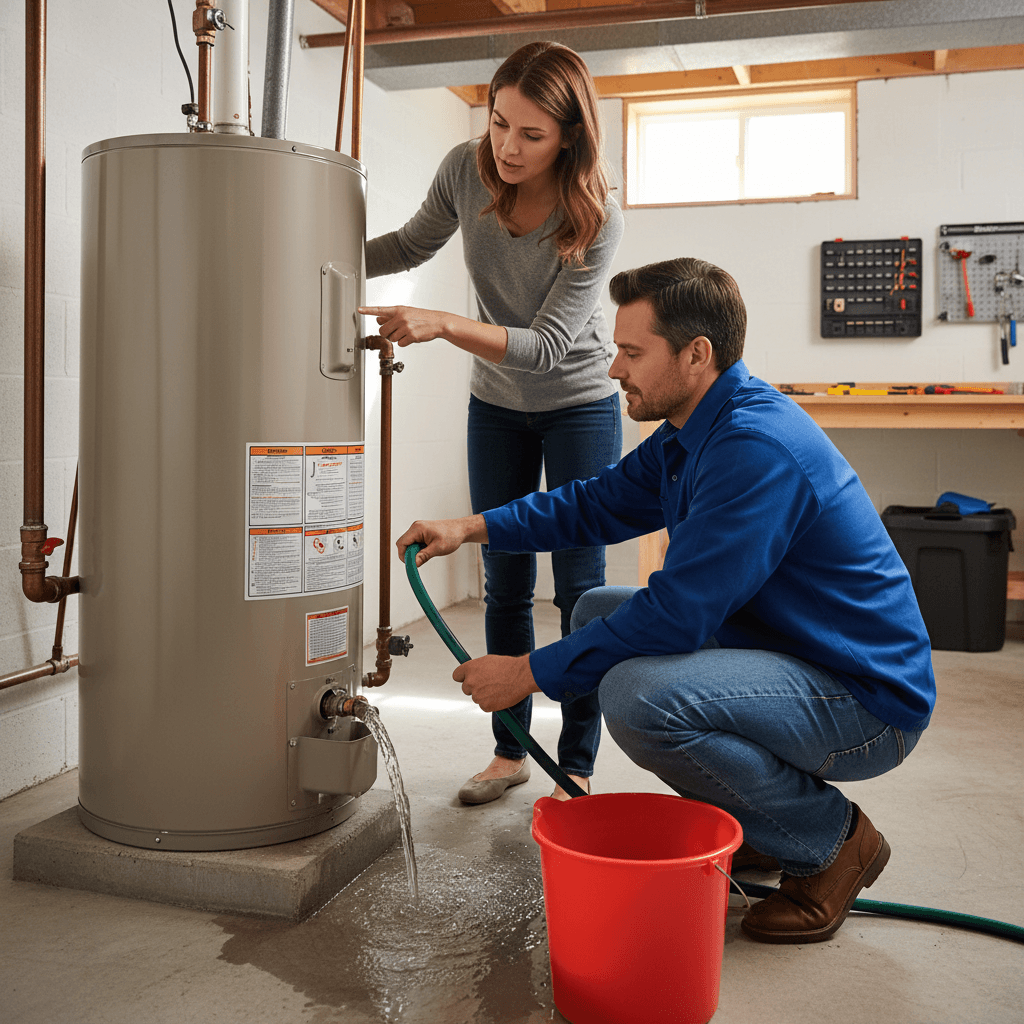
Think about the hardest working appliance in your home. It’s not your fridge or your TV. It’s your water heater. Tucked away in a closet or basement, it works tirelessly day and night to provide the hot water you rely on for showers, dishes, and laundry. You probably don’t think about it at all… until the day you step into an ice-cold shower or discover a pond spreading across your floor.
A failing water heater isn't just an inconvenience; it's a costly, home-damaging emergency. The average cost to replace one is well over $1,500. But what if you could delay that expense for years and prevent a catastrophe with just 30 minutes of maintenance a year? You can. Here’s how.
Performing simple maintenance addresses the three biggest enemies of your water heater: sediment, corrosion, and pressure.
Before you start, locate the two key things you'll need: the power source (the circuit breaker for an electric heater, or the gas shut-off valve/thermostat for a gas heater) and the cold-water supply valve.
The Temperature and Pressure Relief (TPR) valve is a critical safety device that releases pressure if it gets too high inside the tank. It needs to be tested to ensure it hasn't seized up.
If it keeps dripping or won't open at all, it's time to call a plumber to have it replaced. This is non-negotiable for your safety.
This is the single most important task for extending your heater's life.
Inside your tank is a “sacrificial” anode rod. Its job is to attract corrosive elements in the water, corroding itself so the steel tank doesn't have to. Once it's gone, the tank itself starts to rust from the inside out. It should be inspected every 2-3 years. While this can be a DIY job, it often requires a special socket and a lot of torque, so it's a great task to ask a plumber to check when they are at your home for other work.
Remembering to flush the tank, test the TPR valve, check the anode rod, and keep track of your water heater's age can feel like a lot. And that's just one appliance. Now multiply that by your furnace, AC, roof, and dozens of other components in your home.
This is exactly why Properteer was created. Stop trying to manage your biggest investment with sticky notes and a faulty memory. Properteer's AI-powered platform digitizes your home, creating a custom maintenance calendar with smart alerts for tasks just like these. We track the lifespan of your critical systems, helping you budget for future replacements so a new water heater is a planned expense, not a financial emergency.
Take control of your home maintenance and turn anxiety into action. Try Properteer today and protect your home and your wallet.
Q: How often should I flush my water heater? A: A good rule of thumb is once per year. If you live in an area with very hard water, you may want to do it every six months.
Q: What is that popping or rumbling noise coming from my water heater? A: That's the sound of water being superheated and boiling around a thick layer of sediment at the bottom of the tank. It's a clear sign your tank desperately needs to be flushed.
Q: How do I know how old my water heater is? A: Look for the manufacturer's sticker on the side of the tank. The serial number often contains the manufacturing date. For example, a serial number starting with '0815' might mean it was made in the 15th week of 2008. A quick web search for your brand's serial number format can help you decode it.
Q: What are the signs my water heater is about to fail completely? A: Be on the lookout for rusty or discolored hot water, any signs of moisture or slow leaks around the base of the tank, and a unit that is over 12-15 years old. If you see these signs, start planning for a replacement before it fails.