Posted On: Feb 19, 2026
Author: Jason H.
landscaping foundation-protection water-damage
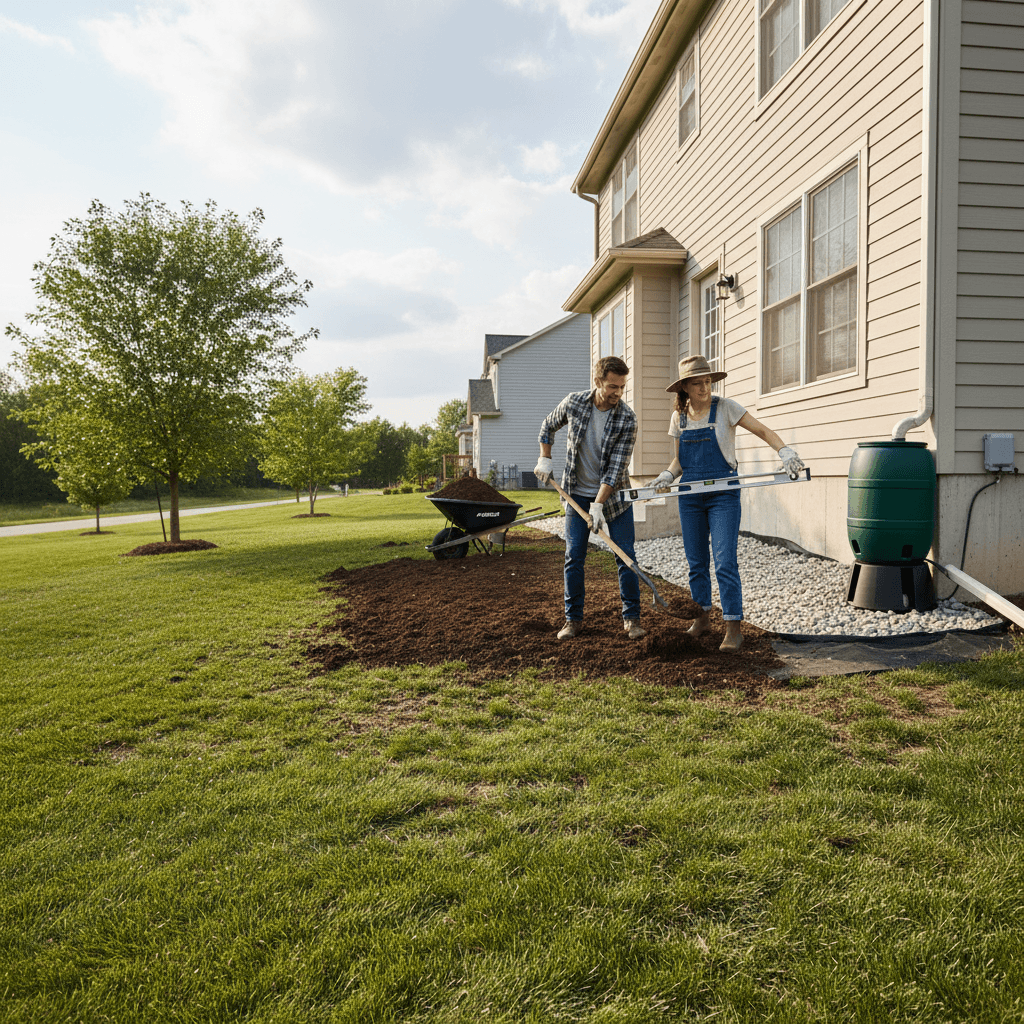
For most new homeowners, the yard is all about aesthetics: a lush green lawn, colorful flower beds, and maybe a nice patio for summer barbecues. We pour time and money into 'curb appeal.' But what if I told you that your landscaping's most important job has nothing to do with how it looks?
Your yard is your home's first line of defense. When managed correctly, it's a silent guardian, deflecting water, deterring pests, and protecting the very foundation your house stands on. When neglected, it can become the primary cause of some of the most expensive and soul-crushing repairs a homeowner can face.
Let's dig in and uncover how to turn your yard into a protective asset, not a liability.
If you take only one thing away from this article, let it be this: water must always flow away from your house. Always.
Your home's foundation is surrounded by soil. When that soil becomes saturated with water, it expands and exerts immense pressure on your foundation walls. This pressure can lead to cracks, bowing, and ultimately, a leaky basement or crawlspace. The fix for this isn't a small one; we're talking tens of thousands of dollars.
The Fix: This is all about grading. The ground around your foundation should have a gentle, consistent slope away from the walls.
Those beautiful bushes and flower beds pressed right up against the siding might look charming, but they're creating a perfect storm for trouble.
Planting anything too close to your foundation does three dangerous things:
The Fix: Create a plant-free buffer zone of at least 12-18 inches around your entire foundation. You can fill this area with decorative gravel or river rock over a weed barrier. It looks clean, allows the area to dry, and lets you easily inspect your foundation.
Trees are fantastic. They provide shade, lower energy bills, and add value to your property. But the wrong tree in the wrong place is a ticking time bomb.
The Fix:
Your gutters do the important job of collecting all the rainwater from your roof. But where does that water go next? If your downspouts just dump it out in a pile right next to your foundation, you're defeating the entire purpose of the system and creating the exact problem we discussed in point #1.
The Fix: Use downspout extenders. These simple and inexpensive attachments channel water at least 4-6 feet away from your home, directing it to a part of the yard where it can be safely absorbed. This is one of the easiest and most impactful DIY fixes you can make.
Managing your home can feel like a huge puzzle, with dozens of interconnected pieces. You fix the gutters, but forget about the downspouts. You plant a beautiful tree, not realizing its future impact on your foundation. It's easy to get overwhelmed and miss the big picture.
This is where technology can be a homeowner's best friend. Instead of trying to remember every seasonal task and the lifespan of every component, you can have a system that does it for you. Properteer is designed to be your home's digital co-pilot. It analyzes your property and creates a personalized maintenance calendar, reminding you when it's time to check your grading, clean your gutters, and inspect the trees after a big storm. It helps you budget for future repairs and replacements, turning vague anxiety into a clear, actionable plan.
Stop guessing and start managing your home with confidence. Protect your investment from the ground up by understanding how all the pieces fit together. Explore how Properteer can give you the clarity and peace of mind every homeowner deserves.
Q: Why is it so bad for water to pool against my foundation? A: When soil becomes saturated with water, it expands and can exert thousands of pounds of hydrostatic pressure on your foundation walls. This can cause cracks, let water into your basement or crawlspace, and in severe cases, even cause the walls to bow inward, leading to major structural failure.
Q: What's the easiest way to improve the slope (grading) next to my house? A: For minor issues, the simplest fix is to buy bags of clean fill dirt or topsoil and pack it against your foundation to create a gentle slope away from the house. Ensure the soil level doesn't cover your siding or any weep holes in brick. Combining this with downspout extenders is a powerful one-two punch against water intrusion.
Q: How far away should I plant a new tree? A: The answer depends on the tree's mature size. A general rule for large shade trees (like oaks or maples) is to plant them at least 20 feet from your foundation. Smaller ornamental trees (like dogwoods or Japanese maples) can often be planted closer, around 10-15 feet away. Always research the specific species before you plant.
Q: I have thick mulch in my flower beds right next to the house. Is that okay? A: It's not ideal. Wood-based mulch holds moisture against your foundation and can be a major attractant for pests like termites. It's much safer to create an 18-inch buffer zone around your foundation using a non-organic material like gravel, river rock, or rubber mulch, and start your organic mulch bed beyond that point.