Posted On: Apr 5, 2026
Author: Jason H.
indoor-air-quality home-health hvac-maintenance
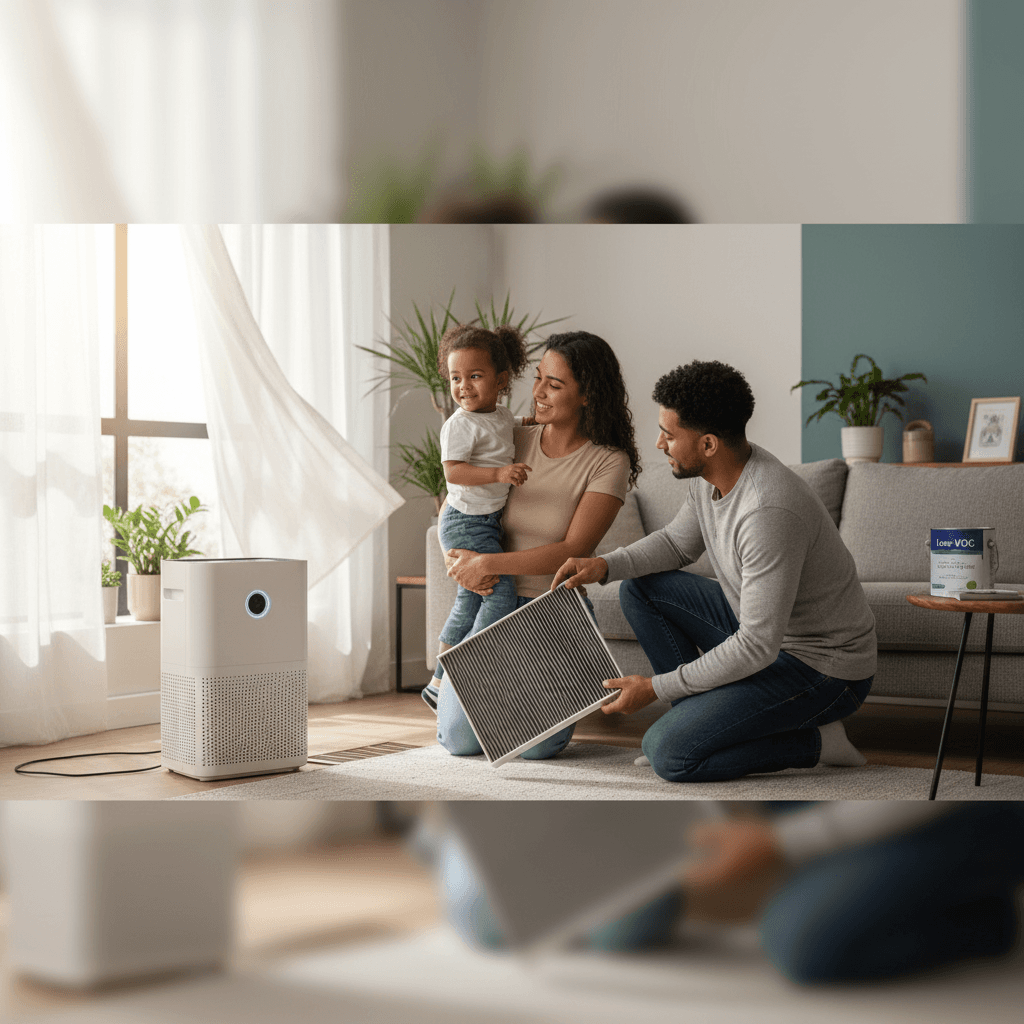
You spend more time inside your house than anywhere else, and the air in there is almost certainly worse than the air outside. The EPA pegs it at two to five times more polluted, sometimes more in homes that are tightly sealed for energy efficiency. Nobody who sold you the house mentioned this.
I didn't think about indoor air either until a few years ago. I'd just replaced an HVAC filter, looked at the gray mat that used to be white, and realized the air pulling through my supply registers had been pushed through that same filter for the last three months. Whatever the filter couldn't catch was still floating around the house.
Improving indoor air isn't complicated. There's no single device that solves it, and most of what the air purifier ads promise is overstated. What works is unglamorous: better filtration, less crap getting in, and ventilation when you cook or shower. That's basically it.
The pollutants in most homes fall into a handful of categories. Dust, pet dander, and pollen are the visible-ish ones. They settle on surfaces and trigger allergies. VOCs are the invisible ones: gases off-gassed by paint, new furniture, "fragrance" in cleaning products, candles, and the carpet that came with the house. The "new car smell" is a VOC cocktail.
Then there's moisture-driven stuff. Mold needs humidity above ~60% to take hold, which is easy to hit in a damp basement or a bathroom without a working fan. Once it's growing, it releases spores. Combustion appliances (gas furnace, gas water heater, gas range) put out CO and nitrogen dioxide if their venting is off, which is why a working CO detector on each floor isn't optional.
And radon. Colorless, odorless, naturally occurring, and the leading cause of lung cancer in non-smokers. The only way to know your levels is a test kit, which runs about $15 at a hardware store and takes a few days to read. If you've never tested, do it.
If you do one thing on this list, do this. Most homes ship with a flimsy fiberglass filter that catches almost nothing. Swap it for a pleated MERV 11 or MERV 13 filter. The MERV rating is the efficiency number. Anything below 8 isn't really filtering air, it's just catching the chunks that would damage your blower motor. MERV 13 captures particles down to bacteria-sized.
Change the filter every 90 days. If you have a dog and run the HVAC year-round, every 60. Write the install date on the cardboard frame in Sharpie so you don't end up guessing later. Mine says "03/12/26 - next 06/12" right now.
If you want to go further, a standalone HEPA purifier in the bedroom moves the needle on allergies and dust. Skip the ones that advertise UV, ionization, or ozone generation. The HEPA filter is the only part that does the work. A Coway Mighty or a Levoit Core 300 at $100-150 is plenty for a bedroom.
Source control is the cheapest fix. When you repaint, buy low-VOC or zero-VOC. They're the same price now as they were ten years ago when they were a premium product. New furniture and rugs off-gas heavily for the first few weeks, so unwrap them in a garage if you can, or open windows for a few days after delivery.
Stop using fragranced candles and air "fresheners." They're VOCs sold as perfume. If you want your house to smell like something, simmer cinnamon sticks or orange peels in water on the stove.
Every time you cook, especially on a gas range, run the hood fan. Every time you shower, run the bathroom fan. Leave it on for 15 minutes after you finish so the moisture and combustion byproducts actually leave the house instead of just getting pushed into the adjacent room.
Open windows on opposite sides of the house for ten minutes when the weather's tolerable. A cross-breeze flushes the place more thoroughly than any in-line filter. This is one of the few areas where 1970s houses (drafty, leaky, naturally ventilated) had an accidental advantage.
Buy a $10 hygrometer. Put it where you spend the most time. You want indoor humidity between 30% and 50%. Below 30% and you'll get dry skin, dry sinuses, and static. Above 50% and you're growing mold somewhere even if you can't see it yet.
If your basement is damp in summer, a dehumidifier is the answer. They're noisy and consume real electricity, but they save you from mold remediation later. If your house is dry in winter, a whole-house humidifier on the furnace return is the cleanest fix.
Most of this is once-a-quarter work that everyone forgets about. Properteer logs your HVAC system, your filter size, your purifier model, and the rest, then reminds you when each one is due. The reminders aren't generic, they reference the specific component, so you know exactly which filter to order before you head to the hardware store.