Properteer logoProperteerAI
  • Home
  • How It Works
  • Pricing
  • Realtors
  • Blog
  • Home
  • How It Works
  • Pricing
  • Realtors
  • Blog
Properteer logoProperteerAI

Consent Preferences
  • Do Not Sell or Share My Personal information
  • Limit the Use Of My Sensitive Personal Information
Additional Products
  • Mobile App (iOS & Android)
  • API
Resources
  • Blog
  • FAQ
  • Pricing
Company
  • Home
  • About Us
  • Contact Us
  • Privacy Policy


© 2026 Properteer. All rights reserved.
Terms & Conditions-Privacy Policy

Cracks, Creeps, and Odd Smells: How to Decode What Your House is Telling You

Posted On: May 14, 2026

Author: Jason H.

home-inspection maintenance-tips homeowner-education
Back to all blog posts
Your home is always talking. Learn how to listen.

Your Home Has a Language. Are You Fluent?

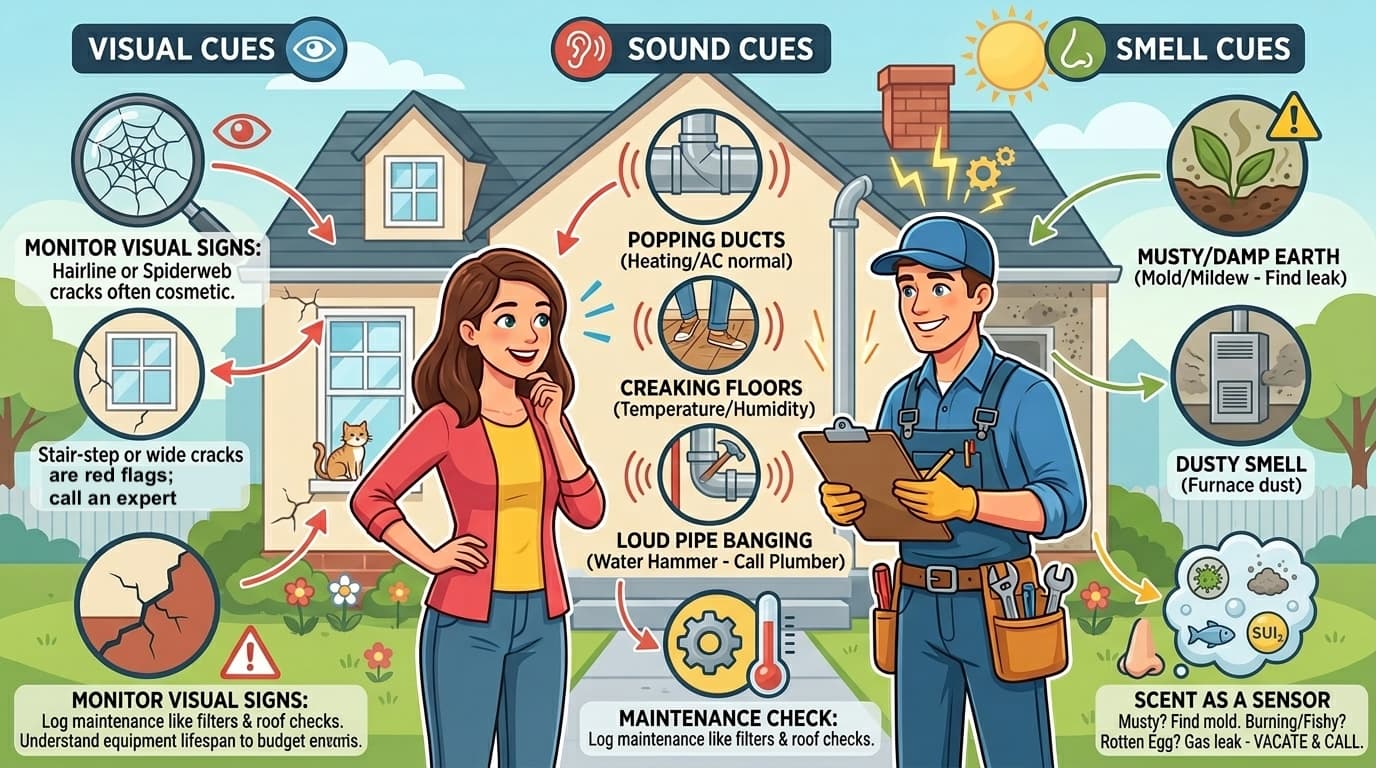
As a new homeowner, you quickly learn that your house has a personality. It creaks, groans, and settles, creating a unique soundtrack to your daily life. But while some of these quirks are charming, others can be signs of trouble brewing just beneath the surface. The key is learning to tell the difference.

Feeling anxious about every little pop or hairline crack is a rite of passage for homeowners. But you don't have to live in a state of constant worry. Think of yourself as learning a new language—the language of your home. By understanding its common expressions, you can transform from a nervous owner into a confident caretaker, ready to catch small problems before they become wallet-draining disasters.

Let’s translate some of the most common things your house might be trying to tell you.

The Visual Language of Cracks

Cracks are one of the first things to send homeowners into a panic, but not all cracks are created equal.

Probably Okay: The Minor Offenses

  • Thin, spiderweb cracks in plaster or drywall: Often just a sign of paint aging or minor settling. They're typically cosmetic.
  • Hairline cracks above doors and windows: These are very common. The wall area here is weaker, and as the house settles, these stress points can show tiny cracks. As long as the door or window still opens and closes easily, it's usually not a concern.

Pay Attention: The Warning Signs

  • Stair-step cracks in brick or concrete block: These diagonal cracks running through the mortar lines of your foundation are a major red flag. They often indicate significant foundation settling or soil pressure.
  • Horizontal cracks in a foundation wall: This is a serious one. It's often caused by exterior water or soil pressure pushing against the foundation, causing it to bow inward. This requires immediate professional evaluation.
  • Cracks wider than a quarter-inch: Any crack, indoors or out, that you can fit a quarter into deserves a professional opinion. This is especially true if the crack is actively growing.

The Symphony of Sounds (Creaks, Bangs, and Hums)

A silent home can be unsettling, but certain noises are definitely cause for concern.

Probably Okay: The Everyday Soundtrack

  • Creaking floors and stairs: Wood expands and contracts with changes in temperature and humidity. This is the source of most of those classic 'old house' sounds.
  • Popping or ticking from ducts: When your furnace or AC kicks on, the metal ductwork expands or contracts, causing a popping sound. Totally normal.
  • A single 'knock' when the heat kicks on: This is also related to ductwork expansion and is generally nothing to worry about.

Pay Attention: The Alarming Noises

  • Loud banging from pipes (Water Hammer): If you hear a loud bang or shudder in your walls when you turn off a faucet or an appliance stops running, that’s 'water hammer.' It's caused by the abrupt stop of water flow. While not an immediate crisis, it puts a lot of stress on your plumbing over time and should be addressed by a plumber.
  • Buzzing or sizzling from outlets or switches: This is a clear electrical danger sign. It could indicate a loose connection or faulty wiring, which is a fire hazard. Turn off the breaker for that circuit immediately and call an electrician.
  • Scratching or skittering in walls or ceilings: This isn't your house settling; it's a houseguest you didn't invite. These sounds are a classic sign of rodents or other pests. It's time to call an exterminator before they can chew through wiring or cause other damage.

What's That Smell? An Olfactory Guide

Your nose is one of your most powerful home maintenance tools.

Probably Okay: Temporary Odors

  • Dusty smell when the furnace first turns on: When your furnace sits dormant all summer, dust settles on the heat exchanger. The 'burning dust' smell it creates on the first cold day should dissipate within an hour or so. If it persists, get it checked out.

Pay Attention: The Unmistakable Warnings

  • Musty or damp earth smell: This is the unmistakable scent of mold or mildew. Your mission is to find the moisture source. Check under sinks, in the basement, around windows, and in the attic. You can't solve a mold problem until you solve the water problem.
  • Rotten eggs or sulfur: THIS IS AN EMERGENCY. This smell is added to natural gas to alert you to a leak. Do not turn lights or appliances on or off. Do not use your phone. Evacuate everyone from the house immediately, and call your gas company's emergency line from a safe distance outside.
  • A fishy or acrid, burning smell: This is a strange one, but it's often linked to severely overheated electrical components—like wiring, outlets, or circuit breakers. If you can't identify the source, don't take chances. Call an electrician.

From Anxious Listener to Confident Planner

Learning to interpret your home's unique language is the first step toward proactive ownership. The next is turning those observations into a plan. A strange smell might mean you need to schedule a plumber to check for hidden leaks. A growing crack means it’s time to budget for a foundation specialist. But how do you keep track of it all?

That’s where Properteer comes in. Instead of just worrying about a new noise, you can log it in the app. Properteer helps you build a comprehensive digital twin of your home, allowing you to track not just scheduled maintenance like changing your furnace filter, but also these real-time observations. It transforms vague anxieties into a clear, actionable to-do list.

Properteer helps you understand the average lifespan of your home’s components, so you know if that groaning water heater is on its last legs. It helps you budget for both the small fixes and the big replacements, so a warning sign becomes a planned expense, not a financial emergency. Stop just listening to your home’s problems and start building its solutions. Visit Properteer.ai to turn your home's language into a language of confidence.

Q&A: Quick Answers to Common Home Worries

Q: Is a small hairline crack in my drywall a big deal? A: Usually not. These are often cosmetic issues caused by your home's normal settling over time. The best course of action is to monitor it. If it grows quickly or becomes wider than 1/8 of an inch, it's worth having a professional take a closer look.

Q: What should I do if I smell rotten eggs in my house? A: Treat this as a serious emergency. The odor is a strong indicator of a natural gas leak. Evacuate everyone from the home immediately. Do not use anything that could create a spark—no light switches, no phones, no lighters. Once you are a safe distance away, call your gas company's emergency line or 911.

Q: My pipes make a loud banging noise when I turn off a faucet. What is that? A: That sound is likely 'water hammer.' It happens when the water flowing through your pipes is forced to a sudden stop, causing a shockwave. While it's not an immediate flood risk, the repeated stress can damage pipes and joints over time. A plumber can often fix this easily by installing a device called a water hammer arrestor.