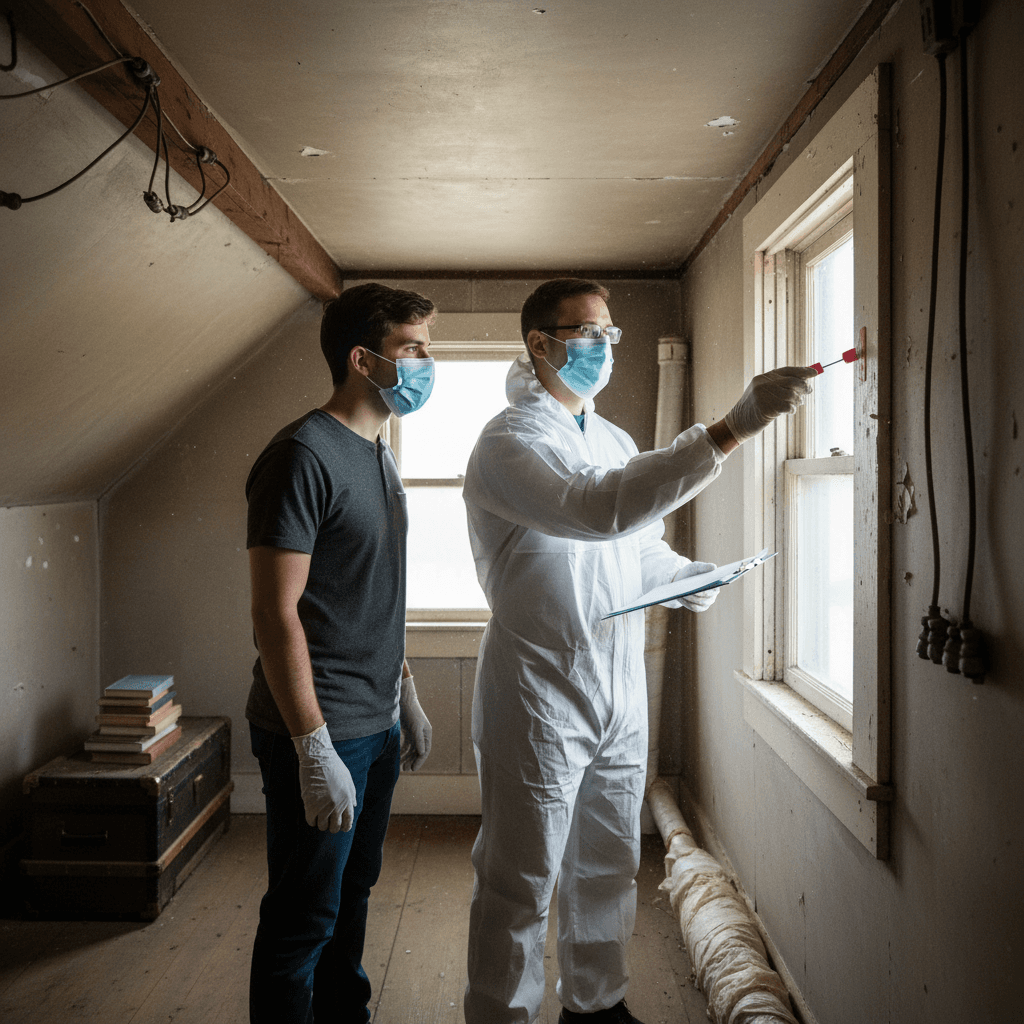
The Charm and the Challenge of an Older Home
There’s an undeniable romance to an older home. The solid construction, the unique architectural details, the sense that you’re part of a long story—it’s a powerful draw. But sometimes, that story includes a few chapters you weren’t expecting to read, featuring characters like asbestos, lead paint, and wiring that was installed when your grandparents were kids.
Discovering these “surprises” can send a jolt of anxiety through any homeowner, especially a first-timer. Your mind might jump to worst-case scenarios and terrifying price tags.
Take a deep breath. Knowledge is your most powerful tool. Understanding what these materials are, the actual risks they pose, and how to create a safe, methodical plan to manage them can transform panic into power.
The Usual Suspects: Identifying Common Legacy Materials
Most older homes have at least one of these hidden features. The key isn't to be afraid of them, but to respect them and know how to proceed.
1. Lead-Based Paint
- What it is: Paint manufactured before 1978 often contained lead to improve durability and drying time.
- Where you'll find it: On walls, trim, windows, doors, and exteriors of homes built before 1978. The older the home, the higher the likelihood.
- The Real Risk: Intact, undisturbed lead paint is generally not a hazard. The danger comes when the paint starts to chip, peel, or turn to dust from friction (like in a window sash) or during a renovation (sanding, scraping). This dust can be inhaled or ingested, posing serious health risks, especially to children and pregnant women.
- Your Action Plan:
- Don't Sand It: Never, ever dry sand or scrape old paint without testing first.
- Test It: You can buy a lead test kit at a hardware store for a preliminary check, but for a definitive answer, consider professional testing.
- Manage It: If the paint is in good condition, you can often seal it with a special paint called an encapsulant. If it’s chipping or you plan to renovate, you must hire an EPA Lead-Safe Certified contractor to handle the removal or work safely.
2. Asbestos
- What it is: A heat-resistant, fibrous mineral used for decades in thousands of building materials.
- Where you'll find it: Popcorn ceilings, 9x9-inch vinyl floor tiles, siding, furnace and pipe insulation (a white, papery-looking wrap), and boiler insulation.
- The Real Risk: Just like lead paint, asbestos is most dangerous when it’s disturbed. When materials containing asbestos are cut, sanded, or crumble, they release microscopic fibers into the air. Inhaling these fibers over time can cause serious lung diseases. The rule of thumb is if the material is “friable” (easily crumbled by hand), the risk is higher.
- Your Action Plan:
- Leave It Alone: If the material is in good, solid condition and is unlikely to be disturbed, the safest thing to do is often nothing.
- Get It Tested: Never assume. Before any renovation or if you see damage, have a sample professionally tested by a certified lab.
- Call the Pros: This is not a DIY job. Asbestos abatement (removal) is a highly regulated and specialized field. Always hire a licensed asbestos abatement professional.
3. Outdated Electrical Wiring
- What it is: Two main types are common in older homes: “Knob and Tube” (porcelain knobs and tubes guiding individual wires through joists) and, to a lesser extent, Aluminum wiring (common in homes from the mid-60s to early-70s).
- Where you'll find it: Visible in unfinished basements, crawlspaces, and attics. Other signs include two-prong outlets and a lack of GFCI outlets in kitchens/baths.
- The Real Risk: Knob and tube wiring becomes unsafe when it’s covered by insulation (a fire hazard) or when it’s been improperly spliced into modern circuits. It also lacks a ground wire, which is a modern safety essential. Aluminum wiring can loosen at connections over time, creating a fire risk.
- Your Action Plan:
- Get an Assessment: Have a licensed electrician inspect the entire system. They can tell you the condition, identify any immediate hazards, and give you a sense of what a full rewire would entail.
- Plan and Budget: A full rewire is a major expense. It may not need to be done immediately, but you should absolutely start planning for it as a future capital improvement. Some homeowner's insurance policies will not cover homes with active knob and tube, so be sure to check.
Your Three-Step Plan: From Panic to Peace of Mind
Discovering one of these issues doesn't mean your dream home is a nightmare. It just means you need a new plan.
- Identify, Don't Assume: Keep an eye out for these materials during your regular home walk-throughs. If you suspect something, move to the next step.
- Test for Certainty: Professional testing is relatively inexpensive and gives you the concrete information you need to make smart decisions.
- Prioritize and Plan: Work with certified professionals to understand the urgency. An intact asbestos tile floor is a low priority; faulty wiring is a high priority. Once you know what you’re dealing with, you can treat it like any other major home project—like a new roof or furnace.
These discoveries can feel overwhelming, but they are manageable. By taking a calm, informed approach, you can ensure your classic home is not only full of charm, but is also safe and sound for years to come.
Turn Unexpected Projects into a Manageable Plan with Properteer
Finding out you need to replace your home’s wiring or abate a popcorn ceiling can feel like getting hit with a surprise $15,000 bill. The stress often comes from the unknown—how much will it cost, and when do I need to do it?
This is where planning becomes your superpower. Properteer is designed to help you navigate exactly these kinds of challenges. Instead of reacting with panic, you can use the Properteer app to log this new, unexpected project alongside planned replacements like your water heater or roof.
By adding it to your home's financial roadmap, you can begin to research costs, set a savings goal, and integrate it into your long-term budget. Properteer helps you turn a scary surprise into a clear, actionable line item, giving you the control and peace of mind every homeowner deserves. Stop letting your house happen to you and start planning for its future. Try Properteer today at https://properteer.ai.
Q&A: Old-Home Surprises
Q: Is asbestos always dangerous and does it always need to be removed?
A: No. Asbestos-containing material that is in good, solid condition and is left undisturbed is generally not considered a health risk. The danger arises when it is damaged, disturbed, or crumbles (becomes “friable”), releasing fibers into the air. In many cases, the safest and most cost-effective solution is to leave it in place.
Q: How can I tell if my home has lead paint?
A: The most reliable way is to have the paint professionally tested. For a quick initial check, you can use a DIY home test kit from a hardware store on a discreet area. Generally, if your home was built before 1978, it's safest to assume lead paint is present and take proper precautions during any project that disturbs painted surfaces.
Q: I just found out my house has knob and tube wiring. Do I need to replace it all immediately?
A: Not necessarily, but you absolutely need a licensed electrician to perform a thorough inspection. They will check for hazards like frayed wiring, improper splices, or insulation covering the wires. While many insurance companies are hesitant to cover homes with K&T wiring, a clean bill of health from an electrician can help. You should, however, begin planning and budgeting for a full rewire as a high-priority future project for safety and home value.
Q: What's the difference between abatement and encapsulation?
A: Abatement means completely and safely removing the hazardous material (like asbestos or lead paint) from the home. This is a complex, regulated process that must be done by certified professionals. Encapsulation means sealing the hazardous material with a special coating to prevent it from releasing dust or fibers. Encapsulation is often a safer, less expensive option for materials that are in good condition.