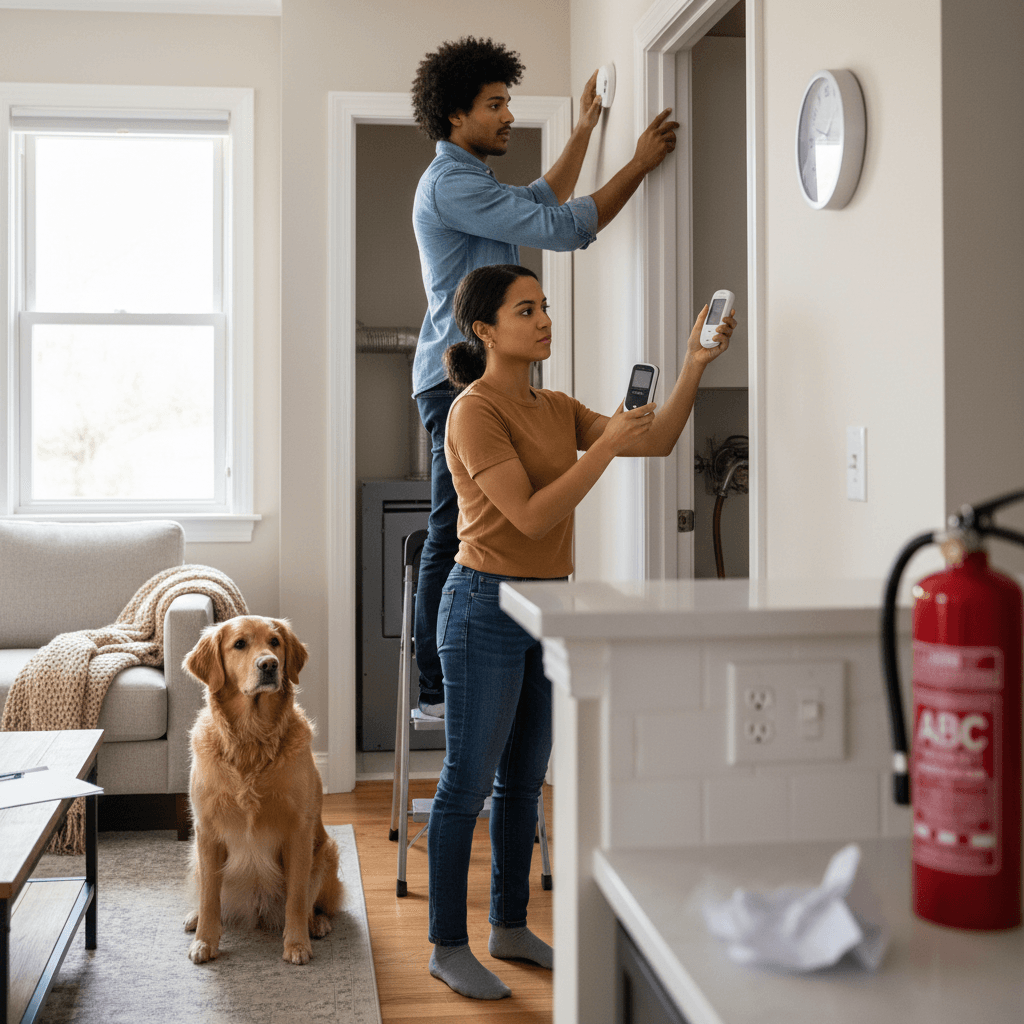
You’ve got the keys. You’ve started unpacking. You finally have a place to call your own. But is it truly safe?
For most new homeowners, “home safety” brings to mind a good deadbolt and maybe an alarm system. While those are important, the biggest threats to your family and your investment are often the ones you don’t see. They’re hiding in your walls, in your appliances, and in the air you breathe.
True peace of mind comes from proactive maintenance and awareness. Forget feeling overwhelmed—this is your simple, actionable checklist to tackle the hidden hazards and make your new house a true safe haven.
Section 1: The Invisible Threats - Fire & Carbon Monoxide
These are the silent dangers that every homeowner needs to take seriously. A few minutes of prevention can be the difference between a close call and a catastrophe.
-
Smoke Detectors: This is non-negotiable. You should have a smoke detector inside every bedroom, outside each sleeping area, and on every level of the home, including the basement.
- Test them monthly. Press the test button until you hear the alarm. It's a loud, annoying sound you want to be sure works.
- Replace batteries annually. A good rule of thumb is to do it when you change your clocks for daylight saving time.
- Replace the entire unit every 10 years. Detectors have a limited lifespan. The manufacturing date is printed on the back.
-
Carbon Monoxide (CO) Detectors: Carbon monoxide is an odorless, colorless gas produced by fuel-burning appliances like your furnace, water heater, and fireplace. It’s impossible to detect without a detector.
- Placement is key. You need one on each level of your home, especially outside sleeping areas.
- Test and maintain them just like your smoke detectors.
-
Fire Extinguishers: Don't wait for a fire to wish you had one. A small kitchen fire can be stopped in seconds with the right extinguisher.
- Get an “ABC” rated extinguisher. This versatile type works on most common household fires (wood/paper, liquids, and electrical).
- Keep one easily accessible in the kitchen and garage. Make sure everyone in the home knows where they are and how to use the P.A.S.S. method: Pull the pin, Aim at the base of the fire, Squeeze the handle, and Sweep from side to side.
Section 2: Electrical Hazard Hotspots
Faulty wiring and overloaded circuits are a leading cause of house fires. While you should leave major electrical work to the pros, you can spot and prevent common hazards yourself.
- Know Your Outlets: Look for GFCI (Ground Fault Circuit Interrupter) outlets in areas with water, like kitchens, bathrooms, and outdoors. These outlets have “TEST” and “RESET” buttons and are designed to shut off power instantly if they detect a short circuit, preventing electrocution. Test them monthly by pressing the “TEST” button (which should cut the power) and then “RESET” to restore it.
- Don't Overload Circuits: Use power strips with built-in surge protectors for electronics, and never plug a major appliance (like a refrigerator or space heater) into an extension cord.
- Watch for Warning Signs: Pay attention to flickering lights, outlets that are warm to the touch, a burning smell, or breakers that trip frequently. These are all signs that you should call a licensed electrician immediately.
Section 3: Preventing Everyday Accidents
Not every hazard is as dramatic as a fire. The most common injuries in a home come from simple, preventable accidents.
- Slips, Trips, and Falls: These are a leading cause of home injuries. Keep your home safe by securing area rugs with non-slip pads, keeping stairways clear of clutter, and ensuring hallways and stairs are well-lit.
- Water Heater Temperature: Many water heaters are set dangerously high by default. To prevent scalding, especially for children and the elderly, set the temperature to 120°F (49°C). This is hot enough for all your needs and is much safer.
- Secure Heavy Furniture: If you have young children, be sure to anchor tall, heavy furniture like bookshelves and dressers to the wall to prevent tip-over accidents.
From Checklist to Confidence
Running through this checklist is a fantastic first step. But home safety isn't a one-and-done task. It's a continuous cycle of testing, checking, and maintaining. Smoke detector batteries need changing, GFCIs need testing, and fire extinguishers eventually expire.
How do you keep track of it all on top of everything else? That’s where you trade anxiety for a simple, automated plan.
At Properteer, we believe that a well-maintained home is a safe home. Our app is designed to help you manage not just the big-ticket replacements, but the small, crucial safety tasks that protect your family. You can use Properteer to create custom, recurring reminders for everything on this list—from your monthly smoke detector test to your annual fire extinguisher check.
Stop relying on sticky notes or a faulty memory. Turn your home maintenance plan into a comprehensive home safety plan. Protect your biggest investment—and the people inside it.
Get started with Properteer today and build your peace of mind.
Quick Q&A: Home Safety Basics
-
Q: How often should I test my smoke detectors?
- A: You should test them once a month by pressing the 'test' button. Replace the batteries at least once a year, and replace the entire detector unit every 10 years.
-
Q: Where is the best place to put a carbon monoxide detector?
- A: You should have one on every level of your home, and crucially, one near the main sleeping areas. Since CO is slightly lighter than air, it can be placed at any height.
-
Q: What type of fire extinguisher do I need for my kitchen?
- A: An “ABC” rated, multi-purpose dry chemical extinguisher is the best choice for general home use, as it can handle the most common types of fires, including grease and electrical fires.
-
Q: What's the difference between a GFCI outlet and a regular one?
- A: A GFCI (Ground Fault Circuit Interrupter) is a safety outlet designed to quickly shut off power in the event of a ground fault (like an appliance falling into water), preventing electric shock. They are required in areas like kitchens, bathrooms, and garages.
-
Q: Why should I set my water heater to 120°F?
- A: Setting your water heater to 120°F (49°C) is the recommended temperature for safety and efficiency. It significantly reduces the risk of accidental scalding while still being hot enough for washing and cleaning, and it also saves you money on your energy bill.