Posted On: Apr 29, 2026
Author: Jason H.
home-emergency plumbing hvac
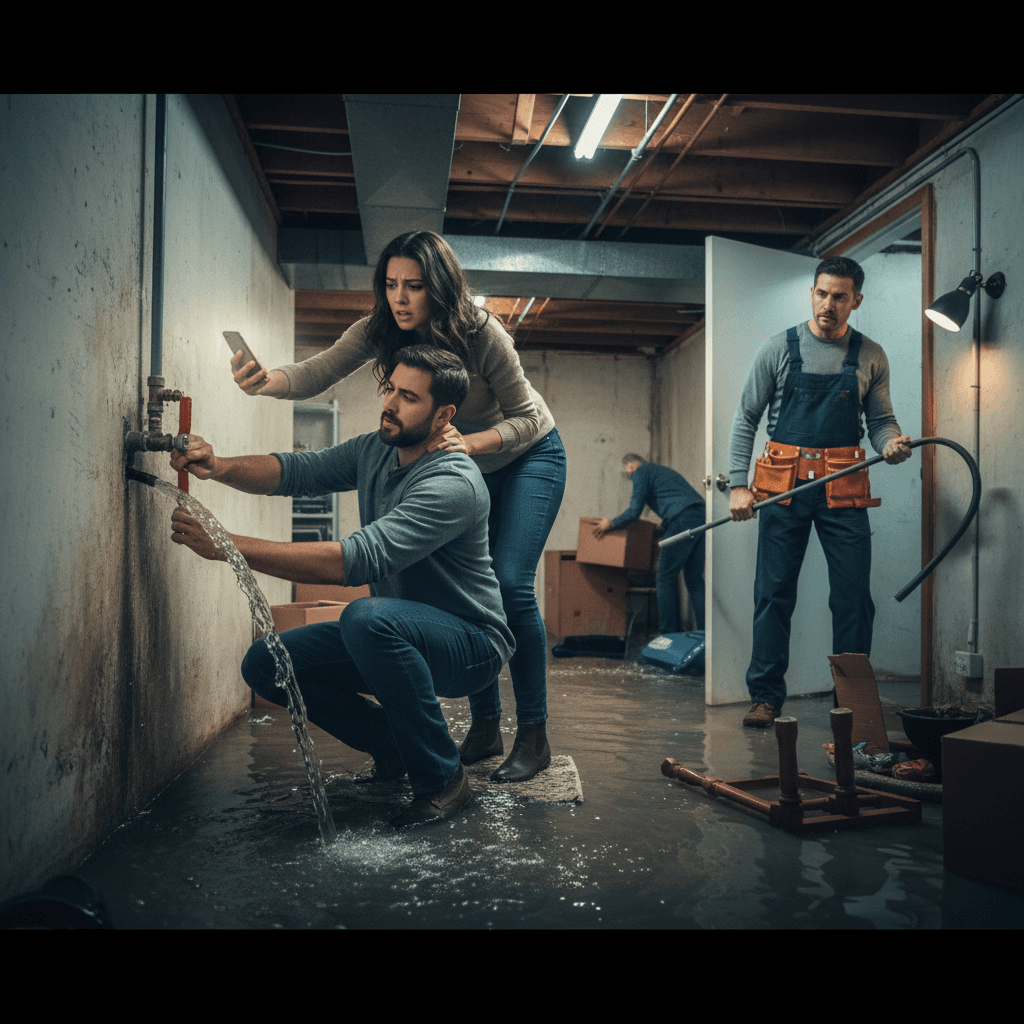
A pipe bursts in the wall behind your washing machine. Or you wake up at 5am because the furnace is silent and the house is 52 degrees. Or you flush a toilet and the shower drain starts gurgling. Pick one. Most homeowners hit at least one of these in their first ten years of owning.
What you do in the first fifteen minutes is the difference between a $400 repair and a $14,000 insurance claim. The bad news is that almost nobody thinks about this until it's happening to them. The good news is that the playbook for each of the big three is short and worth memorizing now.
This post covers three: a major water leak, a furnace failure in freezing weather, and a main sewer line clog. They cover the bulk of true homeowner emergencies, and they each have a fifteen-minute decision tree.
When water is actively coming out of something it shouldn't be, the first job is to stop it. Not call a plumber. Not start mopping. Stop the water.
Your main water shut-off valve is somewhere your water line enters the house. In most homes that's the basement near the water meter, sometimes a utility closet on the ground floor, sometimes outside next to the foundation. If you don't know where yours is, go find it right now before you finish this article. Turn it once a year so it doesn't seize in place. Older gate-valve handles can rust shut if they haven't moved in a decade, and a frozen shut-off is useless when you need it.
Once the water is off, look at where the leak was. If it's anywhere near outlets, an appliance, or your electrical panel, do not step in standing water. Kill the breaker that powers that part of the house first. Most older homes don't have a panel diagram that tells you which breaker covers what, so if yours is unlabeled, this is a good Sunday-afternoon project to do before you need it.
After the leak is stopped and the area is safe, call a 24/7 plumber. Then take pictures, lots of them. Wide shots, close-ups, water staining on the floor and walls. Your insurance adjuster will ask for these later. Take more than you think you need.
Emergency HVAC service runs $250 to $400 just for the visit, sometimes more on holidays. Before you make that call, check the three things that account for half of all "my furnace died" calls.
First, the thermostat. Is it on heat? Is the display lit? Modern thermostats run on AA batteries, and they die at the worst possible time. Swap them.
Second, the breaker for the furnace. It's usually labeled "furnace" or "HVAC" on the panel. If it's tripped (sitting between on and off), flip it all the way off, then back to on. If it trips again immediately, stop and call a pro because something is shorted.
Third, the power switch on the furnace itself. Most furnaces have a wall switch that looks identical to a regular light switch, mounted near the unit. They get bumped accidentally during basement cleanup more often than you'd think.
If you smell gas at any point, do not flip switches. Get everyone out of the house. Call the gas utility's emergency number from outside. They come for free and they come fast.
If none of the three quick checks bring it back, call an HVAC tech. While you wait, open the cabinet doors under every sink that's on an exterior wall, and let your faucets drip cold water at a pencil-thin stream. Pipes burst when they freeze, and a slow drip through a pipe is enough to keep ice from forming inside it.
You'll know this one when it happens. Flush a toilet and the tub gurgles. Run the dishwasher and the basement floor drain backs up. Both are signs the main sewer line out of your house is blocked, and every drop of water you send down a drain has nowhere to go but back up through the lowest opening.
So stop running water. All of it. No flushing, no showers, no laundry, no dishwasher. Turn off the ice maker if it's on a timer. If anyone in the house doesn't get the memo, things get a lot worse fast.
Skip the chemical drain cleaners. They don't work on main-line clogs, they create a chemical hazard for whoever ends up auguring the line, and the plumber may refuse to work on it until it's been flushed clean. Whatever's in that drano commercial is for kitchen sinks, not the four-inch pipe that goes to the street.
Call a plumber or drain specialist with a real mechanical auger. The hand-crank "snake" you can buy at Home Depot isn't long enough or strong enough for a main line. While you wait, move anything valuable off the floor in any rooms where the backup might reach. Sewage damage is one of the worst categories of insurance claim, and most of the cost is in things that absorbed water and have to be thrown out.
The common thread in all three of these is that the panic part eats your decision-making. You can train yourself out of that with twenty minutes of prep:
Locate your main water shut-off and your gas shut-off. Operate the water one once a year. Photograph the inside of your electrical panel and tape a printed label to the door listing what each breaker controls. Tape a contact card on the inside of a kitchen cabinet with your plumber, HVAC tech, and utility emergency lines.
When the emergency comes, you're not trying to remember any of this. You're just doing it.
Properteer keeps your home's emergency cheat sheet alongside your maintenance plan. Your shut-off locations, your contractor contacts, your appliance model numbers and ages. All of it logged once, available when you need it.