Posted On: Jan 6, 2026
Author: Jason H.
HVAC Home Maintenance DIY
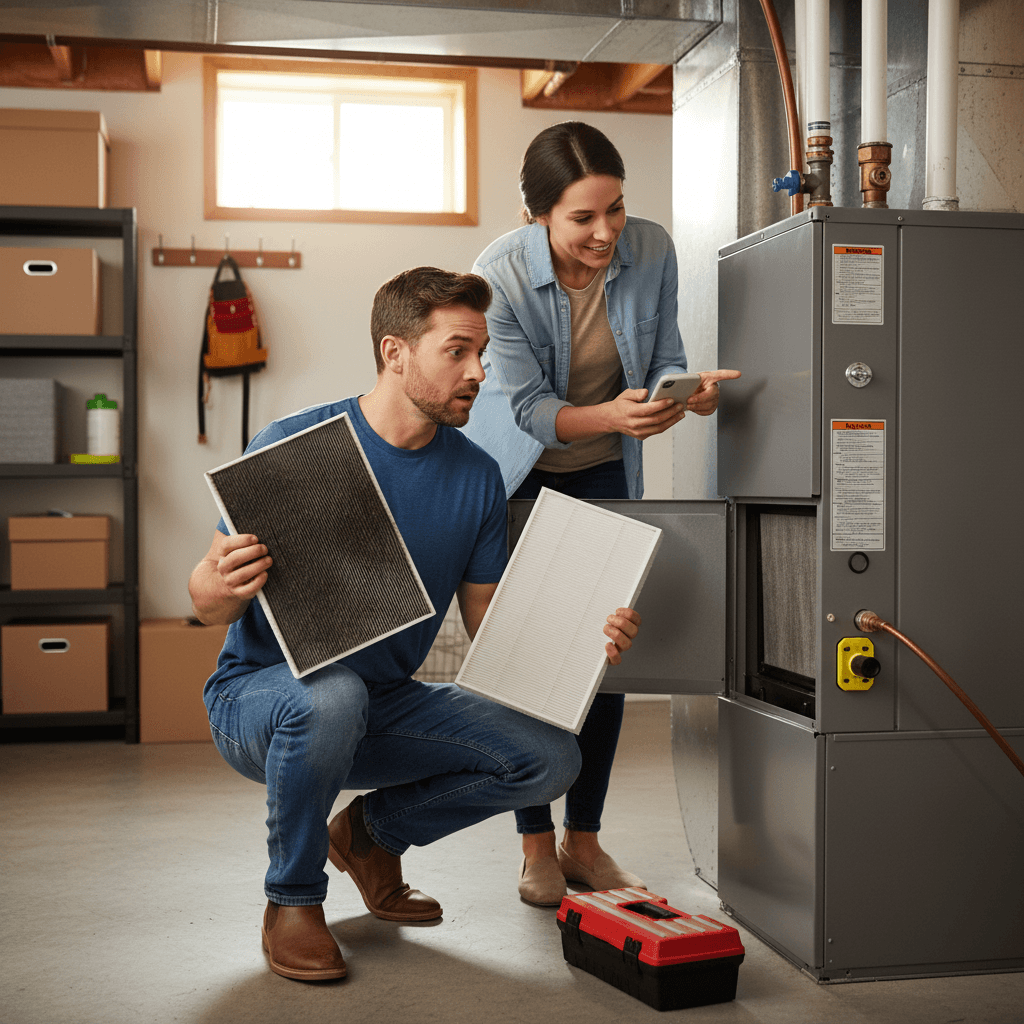
It’s not tightening a leaky faucet or sealing a drafty window (though those are good, too). It’s a simple task that many first-time homeowners don’t even know exists: changing your furnace filter.
It sounds almost too simple to be true, but that small, rectangular piece of pleated paper is the unsung hero of your home's comfort and your budget. Ignoring it is like never changing the oil in your car—for a while, things seem fine, until one day you’re stranded on the side of the road with a multi-thousand-dollar repair bill.
Let's break down why this $20 component is your first line of defense in protecting your very expensive HVAC system.
When your furnace or air conditioner runs, it pulls air from your home through a duct system. The filter is positioned to catch dust, pollen, pet dander, and other debris before it can get into the sensitive mechanical parts of your HVAC unit. When that filter gets clogged, it triggers a domino effect of problems.
1. Sky-High Energy Bills A clogged filter is like forcing your HVAC system to breathe through a straw. The fan motor has to work much harder to pull air through the dense mat of dust and grime. This extra effort consumes significantly more energy, which translates directly into higher heating and cooling bills every single month. A clean filter allows for easy airflow, letting your system run efficiently and affordably.
2. Poor Indoor Air Quality Does your home seem extra dusty? Are allergies acting up indoors? A dirty filter could be the culprit. A filter's job is to trap airborne particles. Once it's full, it can't trap any more. Even worse, the powerful airflow can dislodge clumps of dust and debris, re-circulating them back into the air you breathe.
3. Catastrophic (and Costly) System Failure This is the big one. The reduced airflow from a clogged filter can cause your furnace to overheat. A safety switch will shut the unit down to prevent a fire, but repeated overheating puts immense strain on critical components, leading to cracked heat exchangers or motor burnout. In the summer, it can cause your AC coils to freeze over, potentially damaging the compressor—the heart of your air conditioning system.
These are not small repairs. They are often the kind of failures that lead to a full system replacement, which can cost anywhere from $5,000 to $12,000 or more.
Convinced? Good. The great news is that this is one of the easiest DIY home maintenance tasks you can do.
Step 1: Locate the Filter It's typically in a slot on the side, bottom, or top of your furnace or air handler (the indoor unit). It will be covered by a thin metal door that you can easily slide or pop off.
Step 2: Note the Size and Airflow Arrow Before you pull the old filter out, use your phone to take a picture of it. Note two things:
Step 3: Buy the Right Replacement Take the size information to any home improvement store. You'll see filters with different MERV ratings (Minimum Efficiency Reporting Value). For most homes, a filter in the MERV 8 to MERV 11 range is the sweet spot. It offers excellent filtration for dust and pollen without overly restricting airflow. Be careful with super-high MERV filters (13+); unless your system is specifically designed for them, they can cause the same airflow problems as a clogged filter.
Step 4: Swap It Out
This is the most common question, and the answer depends on your home.
The best advice? Set a calendar reminder to check it monthly for the first few months. You'll quickly see how fast it gets dirty in your specific environment and can adjust your replacement schedule accordingly.
Changing your furnace filter is the perfect example of proactive home maintenance. It's a cheap, easy task that pays huge dividends in energy savings, clean air, and peace of mind. By taking just five minutes every few months, you are actively protecting one of the most expensive and critical systems in your home.
Remembering to change a filter every 90 days is one thing. But what about cleaning the gutters, testing the sump pump, or scheduling an HVAC tune-up? The mental load of home maintenance is overwhelming, and it's easy for crucial tasks to fall through the cracks.
That's where Properteer comes in.
Properteer is your personal home management assistant. Our app takes the guesswork and anxiety out of home maintenance. We'll send you smart, timely reminders for tasks just like this, tailored to your home and your climate. Properteer helps you track the age of your furnace, budget for its eventual replacement, and build a simple, actionable plan for your entire home. Stop reacting to emergencies and start proactively caring for your biggest investment.
Download Properteer today and trade your to-do list for true peace of mind.
Q: How do I know what size furnace filter I need?
A: The size is always printed on the cardboard frame of your existing filter. It will look like 16x25x1 or a similar measurement. Write it down or take a picture before you go to the store.
Q: What does MERV rating mean? What's a good MERV rating for my home? A: MERV stands for Minimum Efficiency Reporting Value. It's a scale from 1-16 that rates how effectively a filter captures airborne particles. For most residential homes, a MERV rating between 8 and 11 provides a great balance of air filtration and healthy airflow for your system.
Q: How often should I really change my furnace filter? A: For the most common 1-inch filters, every 90 days is standard. However, if you have pets, live in a dusty area, or have family members with allergies, you should check it monthly and replace it as soon as it looks visibly dirty, which could be as often as every 30 days.
Q: Does the arrow on the filter really matter? A: Yes! The filter is designed for air to flow through it in one direction. The arrow should always point from the return air duct towards the main body of the furnace. Installing it backward can reduce its effectiveness and even cause the filter to collapse.