Posted On: Apr 17, 2026
Author: Jason H.
maintenance home-safety fireplace
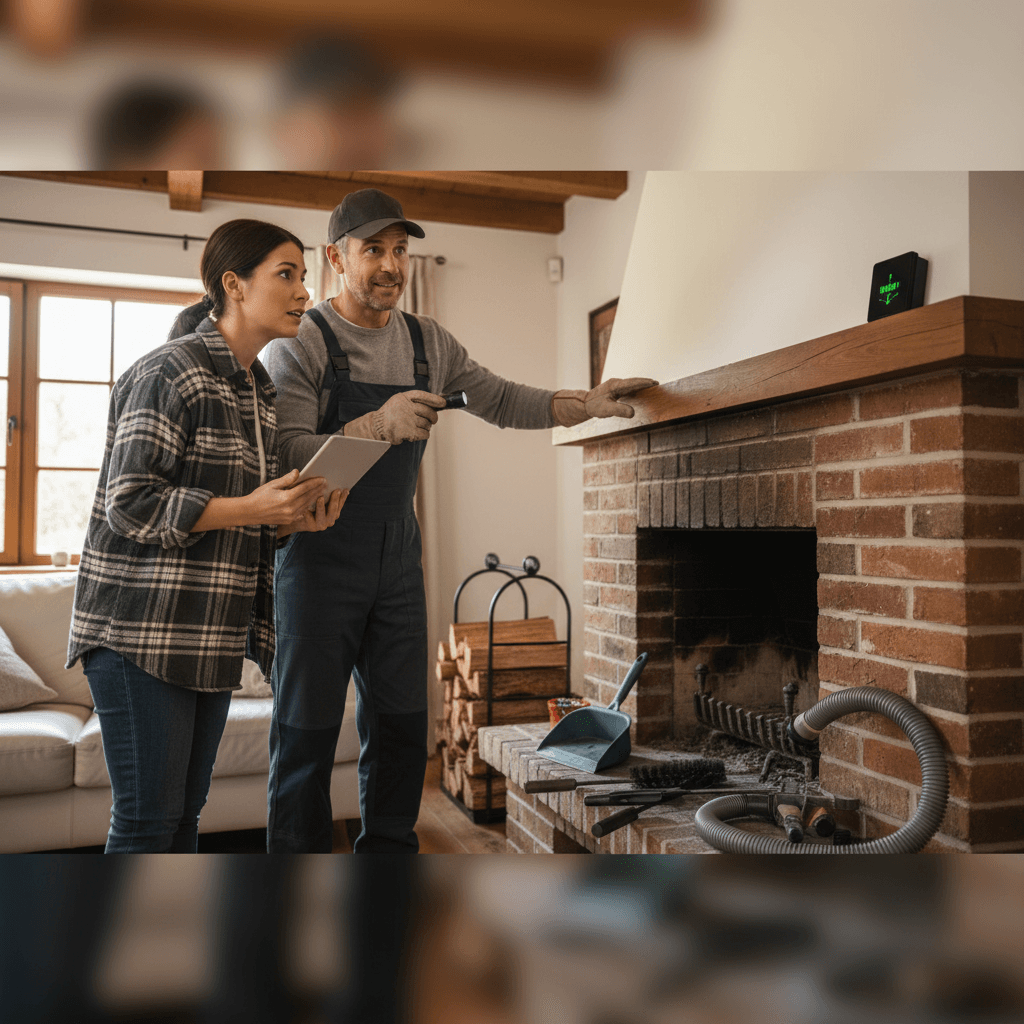
A chimney is one of the few parts of a house that quietly punishes neglect. Most things, when they're failing, give you signs early. A water heater rumbles. A roof shows a stain. A chimney just sits there looking the same as always, even when something inside it has gotten dangerous.
The two real risks are chimney fires and carbon monoxide. Both happen because of buildup or blockage inside the flue, and both are invisible from your couch. Add water damage from a cracked crown or failing flashing, and the chimney earns a spot on the list of home components that deserve more attention than they usually get.
I'll keep this practical. Here's what to check yourself, what to call a pro for, and how often.
When you burn wood, the smoke that goes up the chimney carries unburned bits of fuel. As that smoke cools on the way out, those particles condense and stick to the inside of the flue. The residue is called creosote. In small amounts, it's harmless. In large amounts, it's a thin coating of solid fuel lining the inside of your chimney, perfectly positioned to catch a spark.
A chimney fire can hit 2,000 degrees. That's enough to crack the flue liner, ignite the framing around it, and start a house fire from the inside out. Most chimney fires don't sound dramatic. There's a low roar, a smell like burnt toast, and that's the entire warning.
The other risk is carbon monoxide. Your chimney's actual job is moving combustion gases out of your house. If the flue is blocked by creosote, a bird's nest, or a fallen branch, those gases come back into the room. CO is odorless and colorless. The way you find out about it is your CO detector going off, which is why every house with a fireplace or any gas appliance needs one on every floor, not just the basement.
You're not replacing the certified annual inspection. You're catching the obvious stuff between visits.
Look at the firebox from inside. Are the firebricks cracked? Is the mortar between them crumbling? Small hairline cracks are fine. Mortar that's flaking out in chunks is not. That stuff is what's keeping the heat of your fire from reaching the framing of your house.
Open and close the damper. It should move freely. If it's stiff, rusted, or won't fully open, it's not doing its job. A damper that won't close all the way leaks warm air out of your house when the fireplace isn't in use, which adds up to real money over a winter.
Look at the walls and ceiling around the fireplace, inside and outside the chimney chase. Water staining is a sign that something is leaking up top. Usually it's the crown (the concrete slab on the very top of the chimney) or the flashing (the metal sheet that seals where the chimney meets the roof). Both are repairable, but neither gets better on its own.
Stand back from the house and look at the chimney itself. Are any bricks cracked or missing? Does the chimney look plumb, or is it leaning? Mortar joints disintegrating? A leaning chimney is a serious structural issue and means a structural inspection, not a cleaning.
The Chimney Safety Institute of America (CSIA) certifies chimney sweeps. Look for that certification before hiring anyone. The going rate for a sweep and Level 1 inspection in most U.S. markets is $150 to $300. They check things that aren't visible from below:
The flue liner. This is the tube inside the chimney that actually carries the smoke and heat. Cracks here let fire reach the brickwork around it. You can't see them without a camera on a rod, which is part of what you're paying for.
The smoke shelf and the area above the damper. Bird nests, leaves, and creosote buildup all settle here. So do dead birds and the occasional bat. Yes, really.
The crown and cap from above. They get up there. You don't have to.
If you use the fireplace heavily (a couple of fires a week through winter), you'll likely need an actual cleaning each year on top of the inspection. If it's three or four fires a season, the inspection is the main thing and cleaning may only be needed every other year.
People with gas fireplaces sometimes think they're off the hook. They're mostly off the hook for creosote, but the appliance itself still needs an annual technician check. The tech inspects the burner assembly, verifies the gas line connections, confirms the venting is clear, and looks at the safety pilot. A failed safety pilot on a gas fireplace can mean unburned gas accumulating in your house. It's the same logic as a CO detector: low probability, very bad outcome.
Schedule the annual inspection in late summer or early fall. Wait until November and the good sweeps are booked out three weeks. The cost is the same, the convenience isn't.
If you didn't use the fireplace at all last winter, you can stretch to every other year, but only if you actually open and inspect the firebox during the off year.
Properteer tracks chimney inspections alongside your other annual jobs (furnace tune-up, dryer vent cleaning, water heater flush). One reminder list, dates that move with your actual usage, no spreadsheet.