Your Kitchen's Unsung Heroes
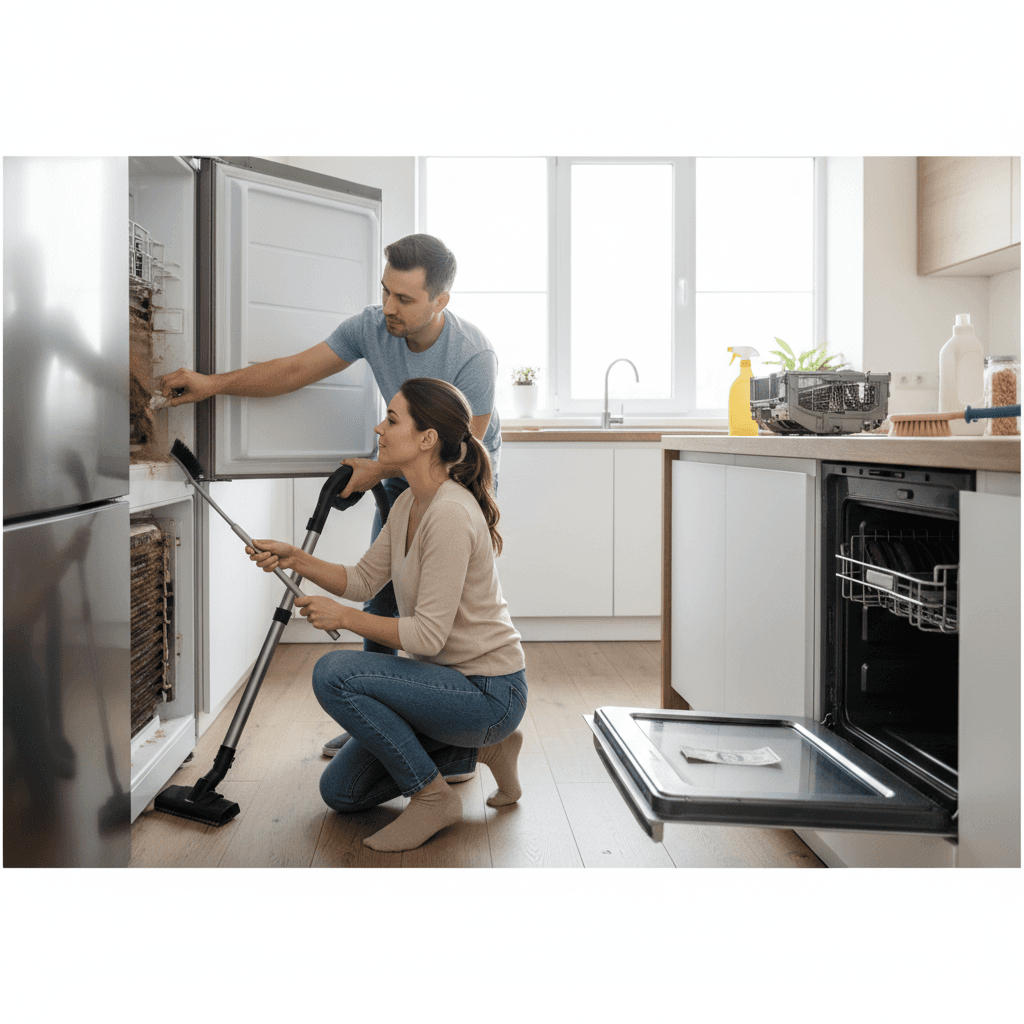
Think about the hardest working members of your household. Your HVAC system and water heater come to mind, but what about the crew that works for you every single day, often 24/7? We're talking about your kitchen appliances: the refrigerator, the dishwasher, and the oven.
As a homeowner, especially a new one, it's easy to take these essentials for granted. They hum along in the background until one day, they don't. A lukewarm fridge, a dishwasher that leaves grime on your plates, or an oven that won't heat up can throw your entire routine into chaos—not to mention your budget.
The good news? You can prevent most of these surprise breakdowns and extend the life of your appliances with a few incredibly simple maintenance tasks. Forget calling a pro; these are 10-minute jobs that anyone can do. Let's get to it.
Your Refrigerator: The 24/7 Energy Hog
Your refrigerator is one of the biggest energy consumers in your home because it never turns off. Giving it a little TLC is the fastest way to see a difference on your utility bill.
Task 1: Clean the Condenser Coils
- Why it matters: The coils on the back or bottom of your fridge are responsible for releasing heat. When they're covered in dust, pet hair, and grime, the compressor has to work overtime to keep things cool, wasting energy and wearing itself out faster.
- How to do it: Once or twice a year, carefully pull your fridge away from the wall. Unplug it. Use a vacuum cleaner with a brush attachment to gently clean the coils. For stubborn dust, a long, flexible coil brush (available at any hardware store) works wonders.
- The Payoff: A cleaner coil can improve your fridge's efficiency by up to 30%. That's real money back in your pocket every month.
Task 2: Check the Door Seals
- Why it matters: A leaky door seal (the rubber gasket around the edge) lets cold air escape, forcing your fridge to run constantly.
- How to do it: This is the famous "dollar bill test." Close the refrigerator door on a dollar bill. If you can pull it out easily without any drag, your seal is weak and likely needs to be cleaned or replaced. Wipe the gaskets down with warm, soapy water to remove any grime that might be preventing a tight seal.
- The Payoff: A tight seal means less work for your fridge and a lower electric bill.
Your Dishwasher: From Grimy to Gleaming
Are your glasses coming out cloudy? Are you finding bits of food left on your "clean" dishes? The problem probably isn't your detergent—it's a dirty dishwasher.
Task 1: Clean the Filter
- Why it matters: The filter, located at the bottom of the dishwasher tub, catches all the large food particles. When it gets clogged, that gunk gets re-circulated onto your dishes. Gross. A clogged filter can also damage the pump, leading to a very expensive repair.
- How to do it: Most modern dishwasher filters twist out easily (check your owner's manual if you're not sure). Take it to the sink and rinse it under hot water, using a soft brush to scrub away any stuck-on debris. Do this once a month.
- The Payoff: Shinier dishes, a better-smelling appliance, and protection against a costly pump failure.
Task 2: Unclog the Spray Arms
- Why it matters: The spray arms are what actually shoot water onto your dishes. If the tiny holes are clogged with mineral deposits or food, the water pressure drops and your dishes won't get clean.
- How to do it: Check if the arms spin freely. If not, remove them (they usually unscrew or unclip). Use a toothpick, pin, or piece of wire to poke out any debris from the holes. Rinse thoroughly before re-installing.
- The Payoff: No more re-washing dishes. You'll get a perfect clean the first time.
Your Oven & Stovetop: A Recipe for Safety
Oven and stovetop maintenance is less about energy savings and more about performance and safety.
Task 1: Clean the Interior
- Why it matters: That baked-on grease and carbonized food at the bottom of your oven isn't just an eyesore. It can smoke during pre-heating, impart a nasty flavor to your food, and in extreme cases, become a fire hazard.
- How to do it: Use your oven's self-cleaning feature if it has one (and be sure to follow the manufacturer's instructions for ventilation). Alternatively, use a commercial oven cleaner or a non-toxic paste of baking soda and water.
- The Payoff: Better-tasting food and a significantly lower risk of a kitchen fire.
Task 2: Check the Oven Door Gasket
- Why it matters: Just like your fridge, the oven has a seal to keep the heat in. If it's torn, brittle, or covered in grime, heat escapes. This means your oven has to work harder to maintain temperature, leading to inconsistent baking and wasted energy.
- How to do it: Visually inspect the gasket for any damage. Give it a gentle cleaning with a damp cloth to ensure it's making good contact.
- The Payoff: More accurate cooking temperatures and a more efficient oven.
Don't Let Maintenance Overwhelm You
These simple tasks, performed just a few times a year, can save you hundreds of dollars in energy costs and thousands in premature replacement fees. They put you in control of your home, turning you from a reactive owner who panics at breakdowns into a proactive one who has a plan.
But who can remember to do all this? Between cleaning gutters, changing furnace filters, and now, checking refrigerator coils, it's a lot to track.
That’s where Properteer comes in. Our app is designed to be your home's digital owner's manual. We help you inventory your appliances, learn their average lifespans, and set smart, simple reminders for crucial maintenance tasks like the ones above. Properteer takes the guesswork and anxiety out of homeownership, creating a simple plan so you can protect your investment and enjoy your home, stress-free.
Stop waiting for an appliance to fail. Take control of your home's health today. Learn more about how Properteer can help you stay ahead of home maintenance.
Q&A: Quick Kitchen Appliance Care
Q: How often should I clean my refrigerator coils?
A: It's best to clean them at least once a year. If you have pets that shed, check them every six months, as pet hair is a major cause of clogs.
Q: What's the easiest way to check my refrigerator's door seal?
A: Use the "dollar bill test." Close the door on a bill. If you can pull it out with no resistance, the seal is weak. Try cleaning the gasket first. If that doesn't work, it may need to be replaced.
Q: Why are my dishes still dirty after a dishwasher cycle?
A: The most common culprit is a clogged filter at the bottom of the dishwasher. The second most common cause is clogged spray arm holes. Cleaning both of these usually solves the problem.
Q: Is it really necessary to clean my oven?
A: Yes. Heavy food and grease buildup can smoke, affect the taste of your food, and become a fire hazard. Regular cleaning ensures safety and better cooking performance.