Posted On: May 17, 2026
Author: Andy H.
humidity mold-prevention indoor-air-quality
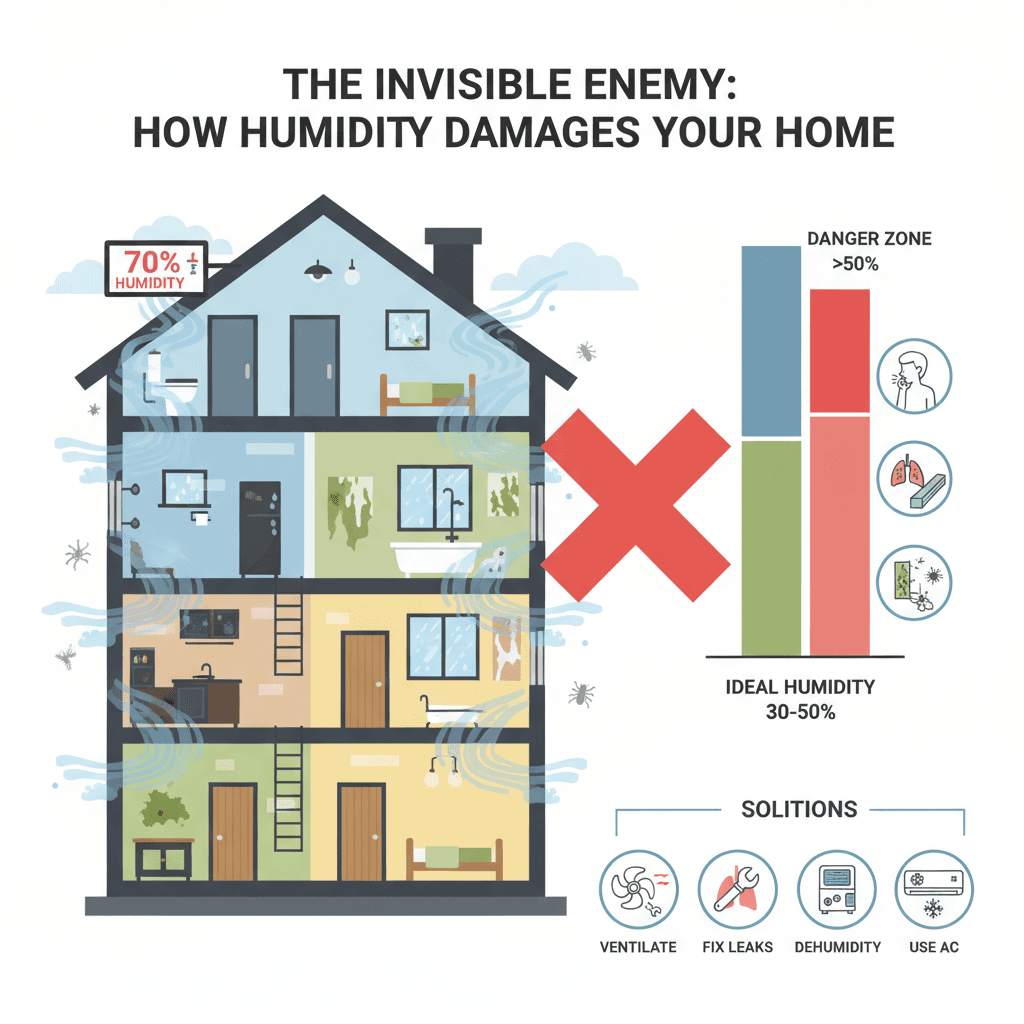
You know the feeling. You walk into your basement and the air feels thick and damp. You notice a persistent musty smell you can't quite place. Or maybe you see condensation fogging up the inside of your windows, even when it’s not particularly cold outside.
It’s easy to dismiss these as minor annoyances, but they’re actually warning signs from your home. They’re telling you that an invisible enemy is at work: excess humidity. For a first-time homeowner, understanding and controlling indoor humidity is one of the most important, yet overlooked, aspects of proactive maintenance. It’s a silent force that can lead to mold, attract pests, and cause thousands of dollars in structural damage.
Humidity is simply the amount of water vapor in the air. For your home's health and your own comfort, the ideal indoor relative humidity (RH) is between 30% and 50%.
Your house will tell you if the moisture levels are too high. You just need to know what to look and smell for:
Controlling humidity doesn’t have to be complicated. By incorporating a few simple habits and checks into your routine, you can protect your home from moisture damage.
Ventilate, Ventilate, Ventilate: This is your number one weapon. Always use the exhaust fan in your bathroom during and for at least 20 minutes after a shower. Use the range hood fan when cooking. These fans are designed to pull moist, contaminated air directly outside. Pro Tip: Make sure your fans actually vent to the exterior, not just into the attic!
Check for Leaks: All the ventilation in the world won't help if you have a persistent source of water. Regularly inspect for plumbing leaks under sinks, check your attic for roof leak stains, and ensure your gutters are directing water far away from your foundation.
Deploy a Dehumidifier: For chronically damp areas like basements and crawl spaces, a dehumidifier is a game-changer. It will pull moisture out of the air, keeping the space dry and inhospitable to mold and pests.
Lean on Your AC: Your air conditioner is a natural dehumidifier. Make sure it's properly maintained (clean filters are a must!) so it can run efficiently and remove moisture from the air as it cools.
Promote Air Circulation: Use ceiling fans or portable fans to keep air moving. Stagnant air allows moisture to settle, while circulating air helps it evaporate.
Taking control of your home’s humidity is a powerful step in proactive homeownership. It’s about shifting from reacting to problems like mold and rot to preventing them from ever starting. By keeping your home’s air in that 30-50% sweet spot, you’re not just making it more comfortable—you’re protecting your health, your structure, and your biggest investment.
Feeling overwhelmed trying to track invisible threats like humidity on top of everything else? You're not alone. Managing a home involves juggling dozens of tasks, from HVAC servicing and gutter cleaning to checking for leaks and planning for future replacements.
This is where Properteer comes in. Our app transforms home maintenance from a source of anxiety into a simple, actionable plan. We help you inventory your home's core systems, create a customized maintenance schedule, and send you smart alerts for crucial tasks—like servicing the HVAC system that helps control your humidity. Stop guessing and start managing your home with confidence. With Properteer, you can track your home's health, budget for future needs, and protect your investment from silent destroyers.
Visit Properteer.ai to learn how you can take control of your home's future, today.
Q: What is the ideal humidity level for a home? A: The ideal indoor humidity level for comfort and home health is between 30% and 50% relative humidity.
Q: What are the easiest ways to reduce humidity? A: The simplest and most effective steps are to always use your bathroom and kitchen exhaust fans when showering or cooking, ensure your clothes dryer vents properly to the outside, and promptly fix any water leaks you find.
Q: How do I know if I have a humidity problem? A: The most common signs are condensation on windows, a persistent musty smell, visible mold spots (especially in corners or closets), and paint that is bubbling or peeling from walls.
Q: When should I use a dehumidifier? A: A dehumidifier is highly recommended for chronically damp areas like basements or crawl spaces. It's also useful during particularly humid seasons if your air conditioning system isn't enough to keep humidity below 50%.