Posted On: Jun 13, 2026
Author: Jason H.
roofing maintenance home-inspection
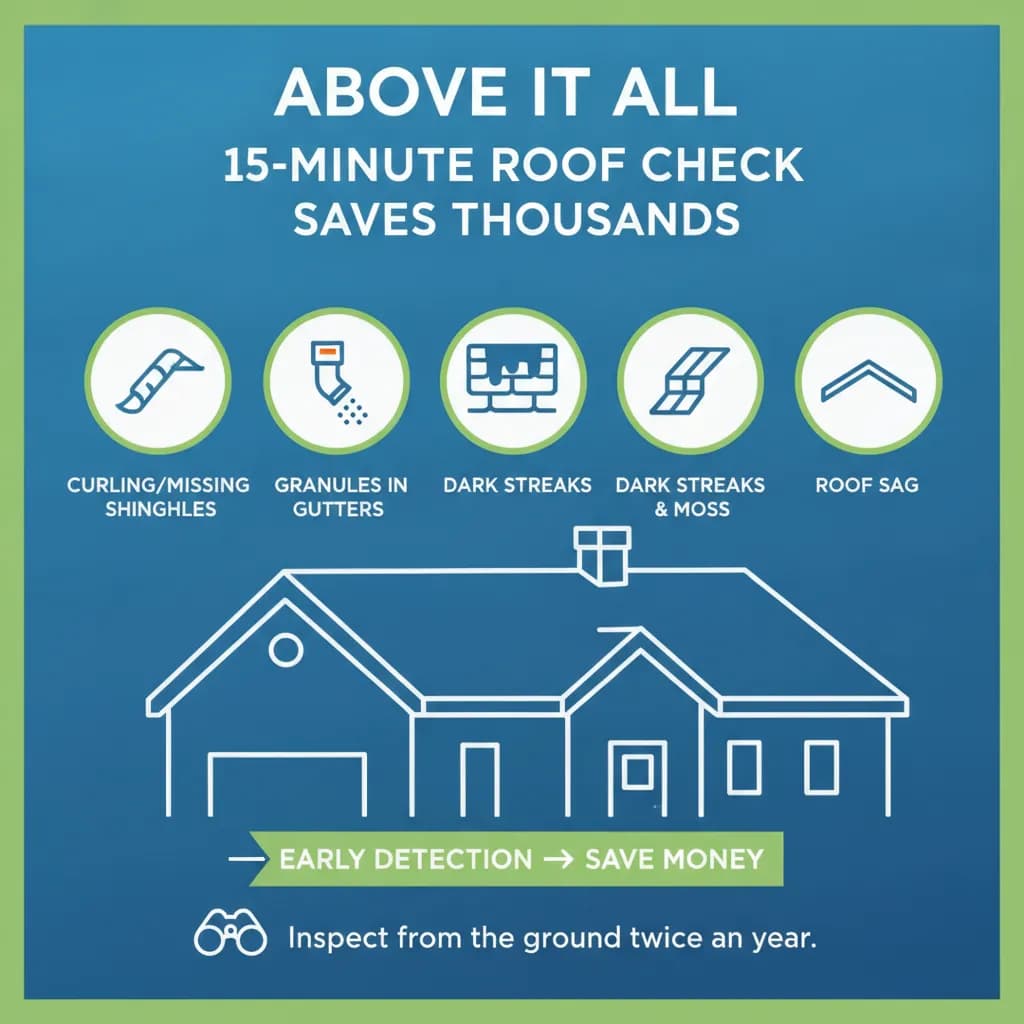
Think of your home as a team. The foundation is your solid defensive line, the plumbing is your circulatory system, but the roof? The roof is the star quarterback and the entire special teams unit rolled into one. It takes a constant beating from sun, rain, wind, and snow, protecting everything—and everyone—under it.
But here's the catch: a replacement can be one of the single most expensive projects you'll ever undertake as a homeowner. The fear of that $15,000+ bill causes many of us to adopt an “out of sight, out of mind” attitude. We don’t look up until a water stain appears on the ceiling, and by then, the damage is already done.
The good news is you don’t need to be a professional roofer to stay ahead of the game. A simple, 15-minute inspection from the safety of the ground, twice a year, can help you spot trouble when it's still a small, affordable repair, not a catastrophic failure.
Grab a pair of binoculars if you have them, and take a slow walk around your property. Here are the five critical signs to look for:
This is the most obvious sign of a problem. Scan the entire surface of your roof for shingles that aren't lying flat.
A healthy asphalt shingle has a rough, sandy texture. This isn't for looks; it's a layer of ceramic granules that protects the shingle from the sun's UV rays, which can bake the life out of the asphalt.
Have you noticed unsightly black or green patches on your roof?
Flashing is the thin metal stripping that seals the seams around interruptions in your roof, like your chimney, skylights, and vent pipes. These joints are the most vulnerable spots for leaks.
This is the one sign you hope you never see. Stand back from your home—even across the street—and look at the lines of your roof.
Seeing one of these signs doesn't automatically mean you need a new roof tomorrow. Spotting a single missing shingle means you should call a roofer for a quick repair. Seeing widespread granule loss and curling means it's time to start planning and saving for a replacement in the near future.
The goal of the ground-level check is to turn you from a reactive homeowner into a proactive one. You’re trading a panicked, middle-of-the-night call to an emergency roofer for a calm, well-planned home improvement project.
Keeping track of your roof's age, its potential issues, and the cost of its eventual replacement can feel overwhelming. It’s one of many big-ticket items—along with your furnace, water heater, and appliances—that all have a finite lifespan.
That’s where technology can turn anxiety into a manageable plan. Properteer is designed to be your homeownership co-pilot. By analyzing your home's details, it helps you understand the expected lifespan of every major component, like your roof. It creates a personalized maintenance calendar to remind you to do these simple check-ups and builds a smart, forward-looking budget for eventual replacements. You’ll know exactly how much to set aside each month, so when the time comes for a new roof, it’s a planned expense, not a financial emergency.
Stop letting your home’s biggest costs be a surprise. Visit Properteer.ai to see how you can take control of your home maintenance and protect your biggest investment.
Q: How often should I inspect my roof? A: A good rule of thumb is to do a thorough ground-level inspection twice a year, ideally in the spring and fall. You should also take a quick look after any major weather event, like a hailstorm or high winds.
Q: Do I really need to get on a ladder to check my roof? A: Absolutely not. For your own safety, it's best to leave climbing on the roof to trained and insured professionals. The vast majority of common warning signs can be spotted easily from the ground, sometimes with the help of binoculars.
Q: My roof is only 10 years old but has a few missing shingles after a storm. Do I need a whole new roof? A: Unlikely. A few missing shingles can often be replaced by a roofer for a relatively small fee. It’s crucial to get them fixed quickly, however, as the exposed area is vulnerable to water damage that could lead to bigger problems.
Q: How much does a new roof actually cost? A: The cost varies significantly based on your home's location, the size and steepness of your roof, and the material you choose (e.g., asphalt, metal, tile). However, for a standard asphalt shingle roof, most homeowners in the U.S. can expect to pay somewhere between $8,000 and $20,000 for a full replacement.