Posted On: Oct 20, 2026
Author: Jason H.
diy home-improvement safety
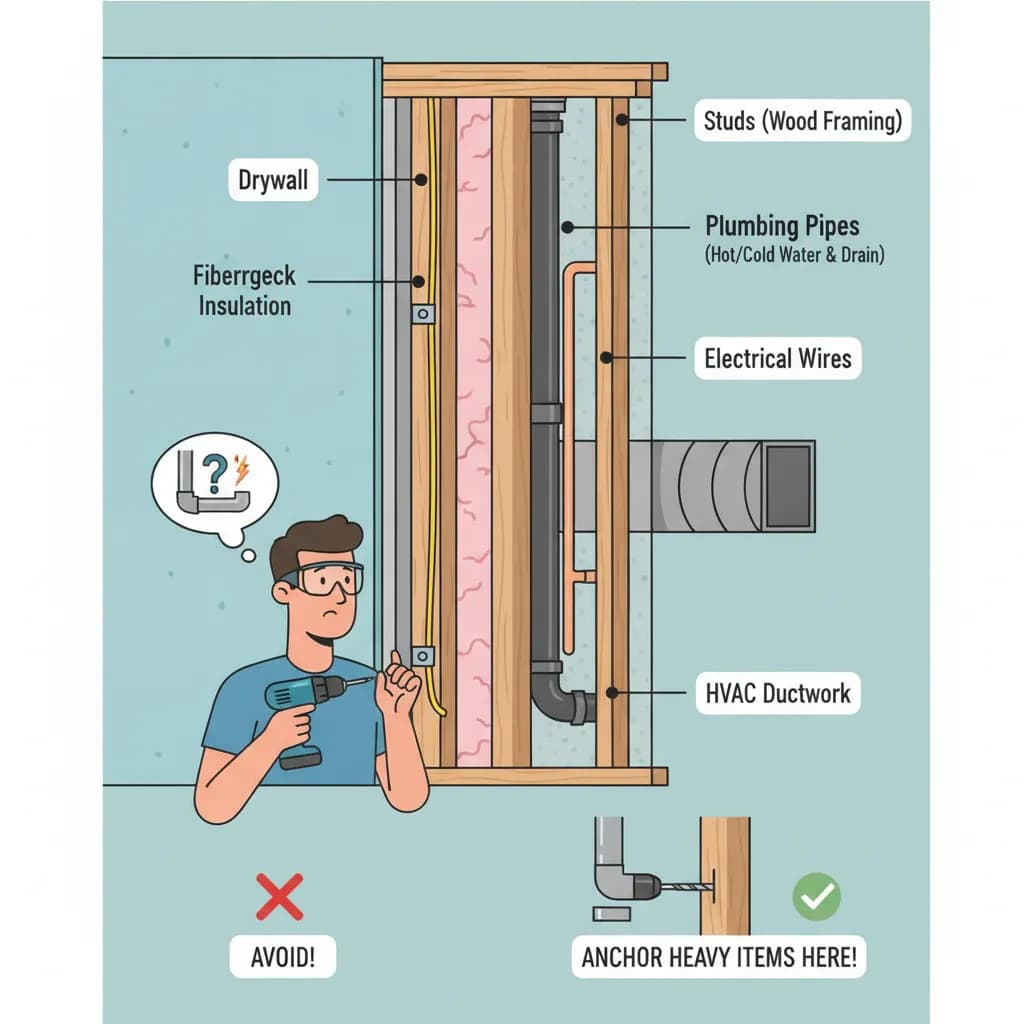
You've closed on your new home, the boxes are unpacked, and it's finally time to make the space your own. First on the list: hanging that beautiful gallery wall, a big-screen TV, or some much-needed shelving. You grab your drill, full of excitement, and then it hits you: a wave of anxiety.
What am I about to drill into? Is there a pipe back there? A live wire? Will this 70-inch TV come crashing down in the middle of the night?
This is a universal new homeowner fear. Your home's walls are more than just blank canvases; they are complex, layered structures that house the critical systems that keep your home running. Understanding what’s inside is the key to conquering your DIY fears and protecting your home from preventable disasters.
Let’s peel back the layers of a typical interior wall, starting from the part you see every day.
Paint & Drywall: The surface is simple enough—a few coats of paint over drywall (also known as gypsum board or Sheetrock). Drywall is essentially a layer of gypsum plaster pressed between two thick sheets of paper. It’s great for creating smooth surfaces, but it’s brittle and has very little structural strength on its own. It cannot support anything heavier than a small picture frame without help.
The Cavity (What's in the 'Empty' Space): Between the sheets of drywall is a cavity, which usually isn't empty. This is where you'll find insulation (typically fluffy pink fiberglass, dense mineral wool, or spray foam) designed to control temperature and muffle sound. You might also find a thin plastic sheet called a vapor barrier, which prevents moisture from accumulating inside the wall.
The most important structural element you need to find is a stud. Studs are the vertical framing members—usually 2x4 or 2x6 pieces of lumber, or sometimes steel—that make up the skeleton of your walls.
Hidden within this framework of studs and insulation are the critical systems that you absolutely want to avoid hitting with a drill bit.
Electrical Wires: Electrical cables run vertically up and down walls, usually stapled to the side of a stud, and horizontally through holes drilled in the center of the studs. A good stud finder will often have an AC detection feature to warn you of live wires, but always be cautious. Hitting a wire can cause a dangerous short, a fire, or electric shock.
Plumbing Pipes: These are the big ones to avoid. You have two types: smaller supply lines (carrying pressurized hot and cold water, often made of copper or PEX tubing) and larger drain lines (carrying wastewater away, typically made of white PVC or black ABS plastic). You’ll find these concentrated in “wet walls”—the walls behind your sinks, showers, toilets, and washing machine. Puncturing a supply line can cause a high-pressure spray, flooding a room in minutes and leading to thousands in water damage.
HVAC Ductwork: In some walls, you may find large rectangular or round metal ducts that carry heated or cooled air throughout your home. While less catastrophic to hit than a pipe, drilling into a duct creates an air leak that reduces your HVAC system’s efficiency and increases your energy bills.
Before you drill, run through this quick mental checklist to avoid a costly mistake.
Understanding the anatomy of your walls transforms you from a nervous novice into a confident DIYer. You’ll be able to personalize your space securely, knowing you're protecting the vital systems that make your house a home.
The plumbing, electrical, and HVAC systems hidden in your walls are the most expensive and complex components of your home. While knowing where they are helps you avoid them during a DIY project, knowing how to maintain them is the key to financial peace of mind. But how do you keep track of it all?
That's where Properteer comes in. The Properteer app (https://properteer.ai) helps you understand the entire ecosystem of your home. It uses AI to identify your home's core components, track their age and condition, and create a personalized budget and maintenance plan. Stop worrying about when your water heater might fail or how much to save for a new furnace. Properteer turns the hidden complexities of your home into a simple, actionable plan, giving you the confidence to be a truly smart homeowner.
Q: What is a stud and why is it important? A: A stud is a vertical wooden or metal beam that forms the frame of your wall. It's important because it provides the structural support for your home and is the only thing strong enough to anchor heavy items like TVs, large mirrors, or cabinets to the wall.
Q: How can I find a stud without a stud finder? A: You can try the “tap test” by knocking along the wall and listening for the sound to change from hollow to a more solid thud. You can also measure 16 inches from a corner or from an electrical outlet box (which is usually attached to a stud) to estimate the location of the next one.
Q: What is a “wet wall”? A: A wet wall is a wall that contains plumbing pipes for fixtures like sinks, showers, or toilets. You should be extremely cautious when drilling into or doing any work on a wet wall to avoid puncturing a water supply or drain line.
Q: What's the difference between a drywall anchor and a screw for a stud? A: A screw driven directly into a stud uses the strength of the wood frame to hold weight. A drywall anchor is used when no stud is present. It expands behind the brittle drywall to spread the load over a wider surface area, allowing you to hang lighter objects safely in a hollow part of the wall.