Posted On: May 2, 2026
Author: Jason H.
homeowner-toolkit diy-essentials first-time-homeowner
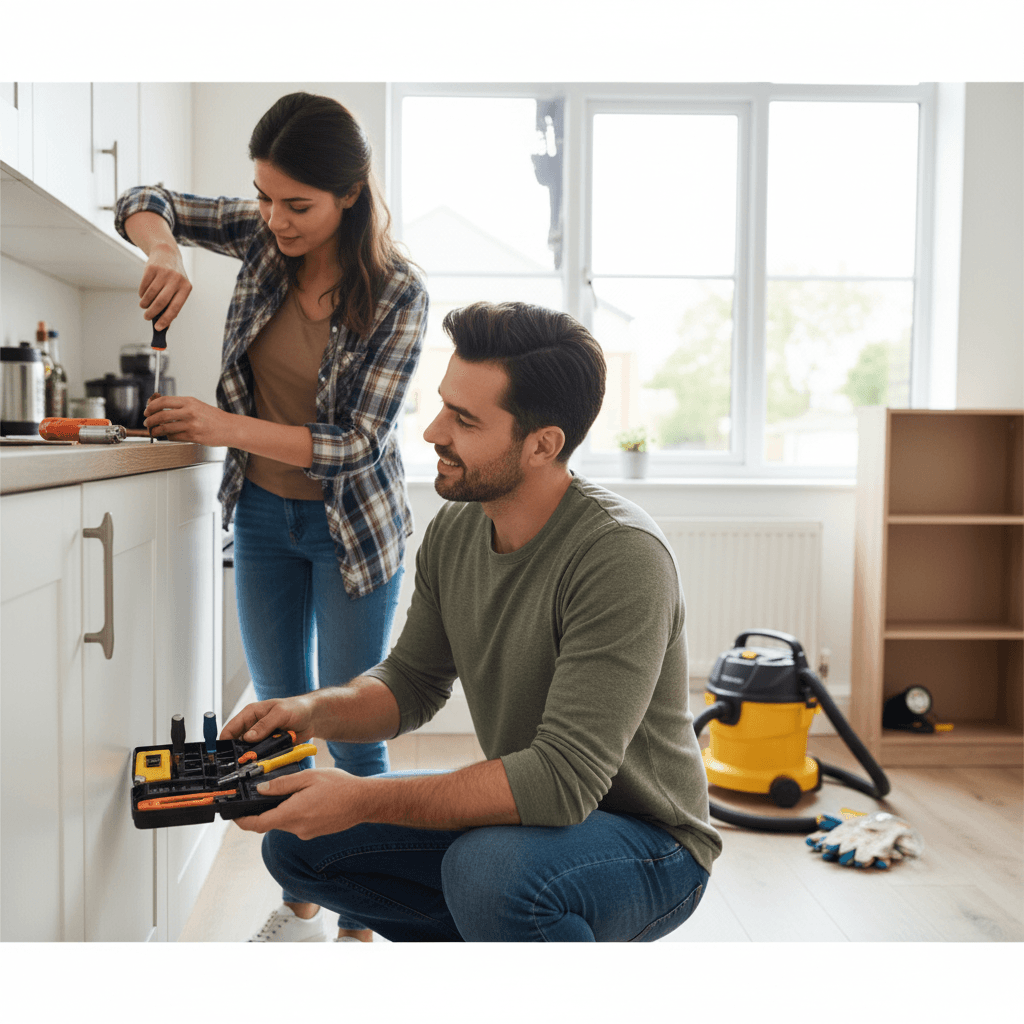
Welcome to homeownership! It’s a journey filled with pride, paint chips, and the sudden, humbling realization that a dripping faucet sounds a lot louder at 2 a.m. Every new homeowner has that moment: a loose cabinet handle, a wobbly toilet seat, a picture that needs hanging. Your first instinct might be to call a handyman, but what if you could handle it yourself in five minutes?
Building a basic home toolkit isn't about becoming a master carpenter overnight. It's about empowerment. It's about turning 'uh-oh' into 'I got this.' An initial investment of around $150 in the right tools can save you thousands over the years in service calls for simple fixes. This isn't just a list of tools; it's your starter kit for a more confident, less stressful life as a homeowner.
Forget those intimidating 150-piece tool kits. You can conquer about 90% of common household issues with these 12 essentials. For each one, we'll tell you why it's a must-have.
1. The Multi-Bit Screwdriver This is your #1 draft pick. A single handle with a dozen interchangeable bits (Phillips, flathead, square, etc.) means you’re ready for anything from tightening a doorknob to opening a battery compartment, without digging through a cluttered drawer.
2. A 16 oz Claw Hammer Simple. Classic. Essential. You'll use the flat end for driving nails to hang photos and art, and the claw end for pulling out the ones you put in the wrong place.
3. A 25-Foot Tape Measure Will that new couch fit through the door? How high should you hang that curtain rod? Guessing is a recipe for frustration. A good, sturdy tape measure is non-negotiable for furniture shopping, renovations, and layout planning.
4. A 9-Inch Level A small torpedo level is all you need to avoid a gallery of crooked frames. It’s the difference between a home that looks put-together and one that’s just slightly... off.
5. An Adjustable Wrench Also known as a Crescent wrench, this tool has a jaw that adjusts to fit various nuts and bolts. It’s your go-to for tightening the water supply line under a sink or toilet—a simple task that can stop a small drip from becoming a water damage claim.
6. A Set of Pliers (Needle-Nose and Channel-Lock) This duo is your gripping powerhouse. Needle-nose pliers are perfect for tight spaces and delicate tasks. Channel-lock pliers give you the brute force needed to grip and turn a stubborn pipe fitting.
7. A Utility Knife From breaking down an endless mountain of moving boxes to carefully scoring old caulk or cutting drywall, a sharp utility knife with a retractable blade is safer and more effective than using kitchen scissors.
8. An Electronic Stud Finder Don't play 'knock-knock' on your walls. A stud finder is the only way to safely and securely hang heavy items like TVs, large mirrors, or shelving. Hitting a stud means your treasured items stay on the wall, not on the floor.
9. A Dripless Caulk Gun Remember our post on The $10 Secret to a Mold-Free Home? This is the tool that makes it happen. Sealing gaps around your tub, windows, and trim is one of the highest-impact DIY tasks you can do to prevent water damage and drafts.
10. A Headlamp When you're peering into the dark abyss under a sink or in a crawl space, you need both of your hands. A headlamp is infinitely better than trying to hold a phone flashlight in your mouth.
11. Basic Safety Gear (Goggles & Gloves) This isn't optional. Protect your eyes from flying debris and your hands from splinters and scrapes. Safety gear is the cheapest insurance policy you can buy.
12. A Small Wet/Dry Shop Vacuum This little workhorse is a homeowner's best friend. It can handle everything from a toilet overflow and a minor dishwasher leak to cleaning up sawdust from a DIY project. It contains messes before they become disasters.
Having the right tools is a fantastic first step. You've traded helplessness for capability. But the most powerful tool of all isn't in your toolbox—it's having a plan.
A hammer can't tell you that your water heater is due for a flush. A stud finder can't remind you to budget for a new roof in seven years. You have the 'how,' but you still need the 'what' and 'when.'
That's where Properteer comes in. Our app turns the overwhelming complexity of home maintenance into a simple, actionable plan. We help you:
A toolbox without a plan is just a box of metal. Pair your new toolkit with the intelligence of Properteer to become a truly proactive, confident, and stress-free homeowner. Protect your biggest investment with the right tools and the right plan.
Get started with Properteer today and build your home maintenance roadmap.
Q: I'm not very handy. Is this toolkit still for me? A: Absolutely! This toolkit isn't for complex renovations. It's for the simple, everyday tasks that anyone can learn in a few minutes from a quick online video. Fixing a loose screw or tightening a bolt can save you a $100 handyman call, and these tools empower you to do just that.
Q: Should I buy expensive name-brand tools or the cheapest ones I can find? A: For a starter kit, aim for the middle ground. Well-regarded consumer brands offer a great balance of durability and affordability. The absolute cheapest tools can break easily or be unsafe to use, while high-end professional-grade tools are overkill for most homeowners.
Q: What's the single most important tool to buy if I can only get one today? A: A good multi-bit screwdriver. You will be amazed at how many items in your home—outlet covers, cabinet hinges, doorknobs, toys, and electronics—are held together by simple screws. It's the most versatile tool you can own.