Posted On: Oct 11, 2026
Author: Jason H.
winter-maintenance first-time-homebuyer home-safety
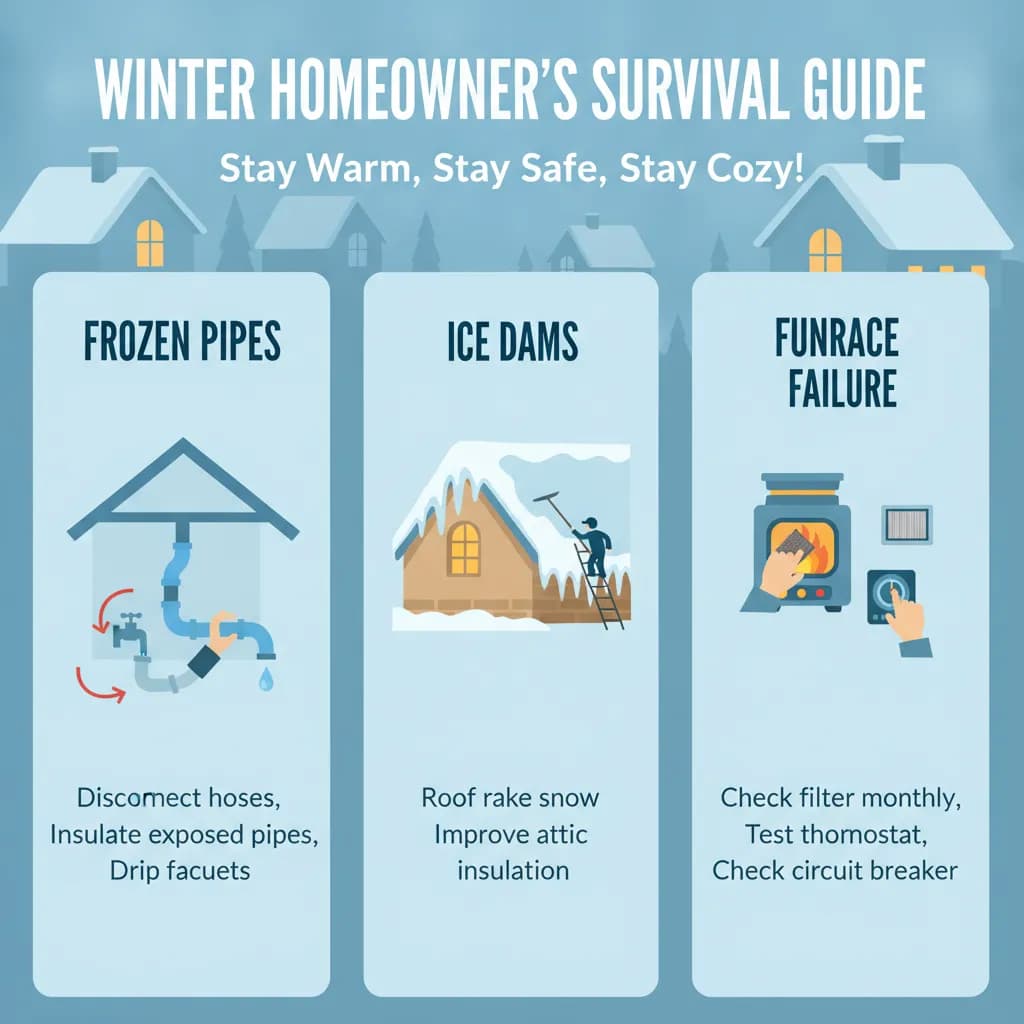
Congratulations! You survived the whirlwind of buying your first home. You’ve unpacked the boxes, figured out which light switch goes where, and maybe even met the neighbors. But as the temperature drops and the first snowflakes fly, a new kind of anxiety can set in. Winter is different when you’re the one responsible for the roof, the pipes, and the heat.
Don’t worry. While winter presents unique challenges, a little knowledge goes a long way. This isn’t a list to scare you; it’s a playbook to empower you. Let's tackle the three biggest winter worries head-on so you can spend less time stressing and more time enjoying your cozy new home.
A burst pipe is one of a homeowner's worst nightmares, capable of causing thousands in water damage. The scary part? It's not the ice itself that breaks the pipe. It's the intense water pressure that builds up between the ice blockage and a closed faucet.
Your Prevention Plan:
Emergency Action: If you turn on a faucet and only a trickle (or nothing) comes out, you may have a frozen pipe.
Those picturesque icicles hanging from the roof can be a sign of a very ugly problem: an ice dam.
Here's how it happens: Heat from your home escapes into your attic, warming the underside of the roof and melting the snow. This water runs down the roof until it hits the cold, unheated eaves (the edges of the roof), where it refreezes. This process repeats, creating a literal dam of ice. Water then pools behind the dam, seeps under your shingles, and leaks into your attic and walls.
The Short-Term Fix: After a heavy snow, use a long-handled roof rake (you can get one at any hardware store) to carefully pull snow off the first 3-4 feet of your roof edge. This removes the source material for the ice dam. Never try to chip away at the ice itself, as you'll likely damage your shingles.
The Long-Term Solution: Ice dams are a symptom of a bigger issue—poor attic insulation and ventilation. Your goal should be to keep your attic as cold as the air outside. A future project might involve adding insulation and ensuring your soffit and ridge vents are clear and working properly.
There's nothing worse than waking up to a cold house in the middle of January. While some furnace issues require a professional, many common problems have simple fixes you can check yourself before making a costly service call.
Your Pre-Call Checklist:
And most importantly, test your carbon monoxide detectors. A malfunctioning furnace can be a source of this deadly, odorless gas. Make sure your detectors are working properly to keep your family safe.
Winter in your first home is a learning experience. By understanding how to prevent frozen pipes, manage ice dams, and troubleshoot your furnace, you're not just protecting your house—you're building the confidence that transforms a new homeowner into a seasoned pro.
Feeling overwhelmed by all the new to-dos? You're not alone. The chaos of homeownership is exactly why we built Properteer. Instead of relying on sticky notes and scattered memories, Properteer organizes everything about your home in one place. It uses AI to create a personalized maintenance calendar, reminding you to check your furnace filter or insulate those pipes before the cold hits. It even helps you budget for long-term replacements, like a new, more efficient furnace, so a sudden failure never becomes a financial crisis.
Let Properteer be your home's new brain. Stop reacting to problems and start preventing them. Sign up for free at Properteer.ai and turn winter anxiety into winter confidence.
Q: What are the first signs of a frozen pipe? A: The most common sign is turning on a faucet and getting only a weak trickle of water, or no water at all. You might also see frost on the outside of an exposed pipe.
Q: Is it safe to remove a large ice dam myself? A: Using a roof rake to remove fresh snow is generally safe and a great preventative measure. However, trying to chip away or melt a large, established ice dam can be dangerous and can easily damage your roof and gutters. For significant ice dams, it's best to call a professional roofing or ice removal service.
Q: How often should I really change my furnace filter in the winter? A: The standard recommendation is every 90 days for a basic 1-inch filter. However, during heavy use in the winter, it's wise to visually inspect it every 30 days. If you have pets, live in a dusty area, or run your system constantly, you'll likely need to change it more often. If it looks grey and clogged, change it.