Posted On: Oct 23, 2026
Author: Jason H.
home-maintenance troubleshooting diy-tips
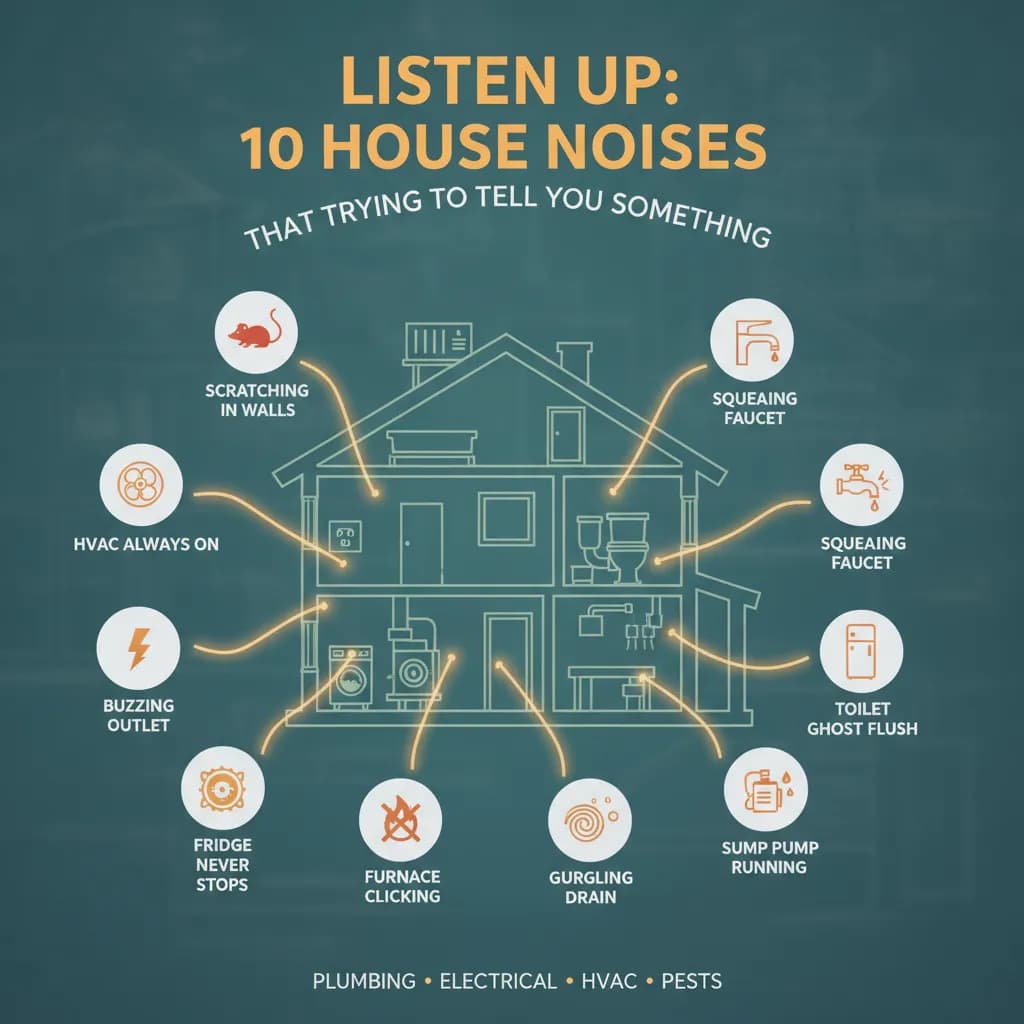
As a new homeowner, you quickly become attuned to the unique symphony of sounds your house produces. The gentle hum of the fridge, the click of the thermostat, the groan of the stairs—it all becomes part of the background music of your life. But what happens when a new, unfamiliar sound joins the chorus?
A sudden bang, a persistent buzz, or a faint scratching can trigger a wave of anxiety. Is it nothing? Or is it a five-figure repair bill in the making?
Good news: Your house isn't haunted. It's communicating. Learning to interpret these sounds is one of the most powerful skills a homeowner can develop. It allows you to catch small problems before they become catastrophic failures. Here are 10 common house noises and what they're trying to tell you.
The Sound: A single, loud BANG or a series of bangs coming from your walls when you shut off a faucet, the washing machine, or the dishwasher.
The Message: This is a classic case of "water hammer." When water flowing quickly through your pipes is forced to a sudden stop, it creates a shockwave that slams against the pipe walls and valves.
The Risk: While it might just seem like an annoyance, that repeated shockwave puts immense stress on pipe joints, fittings, and appliances, leading to leaks and costly water damage over time.
The Plan: For a minor case, you can try securing loose pipes. For persistent or loud hammering, a plumber can install water hammer arrestors—small devices that absorb the shock—at key points like your washing machine hookup.
The Sound: In the quiet of the night, you hear your toilet briefly run as if it's just been flushed, but no one is in the bathroom.
The Message: Your toilet has a slow, silent leak from the tank into the bowl. When enough water has leaked out, the fill valve kicks in to refill the tank.
The Risk: This is a massive water-waster. A single leaky toilet can waste hundreds of gallons a month, running up your water bill.
The Plan: This is one of the easiest and cheapest DIY fixes. The culprit is almost always a worn-out rubber flapper at the bottom of the tank. A replacement costs less than $10 and takes about 15 minutes to install.
The Sound: A low, persistent buzzing or crackling sound coming from an electrical outlet, switch, or your main breaker panel.
The Message: DANGER. STOP WHAT YOU ARE DOING. This is not a sound to ignore or procrastinate on. It almost always indicates loose wiring, an overloaded circuit, or a failing device.
The Risk: A major fire hazard. The buzzing is often the sound of electricity arcing (jumping) across a gap, which generates intense heat.
The Plan: Immediately go to your electrical panel and shut off the breaker for that circuit. Do not use the outlet or switch. Call a licensed electrician right away.
The Sound: A loud squealing or whistling noise when you turn on a specific faucet.
The Message: This is often caused by a worn-out washer or gasket inside the faucet handle. As water is forced past the degraded rubber, it vibrates and creates the squeal.
The Risk: Primarily an annoyance, but it's a sign that the faucet's internal components are wearing out and a drip is likely to follow.
The Plan: Another simple DIY fix. Turn off the water supply to the sink, disassemble the faucet handle, and replace the small washers and O-rings inside.
The Sound: The low hum of your refrigerator's compressor seems to be on all the time, instead of cycling on and off.
The Message: Your fridge is working too hard to stay cool. The two most common culprits are dirty condenser coils or a faulty door seal.
The Risk: Sky-high energy bills and a shortened lifespan for your refrigerator. A compressor that never rests will burn out much faster.
The Plan: First, pull the fridge out and clean the condenser coils with a vacuum and brush. They are often located on the back or underneath. Next, check the door seal with the "dollar bill test." Close the door on a dollar bill; if you can pull it out with no resistance, the seal is bad and needs to be replaced.
The Sound: You hear the telltale click of your furnace trying to start, but the main burners never roar to life.
The Message: Something is preventing ignition. It could be a dirty flame sensor, a faulty ignitor, or a problem with the gas supply.
The Risk: No heat when you need it most. While often not an immediate danger (modern furnaces have safety shutoffs), it's a problem that will only get worse.
The Plan: You can try a simple fix yourself: turn the furnace off, locate the flame sensor (a small metal rod), and gently clean it with light-grade steel wool. If that doesn't work, it's time to call an HVAC professional.
The Sound: Faint scratching, scurrying, or chewing sounds, especially at night.
The Message: You have uninvited guests. Mice, squirrels, raccoons, or other pests have found a way into your walls, attic, or crawlspace.
The Risk: Significant. Pests can chew through electrical wiring (a fire hazard), destroy insulation (raising energy costs), and damage the structural integrity of your home.
The Plan: Act fast. Contact a pest control company to identify and remove the animals. Then, the real work begins: find and seal every possible entry point around your home's foundation, siding, and roofline.
The Sound: When you flush a toilet or drain a sink, you hear a gurgling sound coming from a different nearby drain (like the tub or shower).
The Message: You have a partial clog in a drain line or, more likely, a blocked plumbing vent stack. The vent allows air into the system so water can flow out smoothly. When it's blocked (by leaves, a bird's nest, etc.), the draining water pulls air from other drains, causing the gurgle.
The Risk: A precursor to a full-blown, messy sewage backup.
The Plan: If it's a single drain, try a plunger or a drain snake. If it's happening across multiple fixtures, the vent stack is the likely culprit. You may need to call a plumber to safely clear it from the roof.
The Sound: Your furnace or AC isn't actively heating or cooling, but you can still hear air blowing from your vents constantly.
The Message: This could be simple or serious. The simple cause is that your thermostat's fan setting has been switched from "AUTO" to "ON." The more serious cause is a stuck fan relay in your HVAC unit.
The Risk: If it's just the setting, you're wasting a significant amount of electricity. If it's a stuck relay, it's a sign of a failing component that needs professional repair.
The Plan: First, check your thermostat. Make sure the fan is set to "AUTO." If it is, and the fan is still running, turn the system off at the breaker and call an HVAC technician.
The Sound: It's not raining, but you hear your sump pump gurgling or running intermittently.
The Message: Water is entering the sump pit from somewhere. This could be a high water table, but it could also signal an issue with your home's grading, a leaky pipe, or an improperly configured drain line.
The Risk: The pump is wearing out faster than it should, and it's a warning sign that your water management system isn't working correctly before the next big storm.
The Plan: Investigate where the water is coming from. Check that your gutters and downspouts are directing water far away from your foundation. If you can't find the source, it's worth having a plumber or water-proofer take a look.
Identifying a strange noise is the first critical step. But what's next? Trying to remember which professional to call, guessing at the repair cost, and figuring out how to budget for it is where most homeowners feel overwhelmed.
This is where you turn anxiety into action. With the Properteer app, you can log the issue the moment you hear it. Our AI can help you understand the potential problem and its urgency. You can schedule maintenance reminders, track repair quotes, and, most importantly, build a real financial plan. Properteer helps you budget for both the unexpected repair of that gurgling drain and the eventual replacement of your entire HVAC system.
Stop letting your home's noises scare you. Start using them as the valuable data they are. Download Properteer today and transform from a worried listener into a confident homeowner who has a plan for everything.
Q: What's the most dangerous house noise?
A: Electrical buzzing from outlets, switches, or your breaker panel is the most immediate danger, as it signifies a serious fire risk. If you hear it, turn off the power to that circuit at the breaker and call a licensed electrician immediately.
Q: My pipes bang loudly when I turn off the washing machine. What is that?
A: This sound is called "water hammer." It happens when fast-flowing water stops suddenly, creating a shockwave. While common, it puts a lot of stress on your plumbing joints and can lead to leaks over time. A plumber can install an inexpensive device called a water hammer arrestor to fix it.
Q: Why does my toilet seem to run for a few seconds by itself?
A: This is often called a "ghost flush." It's usually caused by a slow leak from the tank into the bowl, typically from a worn-out flapper. It's a very simple and cheap DIY fix that can save a surprising amount of money on your water bill.
Q: Is it normal for my refrigerator to be running all the time?
A: No, a constantly running refrigerator is working too hard and wasting energy. The most common causes are dirty condenser coils on the back or bottom of the unit (which you can clean) or a bad door seal that's letting cold air escape.