Posted On: Jun 1, 2026
Author: Jason H.
garage-maintenance home-safety diy-home-repair
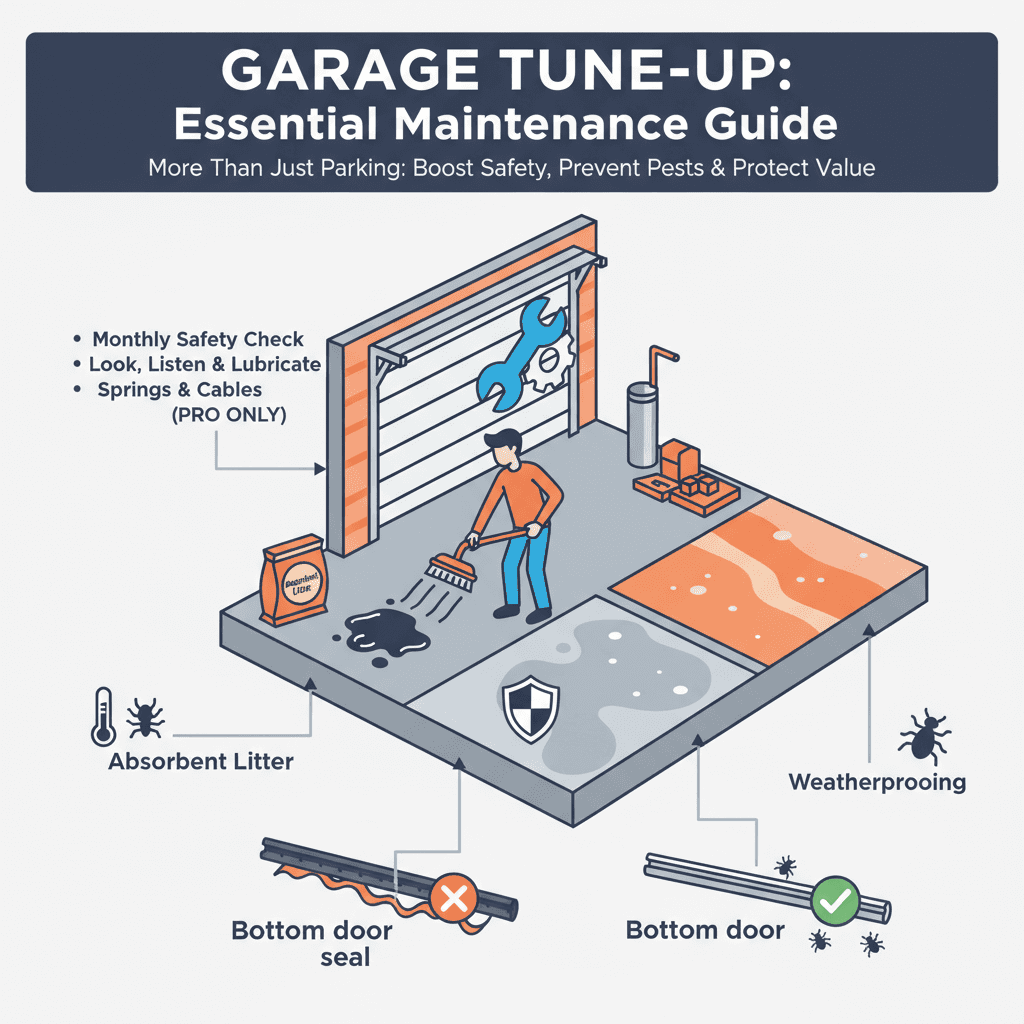
For many of us, the garage isn't just a place to park the car. It's the real front door, the workshop, the storage locker, and the last line of defense against the elements. But with all that heavy lifting, it's often the most neglected space in the home. We tend to ignore it until the door groans to a halt on a freezing morning or we spot an unwelcome eight-legged visitor in the corner.
Proactive garage maintenance is one of the smartest things a homeowner can do. It's not just about keeping things tidy; it's about safety, security, and preventing small annoyances from escalating into four-figure repair bills. Here’s your essential checklist to give your garage the tune-up it deserves.
That massive door is the largest moving part of your home. Keeping it in safe, working order is non-negotiable.
1. The Monthly Safety Check (Don't Skip This!)
Your garage door opener has built-in safety features that need regular testing. These two tests take less than five minutes and could prevent a serious accident.
WARNING: Never attempt to adjust or repair the large springs (torsion springs) above the door or the cables on the sides. They are under extreme tension and can cause serious injury or death. This is a job strictly for professionals.
2. Look, Listen, and Lubricate
Once a season, give your door a quick inspection.
Your concrete garage floor puts up with a lot—leaky cars, road salt, and dragged-in grime. A little care goes a long way in preventing cracking and pitting.
An unsealed garage is an open invitation for drafts, moisture, and pests.
Giving your garage a little attention a few times a year is a powerful proactive step. You’ll not only extend the life of your garage door and protect your floor but also enhance your home's security and energy efficiency.
Feeling like this is a lot to remember? You're not alone. The garage is just one part of a complex system you're now in charge of. Juggling seasonal tasks, budgeting for repairs, and planning for long-term replacements can be overwhelming.
That's where Properteer comes in. Our app turns home maintenance from a source of anxiety into a simple, manageable plan. You can log every component of your home—from your garage door opener to your furnace—and Properteer will create a customized maintenance schedule with smart alerts, so you never forget a critical task again.
Wondering how much to save for a new garage door or opener? Properteer helps you budget for those big-ticket items by tracking the lifespan of your home's systems. You can stop reacting to expensive surprises and start building a confident financial plan for your home's future.
Visit Properteer.ai today to transform your home maintenance and protect your biggest investment with ease.
Q: How often should I lubricate my garage door?
A: It's a good practice to lubricate the moving parts of your garage door (rollers, hinges, springs) every 3-4 months, or whenever you notice it getting noisy. Use a silicone or white lithium grease spray, not WD-40.
Q: How do I test my garage door's safety reverse feature?
A: There are two main tests. First, place a 2x4 board flat on the ground in the door's path. The door should reverse upon contact. Second, as the door is closing, wave an object through the path of the photo-eye sensors near the bottom of the track. The door should immediately reverse and open.
Q: What's the best way to clean an oil stain on my garage floor?
A: For fresh stains, cover them with clay cat litter, sawdust, or baking soda to absorb as much oil as possible. Let it sit for several hours, then sweep it up. For older, set-in stains, you'll need a commercial concrete degreaser and a stiff-bristled brush.
Q: Why is the weatherstripping at the bottom of my garage door so important?
A: The bottom seal, or gasket, is crucial for several reasons. It creates a seal against the floor to keep out rain, snow, and drafts, which improves energy efficiency. It also prevents insects, rodents, and other pests from easily entering your garage.