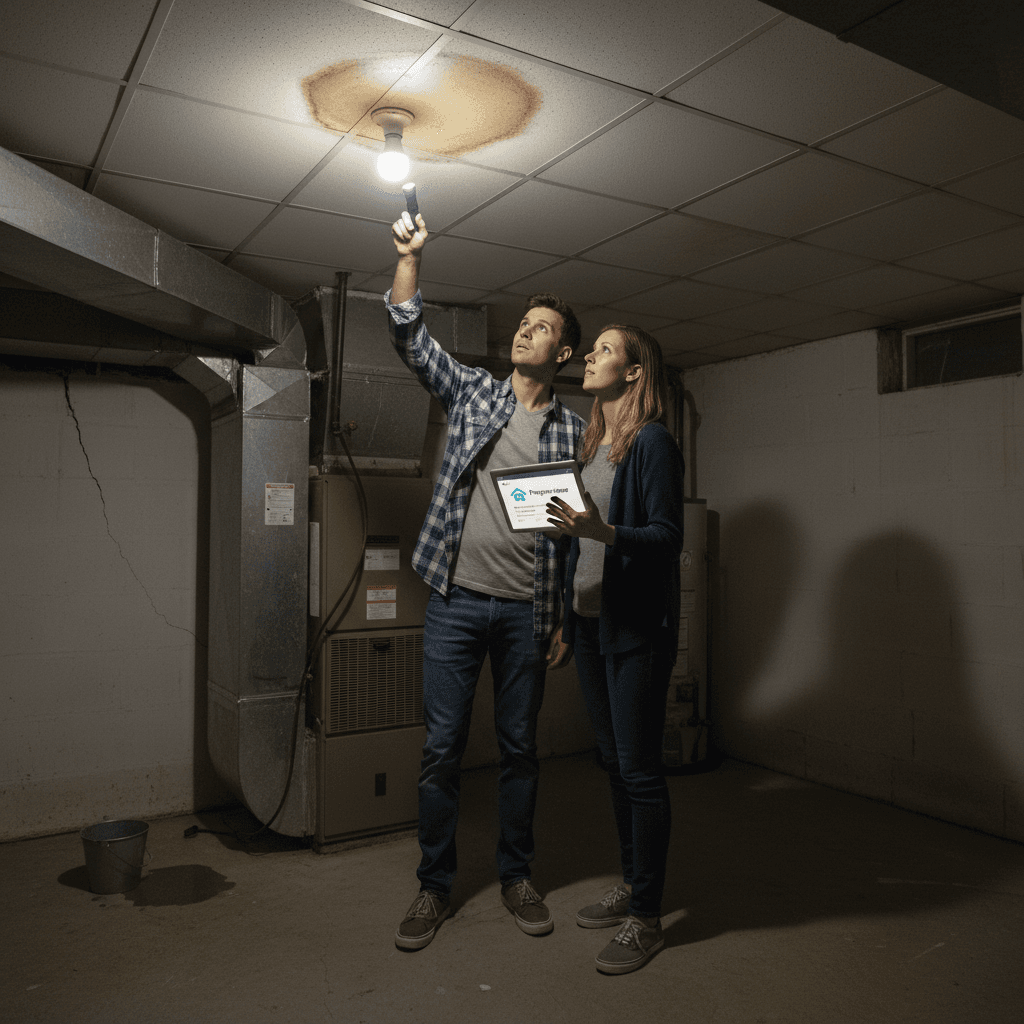
That Sinking Feeling...
It’s the coldest night of the year, and you wake up shivering. The furnace is silent. Or maybe you're rushing to get ready for work, and the shower runs ice-cold. A major home system has just failed, and your day (and your budget) is officially ruined.
For many homeowners, especially first-timers, these moments feel like they come out of nowhere. But the truth is, your home rarely stays silent before a disaster. It whispers, knocks, and creaks, giving you subtle clues that trouble is brewing. Learning to interpret this language is one of the most valuable skills you can develop as a homeowner.
Ignoring these warnings is like hitting 'snooze' on a fire alarm. It might give you temporary peace, but the problem is only getting worse. By learning to spot the signs, you can shift from panicked, reactive repairs to proactive, planned replacements. Here are five critical warning signs your home is sending you.
1. The HVAC System is Making a Racket
Your furnace and air conditioner are the workhorses of your home's comfort, but they shouldn't sound like a heavy metal band's practice session.
Listen for:
- Banging or Popping: This often happens shortly after the furnace kicks on. It could be a dirty burner or, more commonly, your metal ductwork expanding and contracting. While the latter isn't a critical failure, loud, consistent banging could indicate a more serious issue.
- Squealing or Screeching: A high-pitched squeal is often the sound of a problem with the blower motor or a belt that's about to fail. Ignoring this can lead to the entire motor seizing up—a much more expensive fix.
- Grinding: This is a serious red flag. A grinding noise means something is wrong with the motor's bearings. Shut the system down immediately and call a professional. Continuing to run it can cause catastrophic failure.
Also watch for: A sudden, unexplained spike in your energy bill. This is a classic sign that your HVAC system is losing efficiency and working harder to heat or cool your home, often a precursor to a breakdown.
2. The Plumbing is Protesting
Water damage is a homeowner's worst nightmare. Your plumbing system will often give you audible and visible clues before a small drip becomes a full-blown flood.
Listen and look for:
- Rumbling Water Heater: If your water heater sounds like it's boiling rocks or making a low rumbling noise, it’s likely due to sediment buildup at the bottom of the tank. This layer of mineral deposits forces the unit to work harder, reducing efficiency and eventually causing the tank to fail and leak.
- The Phantom Flusher: Do you hear water running when all the faucets and toilets are off? You likely have a hidden leak. It could be a silent toilet leak (a cheap fix) or something more sinister, like a leak in the pipes behind your walls or under your foundation (a very expensive fix). Don't ignore it.
- Discolored Water: Is brown or rusty water coming out of your hot taps only? This is a major sign that your water heater's tank is corroding from the inside out and may be close to failing.
3. The Roof is Shedding
A healthy roof is your home's first line of defense against the elements. When it starts to fail, the evidence often shows up in your gutters.
Look for:
- Asphalt Granules in Gutters: That coarse, black sand you find when cleaning your gutters is actually the protective granules from your asphalt shingles. A few granules are normal, but if you're seeing handfuls, it means your shingles are becoming brittle and losing their ability to protect your home from sun and rain. Your roof is on borrowed time.
- Curling or Cracked Shingles: Take a look at your roof from the ground. Are the edges of the shingles curling up? Do you see deep cracks or missing tabs? These are clear signs of an aging roof that is vulnerable to wind and water intrusion.
- Ceiling Stains: This is the most obvious—and most urgent—sign. A yellow or brown stain on your ceiling means water has already breached the roof, attic, and insulation. The leak has been active for a while, and the potential for mold and structural damage is high.
4. The Electrical System is Acting Spooky
Electrical problems are not a DIY situation. These warning signs are your cue to call a licensed electrician immediately.
Watch for:
- Frequently Tripping Breakers: A breaker's job is to trip and prevent an overload. But if the same breaker trips repeatedly, it's not a fluke. It means you're either overloading the circuit or there's a more dangerous fault in the system.
- Flickering or Dimming Lights: If your lights dim when you turn on the vacuum or microwave, it might just be a sign of an older electrical system. But if lights flicker constantly and randomly, it can indicate a loose connection somewhere in the wiring—a serious fire hazard.
- Buzzing Sounds or a Burning Smell: Any buzzing from an outlet, switch, or your breaker panel is a major alarm bell. If you smell a faint burning odor, especially near electrical components, it's a sign of a dangerous malfunction. Do not wait to get it checked out.
5. The Foundation is Sending You Cracks
Your home's foundation is its bedrock. Problems here can affect the entire structure.
Look for:
- Doors and Windows That Stick: Is a door that used to close smoothly now jamming in its frame? This can be a sign that the house is settling or the foundation is shifting, warping the structure.
- Stair-Step Cracks in Brick: On the exterior of your home, look for cracks in the brick or block that run diagonally in a stair-step pattern. This is a classic sign of foundation movement.
- Horizontal Cracks in the Foundation: While thin, vertical cracks can be from normal concrete curing, any horizontal crack in your basement walls or foundation slab is a serious structural concern. It indicates that external pressure (from soil or water) is causing the wall to bow inward.
From Anxious to Actionable
Reading this list might feel overwhelming. How are you supposed to remember to check for shingle granules, listen for a squealing motor, and inspect your foundation for cracks?
This is where smart home management comes in. Instead of relying on memory and reacting to emergencies, you need a system to stay ahead of the game. That's exactly why we built Properteer.
Properteer (https://properteer.ai) is your digital co-pilot for homeownership. It takes the guesswork out of maintenance by:
- Tracking Component Lifespans: We help you know the average age of your roof, water heater, and HVAC, so you're aware of which items are entering their replacement window.
- Sending Smart Maintenance Reminders: Forget to test your sump pump or flush your water heater? Properteer reminds you, helping you perform the very tasks that prevent these major failures in the first place.
- Budgeting for the Future: Our platform helps you understand and budget for future replacement costs. When your 15-year-old furnace starts making strange noises, you won’t have to panic about the cost—you’ll have a plan.
Stop letting your home surprise you. Start listening to what it's telling you and use Properteer to turn those warnings into a confident, actionable plan. Protect your investment and your peace of mind.
Quick Q&A: Understanding Your Home's Warnings
Q: What's the most common warning sign people ignore?
A: Small water leaks or minor ceiling stains. They seem insignificant at first, but they often point to a much larger, ongoing problem with your roof or plumbing. Ignoring them allows moisture to cause hidden mold growth and structural rot, turning a simple fix into a massive renovation project.
Q: My lights flicker sometimes. Is that always a big deal?
A: Not always. A brief flicker when a large appliance like an air conditioner or a laser printer kicks on can be normal on some circuits. However, if the flickering is constant, random, or happens in multiple rooms at once, it's a serious warning sign of a loose connection or a broader system issue. Call an electrician to be safe.
Q: How can I tell a serious foundation crack from a normal settling crack?
A: Generally, thin hairline cracks that run vertically up a drywall are from normal, harmless settling. The ones to worry about are large (wider than 1/4 inch), diagonal or 'stair-step' cracks in brick or concrete, and especially any horizontal crack in your foundation wall. These indicate significant structural pressure or movement.
Q: My energy bills are creeping up every month. What could that mean?
A: A steady increase in your utility bills is a huge red flag that a major system is failing. Most often, it's the HVAC system or water heater losing efficiency. It's having to run longer and harder to do the same job, which is a common sign of old age and impending failure. It could also mean you have failing seals on your windows, doors, or ductwork.