Properteer logoProperteerAI
  • Home
  • How It Works
  • Pricing
  • Realtors
  • Blog
  • Home
  • How It Works
  • Pricing
  • Realtors
  • Blog
Properteer logoProperteerAI

Consent Preferences
  • Do Not Sell or Share My Personal information
  • Limit the Use Of My Sensitive Personal Information
Additional Products
  • Mobile App (iOS & Android)
  • API
Resources
  • Blog
  • FAQ
  • Home Maintenance Checklist
  • Pricing
Company
  • Home
  • About Us
  • Contact Us
  • Privacy Policy
  • Cookie Policy


© 2026 Properteer. All rights reserved.
Terms & Conditions-Privacy Policy

Beyond the Smart Speaker: Devices That Protect Your Home

Posted On: Jul 28, 2026

Author: Jason H.

smart-home home-maintenance technology
Back to all blog posts
Your home is smart. Is your maintenance plan?

Your Home’s New Nervous System

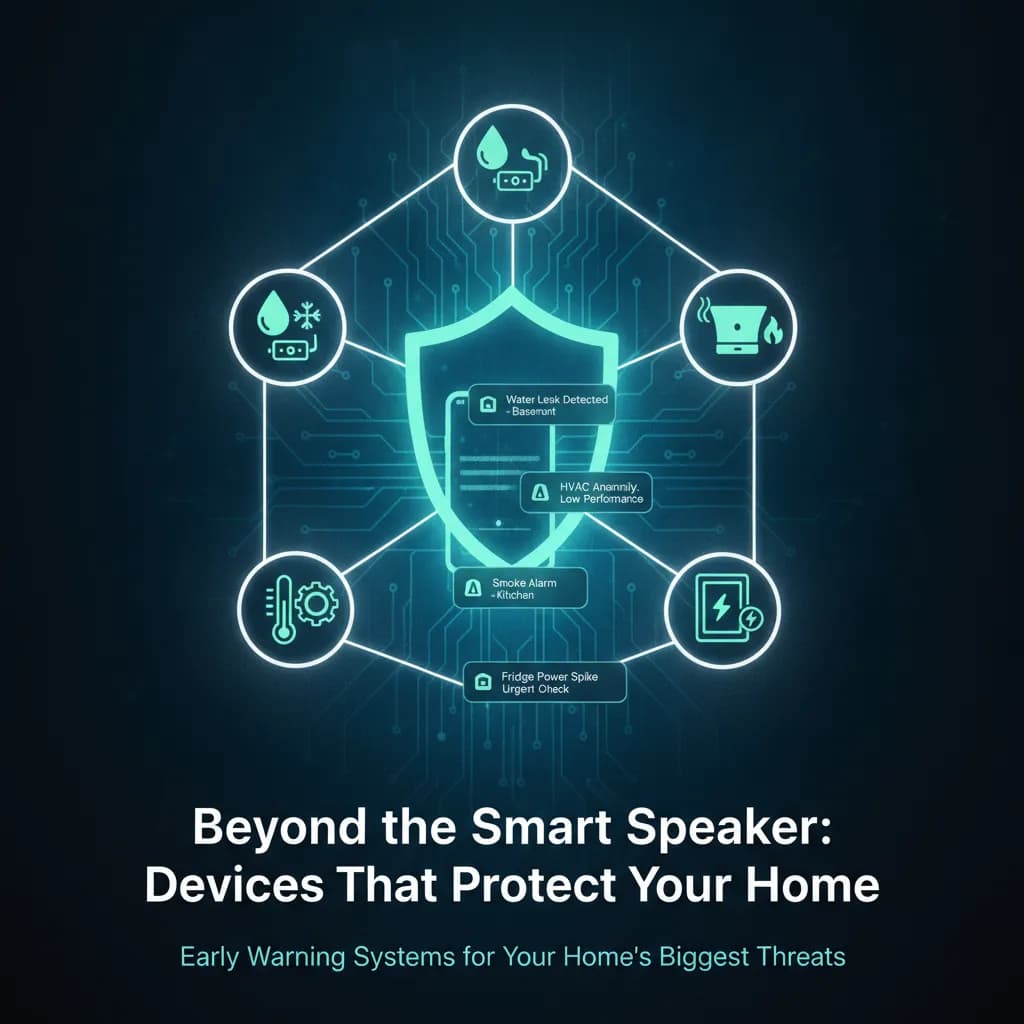
When you hear “smart home,” your mind probably jumps to voice-activated speakers, color-changing lightbulbs, or a thermostat you can control from your phone. And while those are great for convenience, a new class of smart devices is emerging that goes far beyond playing your favorite playlist. These are the protectors—the digital lookouts and early-warning systems that act as your home’s nervous system, sensing trouble long before you can.

For a homeowner, especially a new one, these devices aren't just cool gadgets. They’re a powerful investment in preventative maintenance, capable of turning a potential five-figure disaster into a simple, manageable notification on your phone.


The Must-Have Smart Protectors

Forget convenience; these are the devices focused on prevention and peace of mind. They stand guard over the systems most likely to cause catastrophic and expensive damage.

1. Smart Water Leak & Freeze Detectors

This is arguably the most important, and cheapest, smart upgrade you can make. A burst washing machine hose or a leaking water heater can cause tens of thousands of dollars in damage in mere hours. A smart water sensor is a small, battery-powered device you place in leak-prone areas.

  • Where to Place Them: Behind the washing machine, next to the water heater, under the kitchen and bathroom sinks, and in the basement near the sump pump.
  • How They Work: The moment they detect moisture, they send an instant alert to your phone. Some advanced systems can even be paired with a smart water shut-off valve that automatically closes your home’s main water line, stopping a flood in its tracks.
  • The Payoff: A $40 sensor can prevent a $10,000 water damage claim and the massive headache that comes with it. Many also detect freezing temperatures, warning you of a potential pipe burst before it happens.

2. Smart Smoke & Carbon Monoxide (CO) Alarms

Standard smoke detectors are life-savers, but they have one major flaw: they’re useless if no one is home to hear them. Smart alarms solve this by connecting to your Wi-Fi.

  • The Key Upgrade: If a smart alarm detects smoke or CO, it doesn't just blare—it sends a notification directly to your phone. You’ll know instantly if there’s a fire at your home, whether you’re at work or on vacation, giving you time to alert the fire department and save your home and pets.
  • Added Benefits: They also tell you which alarm is going off, self-test their batteries and sensors, and can often be silenced from your phone (for a burnt toast false alarm) without needing a stepladder.

3. Smart Thermostats (for Maintenance, Not Just Savings)

Yes, smart thermostats are famous for saving you money on your energy bills. But their real value for maintenance is in the data they collect. They are the brain of your most expensive home system: your HVAC.

  • Beyond Scheduling: Many modern smart thermostats track how long your HVAC system runs each day. They can send you monthly performance reports, remind you when it's time to change your air filter, and even alert you to potential problems. For example, if your AC runs for 6 hours straight but the temperature in your home barely drops, the thermostat can flag this as abnormal behavior, signaling it's time to call a technician before the system dies on the hottest day of the year.

4. Smart Electrical Panel Monitors

This is a more advanced upgrade, but for homeowners who want deep insight into their home’s health, it’s a game-changer. These devices are installed inside your electrical panel and monitor the energy usage of every circuit in your home.

  • How They Help: By tracking energy signatures, they can learn the normal patterns of your major appliances. If your refrigerator’s compressor suddenly starts drawing more power than usual, the system can alert you—a classic sign it's about to fail. This gives you time to shop for a replacement instead of coming home to a warm fridge and a thousand dollars of spoiled food.

Putting the 'Smart' in Your Home Maintenance Plan

These devices are your home's digital senses. They give you the alerts and the data you need to stop problems before they start. But data is only half the battle. An alert about a leaking pipe is a critical first step, but you still need a plan to deal with it. Knowing your HVAC is working too hard is great, but how do you budget for the eventual $8,000 replacement?

This is where technology meets planning. Smart devices provide the real-time warnings, but a system like Properteer provides the long-term strategy. Properteer acts as the brain that makes sense of these alerts. You can log a notification from your smart thermostat as a maintenance note, track the age and health of your HVAC system, and use our AI-powered tools to build a personalized budget for its eventual replacement.

By pairing smart-home protectors with the smart planning tools in Properteer, you move from being a reactive homeowner to a proactive one. You're not just waiting for things to break; you're building a complete, data-driven understanding of your home's health, value, and future costs. Get started today at Properteer.ai and turn your home's data into an actionable plan.