Posted On: Oct 29, 2026
Author: Jason H.
plumbing DIY preventative-maintenance
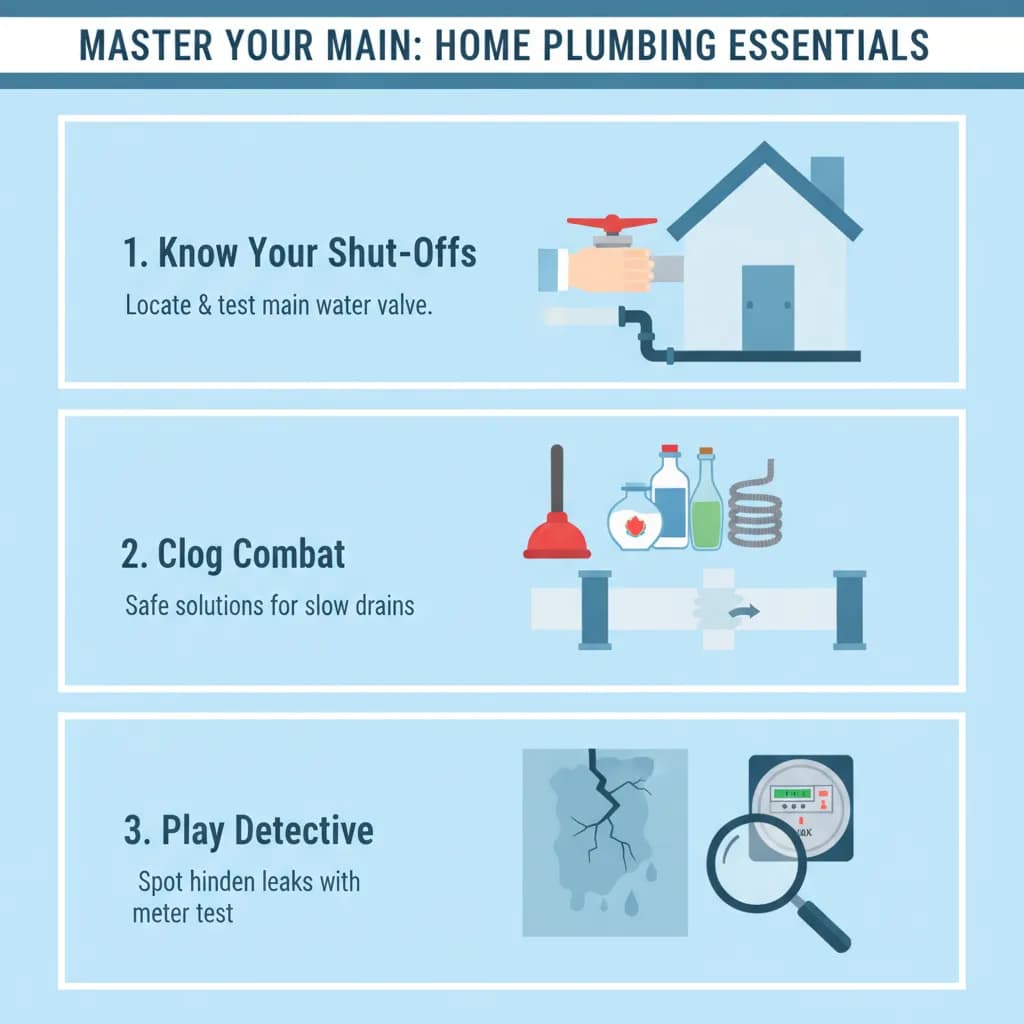
Of all the systems in your new home, plumbing can feel the most intimidating. It’s a hidden network of pipes, and the fear of a sudden leak or catastrophic backup is enough to cause any homeowner anxiety. But what if we told you that with a few key pieces of knowledge, you can move from feeling helpless to being in control?
Understanding the basics of your home’s plumbing isn’t about becoming a master plumber overnight. It’s about empowerment. It’s knowing exactly what to do in the first five minutes of a crisis to prevent thousands of dollars in damage, and how to perform simple maintenance that keeps those crises from ever happening.
Let’s walk through the three most crucial plumbing skills that will transform you into a confident homeowner.
Imagine this: a pipe under your sink bursts, and water is spraying everywhere. Panic sets in. What do you do? The answer is simple, if you've prepared.
Every homeowner's first plumbing task should be to locate and test the main water shut-off valve. This valve controls the flow of water to your entire house. Closing it will stop a catastrophic leak in its tracks, turning a disaster into a manageable repair.
Where to Look:
Once you find it, test it. Turn the valve (it might be a wheel-style gate valve or a lever-style ball valve) to the closed position. Then, turn on a faucet in your house—no water should come out. Turn the valve back on and make sure flow is restored. Doing this before an emergency ensures the valve isn't seized and that you can operate it confidently under pressure.
Bonus Tip: Also locate the individual shut-off valves for your toilets (on the wall behind the base) and sinks (underneath in the cabinet). For a minor, localized leak, these allow you to shut off water to a single fixture without cutting it off to the whole house.
A slow drain is one of the most common home maintenance headaches. The first instinct for many is to reach for a bottle of caustic chemical drain cleaner, but this can be a costly mistake. These harsh chemicals can damage older pipes and are often ineffective on tough clogs.
Here's your new, pipe-safe toolkit:
Prevention is your best weapon. Use drain strainers to catch hair and food, and never pour grease, coffee grounds, or so-called "flushable" wipes down your drains.
The most destructive water damage often comes from leaks you can't see. A slow drip inside a wall or under a floor can go unnoticed for months, leading to mold, rot, and immense repair bills. You just have to know what to look for.
Telltale Signs of a Hidden Leak:
The Water Meter Test: If you suspect a leak but can't find it, your water meter is your best friend. Here’s how to use it:
Knowing how to shut off your water, clear a simple clog, and spot a hidden leak are foundational skills that protect your home and your wallet. These proactive steps are the difference between a minor inconvenience and a major financial crisis.
But what about tracking the bigger picture? Remembering to flush your water heater annually to extend its life, budgeting for the eventual replacement of your main sewer line, or knowing the average lifespan of your sump pump—these are the tasks that separate good homeowners from great ones.
That's where Properteer transforms your approach. Instead of reacting to problems, Properteer helps you get ahead of them. Our app allows you to create a personalized maintenance schedule for your entire plumbing system, from the smallest faucet to the biggest pipes. We help you understand the true lifespan of these components and build a financial plan for their eventual replacement, turning anxiety about the unknown into the confidence of a well-prepared homeowner. Stop waiting for disaster to strike—start building your home's financial fortress today.
