Properteer logoProperteerAI
  • Features
  • How it works
  • Pricing
  • FAQ
  • Features
  • How it works
  • Pricing
  • FAQ
Properteer logoProperteerAI
[email protected]
Additional Products
  • Mobile App (iOS & Android)
  • For Property Managers
  • For Realtors
  • TrueCost Analysis™ Report
  • TrueCost Mortgage Calculator
  • API
Resources
  • Features
  • Blog
  • FAQ
  • Home Maintenance Checklist
  • Pricing
Company
  • Home
  • About Us
  • Contact Us
  • Privacy Policy
  • Cookie Policy
Consent Preferences
  • Do Not Sell or Share My Personal information
  • Limit the Use Of My Sensitive Personal Information
© 2026 Properteer. All rights reserved.
Terms & ConditionsPrivacy Policy

Stop Heating the Neighborhood: Your DIY Home Energy Audit

Posted On: Oct 26, 2026

Author: Jason H.

energy-efficiency home-maintenance budgeting
Back to all blog posts
Stop Heating the Neighborhood: Your DIY Home Energy Audit

That first high utility bill in a new home hits differently. You stare at the number, wondering how it’s possible. Is the furnace running constantly? Is the AC just for show? It’s a frustrating feeling of losing money to an invisible enemy. But what if you could fight back?

Welcome to the world of the home energy audit. It sounds complicated, but a basic DIY version is one of the most empowering things you can do as a homeowner. It's a detective mission to find exactly where your home is wasting energy—and your money. In about an hour, you can create a hit list of simple fixes that will make your home more comfortable and lower your monthly bills.

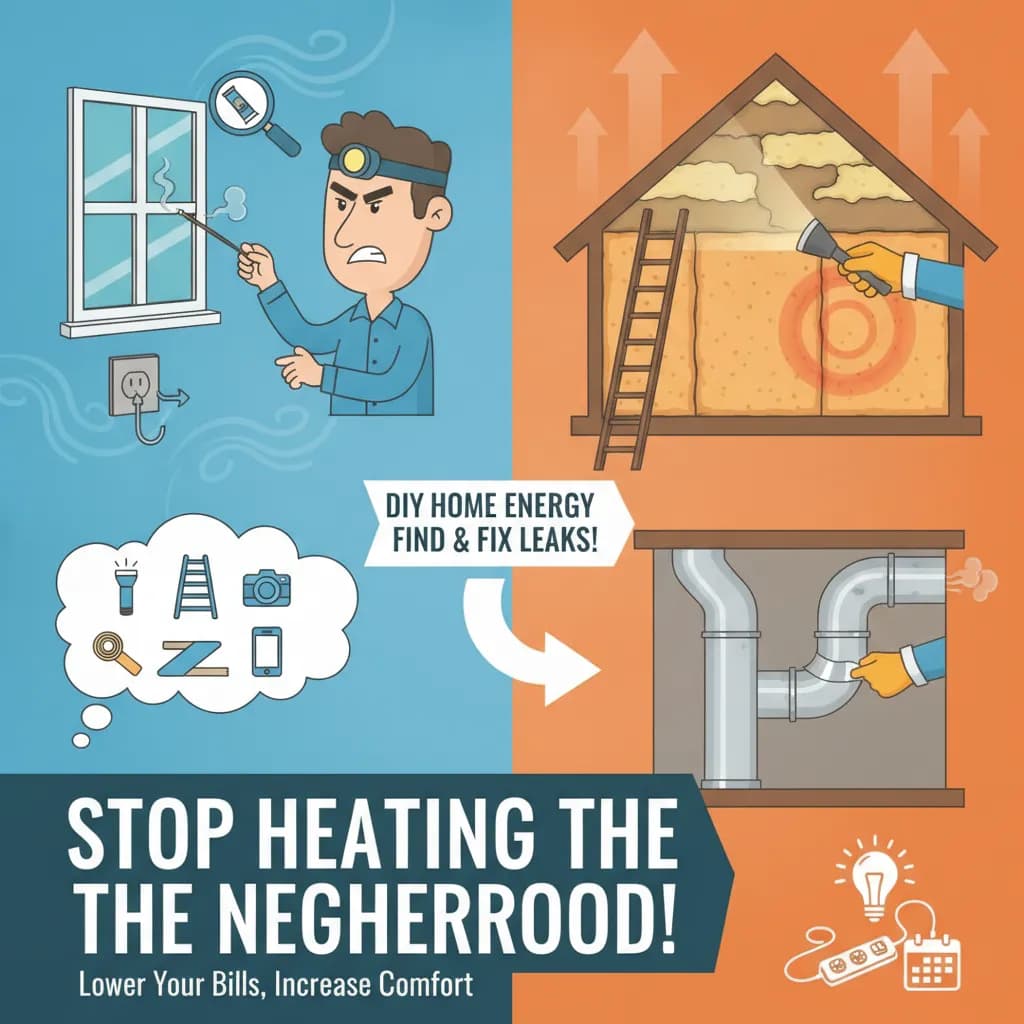
Your Energy Detective Toolkit

You don't need a lot of fancy equipment for this. Grab these simple items:

  • An incense stick or a candle
  • A flashlight
  • A step ladder
  • A camera (your phone is perfect)

The 4-Step Home Energy Audit

Wait for a cool, windy day for the best results, as it makes air leaks easier to spot. Turn off your furnace or AC fan so it doesn't interfere with your tests.

Step 1: The Great Air Leak Hunt

Air leaks (or infiltration) are the number one energy thief in most homes. Tiny cracks and gaps around windows, doors, and outlets can add up to the equivalent of leaving a window open all year round. Here’s where to hunt them down:

  • Windows & Doors: Carefully light your incense stick or candle. Slowly move it around the edges of your windows and exterior doors. If the smoke wavers, flickers, or gets blown into the room, you’ve found a leak. Make a note of it.
  • Electrical Outlets & Switches: Check the outlets and light switches on exterior walls. You’d be surprised how much air can travel through these small openings.
  • Plumbing & Vents: Check where pipes and wires enter your home from the outside, typically under sinks, behind the washer/dryer, and in the basement. Use your flashlight to get a good look.
  • The Attic Hatch & Recessed Lights: These are notoriously leaky spots. Check the seal on your attic hatch and look for gaps around recessed lighting fixtures in the ceiling below the attic.

The Fix: For most cracks and gaps, a simple tube of caulk or a roll of foam weatherstripping is an inexpensive, game-changing fix.

Step 2: The Insulation Investigation

Insulation is like a blanket for your house. If it’s thin, compressed, or missing in spots, your home is losing a massive amount of heat in the winter and gaining it in the summer. Your attic is the most important place to check.

  • Head to the Attic: Using your step ladder and flashlight, pop your head into the attic. Is the insulation spread evenly? Can you see the tops of the ceiling joists (the wooden beams on the floor)? If you can, you probably don’t have enough insulation.
  • Check for Gaps: Look for areas where the insulation is compressed, disturbed, or missing, especially around light fixtures or vents. Take pictures to remember where the problem spots are.

The Fix: Adding blown-in insulation to an attic is a common and highly effective upgrade that often pays for itself in energy savings within a few years.

Step 3: The HVAC & Ductwork Check-Up

Your heating and cooling system can’t work efficiently if its basic components are neglected or if the air isn’t getting where it needs to go.

  • The Filter: This is the easiest win. When was the last time you changed your HVAC filter? A clogged filter forces the system to work harder, wasting energy and potentially leading to damage. Check it and change it if it's gray and dusty.
  • Visible Ductwork: In your basement or crawlspace, look at the metal ducts. Are there any joints that have separated? Run your hand over the seams. Can you feel air escaping? Look for streaks of dust near seams—a telltale sign of a long-term leak.

The Fix: Do not use standard gray duct tape to seal ducts (ironically). Use specialized foil tape or duct mastic, a gooey substance you paint over the seams for a permanent, airtight seal.

Step 4: The Appliance & Lighting Audit

Finally, take a quick inventory of the things that use electricity every day.

  • Lighting: Are you still using old incandescent light bulbs? Switching to LEDs uses up to 80% less energy and they last years longer. Prioritize replacing bulbs in your most-used fixtures first.
  • Vampire Power: Look at all the electronics plugged in. Many of them draw power even when they’re “off.” Consider using smart power strips that cut the power to devices when they’re not in use.

Your Action Plan

Now you have a list of energy vampires in your home. Don't get overwhelmed! Prioritize them based on cost and effort:

  1. The Easy Wins (This Weekend): Change your HVAC filter, caulk drafty windows, and add weatherstripping to doors. These are low-cost, high-impact tasks.
  2. The Mid-Level Projects (This Season): Sealing your accessible ductwork and methodically swapping out light bulbs for LEDs.
  3. The Big Investments (Future Planning): Adding attic insulation or, eventually, upgrading old windows or HVAC systems. These require a budget and professional help.

You've just created an incredible roadmap for improving your home. But a list on a notepad can easily get lost, and it's tough to remember to re-check that leaky window next year. That’s where technology can turn your hard work into a long-term strategy.

Properteer is designed for exactly this. You can take your audit findings and instantly turn them into a digital home management plan. Log a task to Caulk the living room windows. Set a reminder to Change the HVAC filter every 90 days. Start a budget for Attic Insulation Project and see how it fits into your home's financial future. Instead of feeling overwhelmed, you gain control.

Stop letting your money leak out through the cracks. Take an hour to understand your home, then let Properteer help you turn that knowledge into a smart, cost-saving action plan.