Posted On: Sep 20, 2026
Author: Jason H.
Appliance Maintenance DIY Budgeting
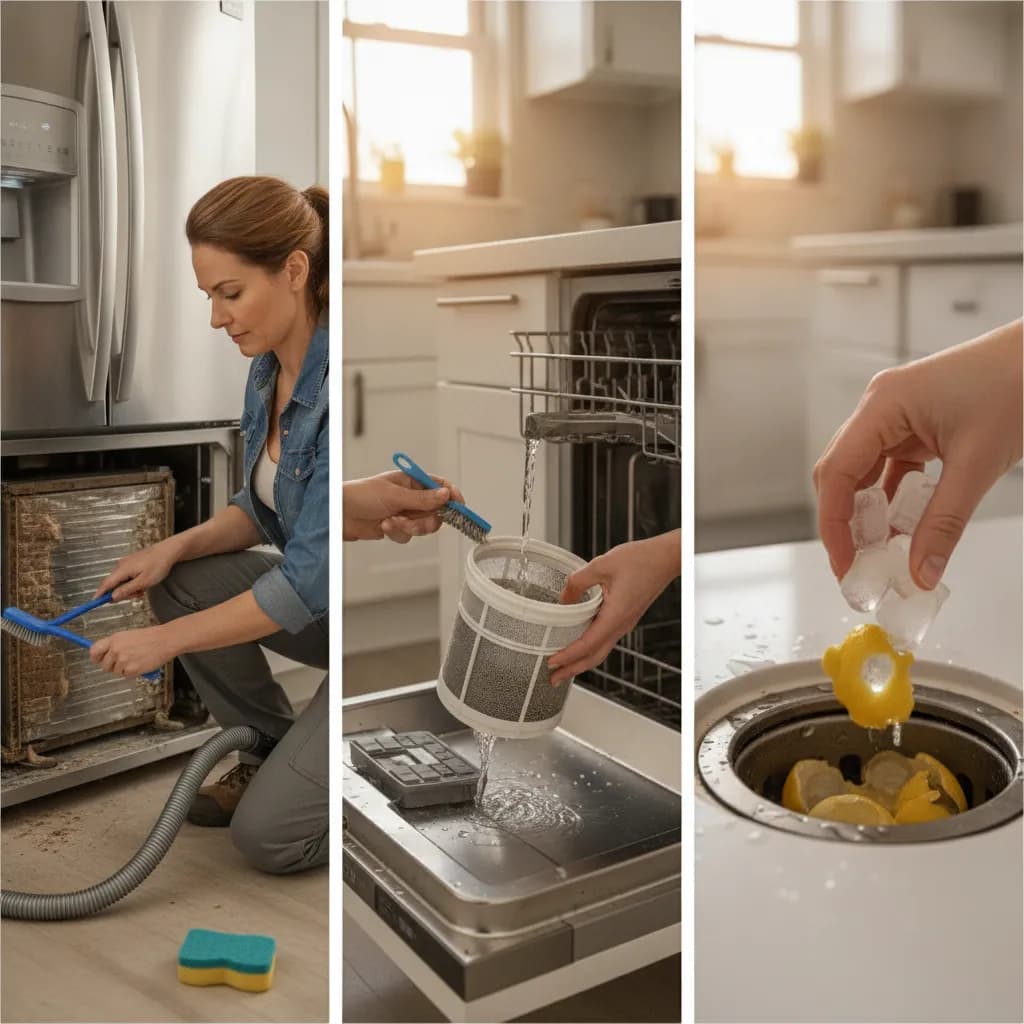
You probably have a reminder to get your car’s oil changed and another to service your HVAC system. But what about the appliances that work tirelessly for you every single day? Your refrigerator, dishwasher, and garbage disposal are the unsung heroes of your home, and a little neglect can lead to a lot of chaos: a flooded kitchen floor, a sky-high repair bill, or an emergency appliance shopping trip on a holiday weekend.
The good news? You don't need to be a master technician to keep them in prime condition. A few simple, incredibly cheap maintenance tasks can dramatically extend their lives, improve their efficiency, and save you thousands in the long run. Let's break down the quick fixes that offer the biggest return on your time.
That constant hum from your kitchen is the sound of your refrigerator's compressor, its hardest-working part. When it fails, you’re usually looking at a full replacement. The number one killer of compressors is heat, caused by neglect.
The Fix: Clean the Condenser Coils
Bonus Tip: The Dollar Bill Test
Check your refrigerator's door seals (gaskets) by closing the door on a dollar bill. If you can pull it out with zero resistance, your seal is leaking cold air. Clean the gaskets with warm, soapy water to remove sticky residue that might be preventing a tight seal.
Is your dishwasher leaving food particles on your “clean” dishes? Before you call a repair person, perform this simple check. The cause is almost always a clogged filter.
The Fix: Clean the Filter
Bonus Tip: De-gunk the Spray Arms
Check the tiny holes on the spinning spray arms. If they’re clogged with food or mineral deposits, poke them clear with a toothpick or a paperclip to ensure a powerful, effective spray.
A smelly, slow, or jammed garbage disposal is a common household headache. Most issues can be prevented by cleaning it properly and knowing what not to put down the drain.
The Fix: The Ice Cube and Citrus Peel Combo
The "Never Ever" List: Never put these down your disposal:
These small tasks are easy to forget, but they matter. Proactive maintenance is always cheaper, faster, and less stressful than reactive repair. The challenge for most homeowners isn't the difficulty of the tasks—it's remembering to do them.
That's where technology can lend a hand. Instead of trying to juggle a dozen mental notes about fridge coils, HVAC filters, and gutter cleaning, let Properteer do it for you. Properteer is an AI-powered app that builds a complete maintenance and replacement plan for your entire home—from the roof right down to the appliances in your kitchen. It sends you smart alerts for tasks like these, helps you budget for future replacements, and transforms the chaos of homeownership into a simple, confident plan. Stop reacting to disasters and start protecting your investment today.
Check out how Properteer can build your home's personalized plan at https://properteer.ai.
Q: How often should I clean my refrigerator coils?
A: At least once a year, or twice a year if you have pets that shed. This simple step can prevent the compressor—the heart of your fridge—from overheating and failing.
Q: What's the easiest way to clean a smelly dishwasher?
A: First, pull out and clean the filter at the bottom of the dishwasher—this is the source of most smells. For a deeper clean, run an empty, hot water cycle with a cup of white vinegar in a bowl on the top rack to break down grease and mineral deposits.
Q: Can I really sharpen my garbage disposal blades?
A: While garbage disposals have blunt impellers, not sharp blades, grinding a tray of ice cubes is highly effective. It forcefully knocks off built-up gunk, cleaning the impellers and allowing them to work more efficiently. Following up with citrus peels is a great way to deodorize it.
Q: Are these maintenance tasks really worth the time?
A: Absolutely. Spending 15-20 minutes on each appliance twice a year can prevent a $1,500 emergency refrigerator replacement or a $500 dishwasher repair bill. It's one of the highest-return-on-investment activities a homeowner can do.