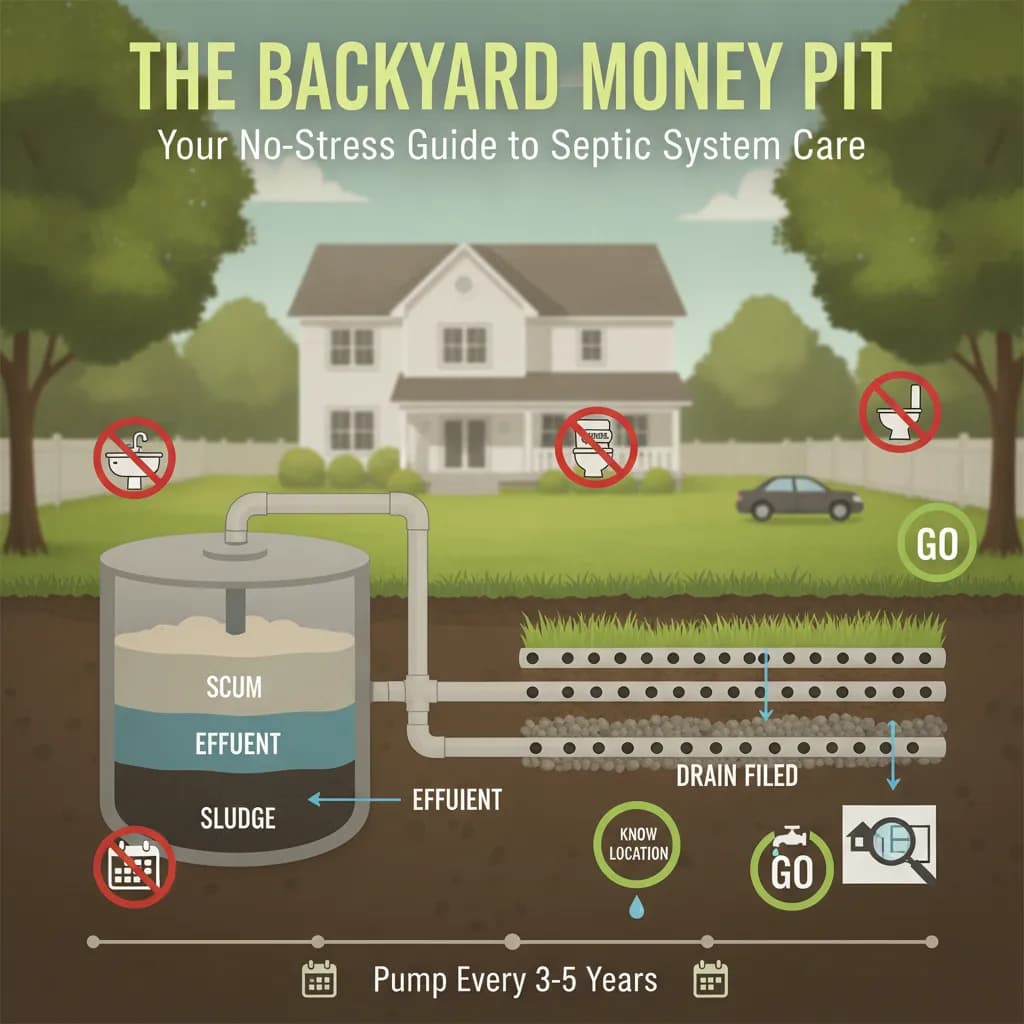
For millions of homeowners, the biggest and most mysterious piece of their home isn't inside it at all—it's buried in the backyard.
If you're new to a home with a septic system, you might feel a little anxious. It’s an expensive, essential component you can't see, and the horror stories of failures are the stuff of legend. But here’s the secret: a septic system isn’t complicated or scary. It's a simple, effective, and reliable machine for processing waste, as long as you understand the basic rules.
Forgetting about it, however, is one of the most expensive mistakes a homeowner can make. This guide will turn you from a septic novice into a confident owner who knows exactly how to protect their system—and their wallet.
How Does This Thing Even Work?
Think of your septic system as your own personal, miniature water treatment plant. It has two main parts:
- The Septic Tank: This is a large, buried container (usually concrete, fiberglass, or plastic) that all your home's wastewater flows into. Inside the tank, nature takes over. Solid waste settles to the bottom, forming a layer of sludge. Lighter waste, like grease and oil, floats to the top, forming a layer of scum. In the middle is a relatively clear liquid layer called effluent.
- The Drain Field (or Leach Field): The effluent flows out of the tank and into a series of perforated pipes buried in your yard. This network of pipes slowly releases the water into the surrounding soil, which acts as a natural filter, cleaning the water before it returns to the groundwater system.
That's it. Simple, right? The whole system works perfectly as long as the tank doesn't get too full of sludge and scum, and the drain field doesn't get clogged.
The Golden Rules: Your Septic System's Do's and Don'ts
Your daily habits have a huge impact on your septic system's health. Following these rules is 90% of the battle.
The DON'Ts (What to Keep OUT of the System):
- Grease, Fats, and Oils: Never pour cooking grease down the drain. It cools, solidifies, and is the #1 enemy of your pipes and drain field.
- "Flushable" Wipes & Feminine Products: There is no such thing as a septic-safe “flushable” wipe. They do not break down like toilet paper and are a leading cause of clogs and expensive service calls. The only things that should be flushed are human waste and toilet paper.
- Harsh Chemicals: Bleach, drain cleaners, and antibacterial soaps kill the beneficial bacteria in your tank that are responsible for breaking down waste. Use them sparingly or switch to septic-safe cleaning products.
- Food Waste: Avoid using a garbage disposal if you can. It adds a massive amount of solid waste to your tank, meaning you'll have to get it pumped much more frequently.
- Heavy Objects: Never drive, park, or build anything over your tank or drain field. The weight can damage the pipes or tank and compact the soil, preventing the drain field from working properly.
The DO's (What You Should Do):
- Pump it Regularly: This is the single most important maintenance task. Have a professional pump out the sludge and scum every 3 to 5 years. The exact frequency depends on your tank size and the number of people in your household.
- Conserve Water: The less water you send to the system, the better it performs. Fix leaky faucets, install efficient fixtures, and spread out laundry loads over several days rather than doing them all at once.
- Know Your System's Location: Be aware of where your tank and drain field are so you can protect them from damage.
Spotting Trouble Before It's a Catastrophe
Your system will usually give you warning signs before a complete failure. If you notice any of these, call a septic professional immediately.
- Bad Odors: Persistent rotten egg or sewage smells in your yard or coming from your drains.
- Slow Drains or Backups: If multiple drains in your house are slow or you hear gurgling sounds, it could be a sign your tank is full.
- Pooling Water: Any standing water or damp spots on the ground near your septic tank or drain field is a major red flag.
- Suspiciously Green Grass: Is there one patch of your lawn over the drain field that's inexplicably lush and green, even in dry weather? That's a classic sign that effluent is surfacing instead of being absorbed by the soil.
A Simple Plan for a Healthy System
Owning a septic system doesn't have to be a source of stress. A little bit of knowledge and a simple, proactive plan can prevent almost every major problem.
But how do you remember to schedule a pumping in three years? How do you budget for a service that costs several hundred dollars? This is where planning becomes crucial.
A septic failure is a true home emergency that can cost $10,000, $15,000, or more to fix. Proactive maintenance is the best insurance you can buy.
Properteer is designed to handle exactly this kind of long-term planning. You can log your septic system as a core component of your home, set a reminder for its next pumping in 3 years, and start budgeting a small amount each month for the expense. Properteer transforms a future crisis into a simple, manageable line item in your budget. It takes the guesswork and anxiety out of owning your home's most critical systems, so you can focus on enjoying it, not worrying about what's buried in the backyard.