Posted On: Nov 1, 2026
Author: Jason H.
windows home-maintenance budgeting
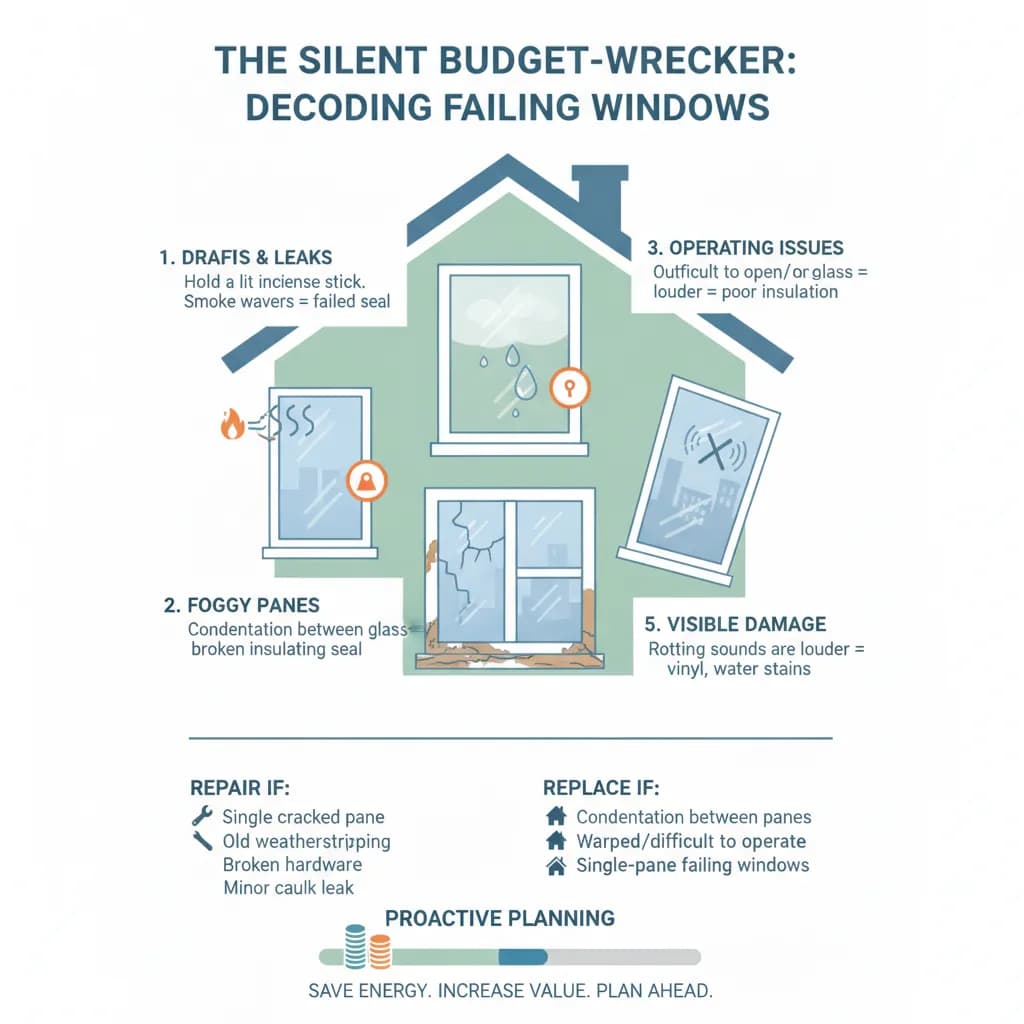
You feel it every winter—that persistent chill when you sit near the living room window. Or maybe you've noticed a hazy fog between the panes of glass that no amount of cleaning can remove. These aren't just minor quirks; they're your home’s way of telling you that a major component, your windows, are starting to fail.
Ignoring these signals is like ignoring the 'check engine' light on your car. It might seem fine for a while, but it’s often a warning of a much bigger, more expensive problem on the horizon. Your windows are a critical part of your home's thermal envelope, security, and value. Here's how to decode their warning signs and decide on your next move.
Keep an eye (and ear) out for these common symptoms. Spotting them early can give you valuable time to plan and budget.
1. You Feel a Draft This is the most obvious sign. If you can feel cold air seeping in during the winter or hot air in the summer, the seals around your window have failed. This air leakage forces your HVAC system to work overtime, directly impacting your energy bills.
2. Condensation Between the Panes If you see fog, moisture, or mineral deposits trapped between the layers of glass in a double- or triple-pane window, it means the seal has broken. The inert gas that was once there for insulation has escaped, and moist air has gotten in. At this point, the window has lost nearly all of its insulating value.
3. Difficulty Opening, Closing, or Locking Are you in a daily wrestling match with your window? Frames can warp, rot, or settle over time, causing balance issues that make them difficult to operate. This isn't just an annoyance; a window that doesn’t close or lock properly is a serious security risk.
4. A Sudden Increase in Outside Noise Modern windows are designed to dampen outdoor sounds. If you're suddenly hearing more traffic, neighborhood chatter, or barking dogs than you used to, it could mean the seals and insulating components are no longer doing their job.
5. Visible Damage and Decay Don't ignore what you can see. Take a close look at your window frames and sills.
Once you've identified a problem, you face a critical choice. Here’s a simple framework to help you decide.
Consider a REPAIR if:
These are typically smaller, less expensive fixes that can extend the life of an otherwise healthy window.
It's time to REPLACE if:
Replacing windows is a significant investment, with costs often ranging from $400 to over $1,500 per window. However, this investment pays you back over time with lower energy bills, improved comfort, and increased home value.
That sticker shock is real. The thought of replacing ten windows can be overwhelming, which is why most homeowners put it off until a small problem becomes a catastrophe. But it doesn't have to be that way. Proactive planning is your best defense against financial surprises.
This is where an intelligent home management tool like Properteer becomes essential. Instead of a vague worry in the back of your mind, you can turn it into an actionable plan. With Properteer, you can log the age and condition of your windows, set reminders to perform your annual draft and seal checks, and—most importantly—use the financial planning tools to start a dedicated savings fund for their eventual replacement.
Properteer helps you see the big picture, estimating the lifespan of your windows and helping you budget accordingly. Stop letting your home's needs surprise you. Take control with Properteer and transform anxiety into confidence, one planned project at a time.
Q: What's the 'fog' between my window panes? A: That's condensation, and it means the airtight seal on your double- or triple-pane window has failed. The insulating gas (like argon) has escaped, and the window is no longer energy efficient. The window itself will need to be replaced.
Q: How can I quickly check my windows for drafts? A: On a cool, windy day, close your window and hold a lit incense stick or a thin piece of tissue paper near the edges where the sash meets the frame. If the smoke or paper flutters, you have an air leak that needs sealing.
Q: Is it better to replace all my windows at once or one at a time? A: Replacing one failed window can be a good short-term fix. However, if most of your windows are the same age and showing similar wear, you can often get a better price per window and ensure a consistent look and performance by replacing them all as a single project.
Q: How long should my home's windows last? A: This depends heavily on the material and quality. Vinyl windows typically last 20-30 years, while well-maintained wood or fiberglass windows can last 40 years or more. Environmental factors and regular maintenance play a huge role.
