Posted On: Jul 16, 2026
Author: Jason H.
hvac maintenance home-repair
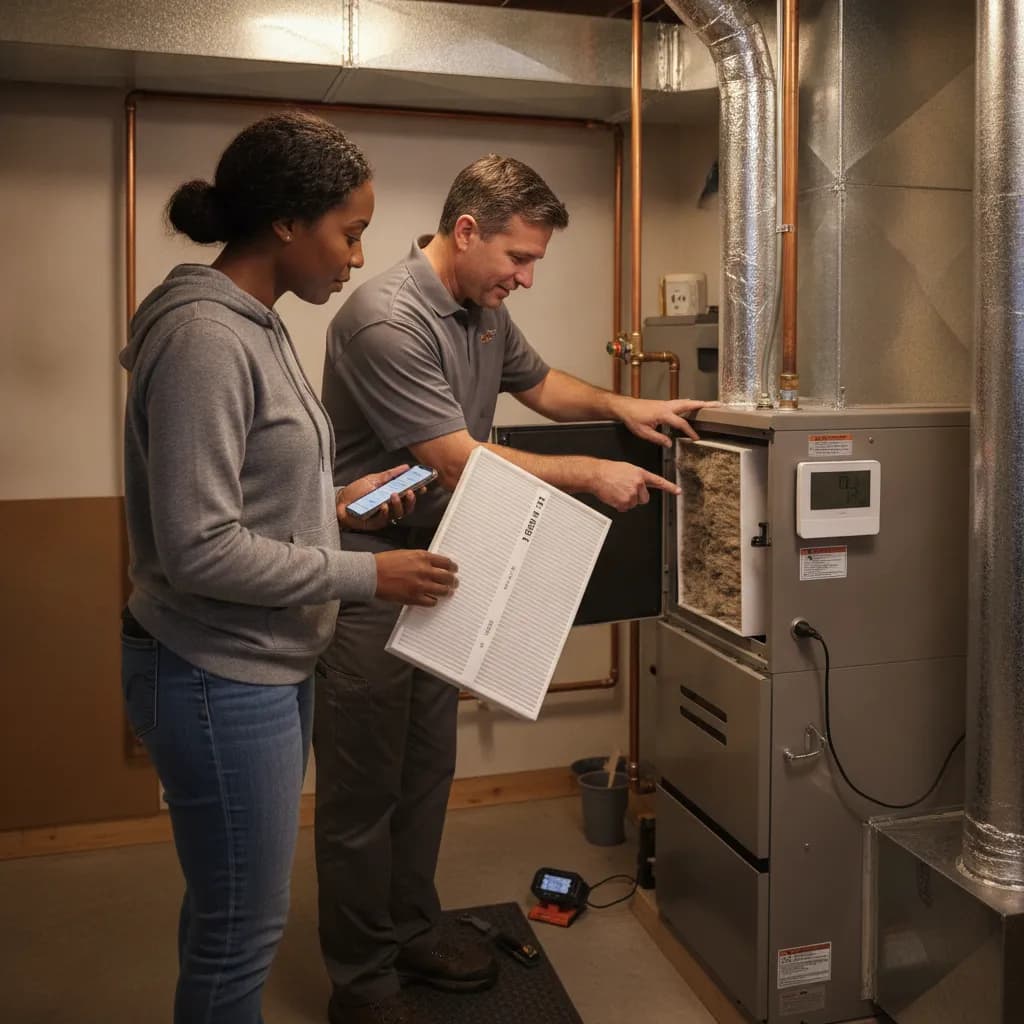
For a first-time homeowner, the collection of humming, whirring machinery in the basement or utility closet can feel like a total mystery. That's your HVAC system, and it's the quiet, powerful heart of your home's comfort, safety, and energy budget. Ignoring it is one of the costliest mistakes a homeowner can make, leading to surprise breakdowns on the coldest winter night or hottest summer day, and repair bills that can drain your savings.
But it doesn't have to be intimidating. Understanding the basics of how your HVAC system works, what it needs from you, and how to plan for its future is the ultimate homeowner power move. This guide will walk you through everything, from identifying its core parts to creating a smart savings plan for its eventual replacement. Let's demystify the machine and put you in control of your home's climate and your budget.
HVAC stands for Heating, Ventilation, and Air Conditioning, and it is the comprehensive system responsible for controlling the temperature, humidity, and purity of the air inside your home. Its primary job is to keep you comfortable by providing heated air in the winter and cooled air in the summer. But the “V” for ventilation is just as important; the system circulates air, removes contaminants through filters, and helps manage indoor humidity levels. A well-functioning HVAC system is a cornerstone of a healthy and comfortable living environment, impacting everything from your sleep quality to your monthly utility bills. For homeowners, understanding that this is more than just a furnace or an AC unit—it's an integrated system—is the first step toward proper maintenance and long-term savings.
Your HVAC system is composed of several key components working together, typically split between an indoor and an outdoor unit. The furnace, usually located in a basement, garage, or utility closet, is responsible for heating the air. The air conditioner's condenser unit sits outside your home and is responsible for cooling. The evaporator coil, which is often attached to the furnace, works with the condenser to cool the air. A heat pump, if you have one, is an all-in-one outdoor unit that can both heat and cool your home. The ductwork is the network of channels that distributes the conditioned air throughout your house. Finally, the thermostat acts as the central control panel, allowing you to set temperatures and communicate with the entire system. Knowing how to identify each of these parts is crucial for basic troubleshooting and maintenance.
A furnace generates heat for your home primarily through combustion, typically using natural gas, oil, or propane. When your thermostat signals for heat, it opens a gas valve in the furnace, and an electronic ignitor lights the burners inside a sealed combustion chamber. The heat produced by these burners warms a critical component called a heat exchanger. As the heat exchanger gets hot, the furnace's blower motor kicks on, pulling cool air from your home through the return ducts, pushing it over the hot heat exchanger, and then distributing the now-warmed air throughout your house via the supply ducts. The byproducts of combustion, like carbon monoxide, are safely vented out of your home through a flue pipe. This process repeats in cycles to maintain your desired temperature.
An air conditioner cools your home not by creating cold air, but by removing heat and humidity from the indoor air and transferring it outside. The process begins at the indoor evaporator coil, where a chemical refrigerant absorbs heat from the air being pulled in by the blower motor. This now-warm, gaseous refrigerant travels to the outdoor condenser unit. There, a compressor pressurizes the gas, and a large fan blows air over the condenser coils, releasing the absorbed heat into the outdoor air. As the refrigerant cools, it turns back into a liquid and cycles back to the indoor evaporator coil to repeat the process. This continuous cycle of heat absorption and release is what effectively lowers your home's indoor temperature and reduces humidity.
A heat pump is an incredibly efficient all-in-one HVAC system that provides both heating and cooling by moving heat, rather than creating it. In the summer, it functions exactly like a standard air conditioner, absorbing heat from inside your home and releasing it outside. The magic happens in the winter, when a reversing valve allows the system to run in reverse. It absorbs ambient heat from the outdoor air (even when it's cold) and transfers it inside to warm your home. Because it moves existing heat instead of generating it through combustion or electric resistance, a heat pump can be significantly more energy-efficient, especially in moderate climates. Many homes with heat pumps also have a secondary or emergency heat source, often an electric strip, for when outdoor temperatures drop too low for the heat pump to operate efficiently.
| Feature | Furnace & AC System | Heat Pump System | | :--- | :--- | :--- | | Primary Function | Separate units for heating and cooling. | Single unit provides both heating and cooling. | | Heating Method | Creates heat via combustion (gas/oil) or electric resistance. | Moves existing heat from the outside air to the inside. | | Energy Efficiency | Can be highly efficient, but combustion is less efficient than heat transfer. | Extremely energy-efficient for heating in moderate climates. | | Best Climate | Excellent for very cold climates where heating power is paramount. | Ideal for climates with mild winters and hot summers. | | Upfront Cost | Can be higher if purchasing two separate systems at once. | Generally a higher upfront cost for the single unit. | | Operating Cost | Gas furnaces are often cheaper to run than electric heat in cold climates. | Can significantly lower electricity bills compared to electric furnaces. |
Your thermostat is the central command interface for your entire HVAC system, telling it when to turn on, what temperature to reach, and when to shut off. Basic thermostats simply maintain a single temperature, but modern programmable and smart thermostats offer huge advantages. A programmable thermostat allows you to set different temperatures for different times of the day, so you're not wasting energy heating or cooling an empty house. A smart thermostat takes this a step further by learning your habits, allowing for remote control via your phone, and providing detailed energy usage reports. Upgrading from a basic manual thermostat to a programmable or smart model is one of the easiest and most cost-effective ways to reduce your energy bills, often paying for itself in under a year.
Your ductwork is the circulatory system for your home's air, and its condition is critical for both efficiency and air quality. This network of metal or flexible tubes carries conditioned air from the furnace or air handler to every room and returns stale air back to the system for reconditioning. However, leaks, holes, and poor connections in ductwork are incredibly common, even in new homes. The EPA estimates that the typical home loses 20-30% of its conditioned air through leaky ducts. This forces your HVAC system to work harder and longer to maintain the set temperature, driving up utility bills. Furthermore, leaky return ducts can pull in dusty, unfiltered air from basements, crawlspaces, or attics, degrading your home's indoor air quality. Sealing and insulating your ducts is one of the most impactful energy-saving projects a homeowner can undertake.
The single most important maintenance task any homeowner can perform for their HVAC system is regularly changing the air filter. A clean filter allows air to flow freely through the system, enabling it to heat and cool your home efficiently. A clogged, dirty filter forces the system's blower motor to work much harder to pull air through. This strain increases your energy consumption, reduces the system's heating and cooling performance, and can lead to expensive damage, such as a frozen evaporator coil or a burned-out motor. A dirty filter also fails to trap dust, pollen, and other allergens, circulating them throughout your home and diminishing your indoor air quality. This simple, inexpensive task protects your investment, lowers your energy bills, and helps you breathe easier. It is truly non-negotiable.
You should change your HVAC air filter every 1-3 months, but the exact frequency depends on several factors. For a standard 1-inch disposable filter, a good rule of thumb is every 90 days. However, you should check it monthly and change it sooner if it appears clogged with dust and debris. If you have pets that shed, live in a dusty or high-pollen area, or have family members with allergies or asthma, you should change the filter every 30-45 days. Homes with thicker 4- or 5-inch media filters may only need a change every 6 to 12 months. The best practice is to physically inspect the filter each month. Hold it up to a light; if you can't see the light through it, it's time for a replacement, regardless of how long it's been in use.
A MERV rating, which stands for Minimum Efficiency Reporting Value, measures how effectively an air filter captures airborne particles. The rating ranges from 1 to 20, with higher numbers indicating finer filtration. For most residential HVAC systems, a filter with a MERV rating between 8 and 13 is the ideal choice. This range is effective at trapping common household pollutants like pollen, dust mites, and pet dander without overly restricting airflow. Filters with very high MERV ratings (14+) can be too restrictive for standard residential systems, forcing the fan motor to work too hard and potentially causing damage. Unless your system is specifically designed for high-MERV filters or you have a critical need for hospital-grade air filtration, stick to the MERV 8-13 sweet spot for the best balance of air quality and system efficiency.
Performing simple seasonal checks yourself can extend the life of your HVAC system and prevent service calls. Here is a basic DIY checklist to follow.
Professional HVAC servicing is necessary because a trained technician can perform crucial safety checks, deep cleaning, and technical adjustments that are beyond the scope of a typical homeowner. During an annual tune-up, a technician will clean and inspect the internal components of your furnace and AC, such as the burners, coils, blower motor, and electrical connections. They will check refrigerant levels, test safety controls like the high-limit switch, measure gas pressure, and check for any potential carbon monoxide leaks from your furnace's heat exchanger. These preventative actions not only ensure your system runs at peak efficiency, saving you money on utility bills, but they also catch small problems before they become catastrophic failures. Most importantly, a professional safety inspection provides peace of mind that your system is operating correctly and not posing a risk to your family.
An annual professional HVAC maintenance visit, often called a tune-up, typically costs between $80 and $200. The final price depends on your location, the complexity of your system, and whether you're having both your heating and cooling systems serviced at the same time. Many HVAC companies offer service plans or contracts for a yearly fee, which often include two tune-ups (one for heating, one for cooling) and may provide additional perks like priority service and discounts on repairs. While it's an upfront cost, this preventative maintenance is a sound investment. According to data from the Properteer platform, homeowners who invest in annual tune-ups spend up to 40% less on major repairs over the lifespan of their system and can extend its operational life by several years, easily saving thousands of dollars.
Your HVAC system will almost always give you warning signs before a major failure, and learning to spot them is key to avoiding an emergency. Call a professional if you notice any of the following:
Understanding what common HVAC problems mean can help you communicate effectively with a technician and avoid panic. A clogged filter is the root of many issues, causing reduced airflow, system overheating, and frozen AC coils. A faulty thermostat can prevent the system from turning on or cause it to run erratically. In a furnace, a malfunctioning ignitor or a dirty flame sensor are common reasons it fails to produce heat. For an air conditioner, a bad capacitor can prevent the outdoor fan or compressor from starting, while low refrigerant levels due to a leak will severely diminish its cooling ability. Finally, a clogged condensate drain line can cause water to back up, tripping a safety switch that shuts the entire system down to prevent water damage.
Before you make a potentially expensive service call, there are a few simple troubleshooting steps every homeowner should take if their HVAC system stops working. First, check the air filter; a severely clogged filter can shut the system down. Second, check the thermostat to ensure it's set to the correct mode (heat/cool), has fresh batteries, and the temperature is set correctly. Third, check your electrical panel for a tripped breaker labeled "Furnace," "Air Handler," or "AC." Fourth, make sure the power switch for the furnace, which often looks like a regular light switch in the utility room, is in the "On" position. For the AC, check that the outdoor disconnect switch near the condenser is also on. These four steps can resolve a surprising number of common issues and save you the cost of a service visit.
Deciding whether to repair or replace your HVAC system is a major financial decision that hinges on three key factors: the age of the system, the frequency of repairs, and the cost of the repair. A good guideline is the "5,000 Rule": multiply the age of your unit by the estimated repair cost. If the result is more than $5,000, it's generally more financially sound to replace the unit. For example, a $600 repair on a 12-year-old AC unit (12 x 600 = 7,200) suggests replacement is the better long-term investment. Additionally, if your system is more than 15 years old, requires frequent service calls, or needs a major component repair (like a compressor or heat exchanger) that costs 30-50% of a new system, replacement is almost always the smarter choice due to the improved efficiency and reliability you'll gain with new equipment.
This data reflects average national costs and can vary by location. Source: Properteer Platform Data | Repair Task | Average Cost Range | | :--- | :--- | | Thermostat Replacement | $140 - $350 | | Flame Sensor Replacement | $80 - $250 | | Capacitor Replacement | $120 - $400 | | Furnace Ignitor Replacement| $150 - $450 | | Condensate Drain Cleaning | $75 - $250 | | Blower Motor Replacement | $450 - $2,000 | | Refrigerant Recharge (including leak fix) | $300 - $1,500+ | | Heat Exchanger Replacement | $1,500 - $3,500 | | AC Compressor Replacement | $1,800 - $4,000 |
The lifespan of an HVAC system depends on the specific component, the quality of the installation, the climate, and how well it has been maintained. Gas furnaces are the most durable component, typically lasting 15 to 25 years. Central air conditioners and heat pumps have a shorter lifespan, generally needing replacement after 10 to 15 years, as their outdoor components are exposed to the elements. Ductwork can last for 20 to 30 years or more but may require sealing to maintain efficiency. Modern thermostats can last for 10 years or more but are often replaced sooner to take advantage of new smart technology. Consistent annual maintenance is the single most effective way to ensure every component reaches or even exceeds its expected operational lifespan.
A new HVAC system is a significant investment, with costs varying widely based on the type and size of the equipment. According to Properteer's data, a new gas furnace installation typically costs between $3,000 and $7,600. A new central air conditioner installation ranges from $3,500 to $8,000. For a heat pump, homeowners can expect to pay between $4,000 and $10,000. If you are replacing both the furnace and air conditioner at the same time, you may receive a discount on the combined installation. These prices typically include the unit itself, installation labor, and removal of the old equipment. It's crucial to get at least three quotes from reputable, licensed contractors to ensure you're getting a fair price for the right-sized equipment for your home.
Several key factors influence the final cost of a new HVAC system beyond the unit itself. The size or capacity of the system, measured in BTUs (British Thermal Units) for heating and tons for cooling, is a primary driver; a larger home requires a more powerful and expensive system. The brand and energy efficiency rating (SEER for AC, AFUE for furnaces) also play a major role, with higher-efficiency models costing more upfront but saving money on utility bills over time. The complexity of the installation, such as needing new ductwork, electrical upgrades, or relocating the unit, will add to the labor costs. Finally, your geographic location impacts both labor rates and the type of system you might need.
An HVAC energy audit is a professional assessment of your home's heating and cooling system to determine its energy efficiency and performance. While a whole-home energy audit looks at everything from insulation to windows, an HVAC-specific audit focuses intensely on your equipment and ductwork. A technician will perform tests like a blower door test to find air leaks in your home's envelope and a duct blaster test to measure leakage in your ductwork. They will also evaluate the sizing and condition of your equipment to ensure it's appropriate for your home. The result is a detailed report outlining specific, prioritized recommendations—such as sealing ducts, adding insulation, or upgrading your system—that will reduce your energy consumption, lower your bills, and improve your home's comfort.
You can improve your HVAC system's efficiency and save significant money through a combination of simple habits and strategic upgrades. First, change your air filter religiously. Second, use a programmable or smart thermostat to automatically reduce heating and cooling when you're away or asleep. Third, seal air leaks around windows, doors, and electrical outlets with caulk and weatherstripping to keep conditioned air from escaping. Fourth, ensure your attic and walls are properly insulated. Fifth, keep your outdoor condenser unit clean and clear of debris. Finally, schedule annual professional maintenance to keep the system running at factory specifications. These low-cost or no-cost steps work together to reduce the workload on your HVAC system, directly translating to lower monthly energy bills.
A sinking fund is the most effective strategy for planning for your HVAC replacement, ensuring you have the cash ready when the time comes. Instead of being surprised by a $9,000 expense, you plan for it by saving a small amount each month. To start, estimate the replacement cost of your system (e.g., $9,000) and its remaining lifespan (e.g., 7 years). Divide the cost by the remaining years ($9,000 / 7 years = ~$1,285 per year). Then, divide that annual amount by 12 to get your monthly savings goal (~$107 per month). By setting this amount aside in a dedicated high-yield savings account, you turn a future financial emergency into a manageable, planned expense. This proactive approach eliminates the stress and high-interest debt that often accompany a sudden system failure.
Your HVAC system is one of the most complex and expensive components of your home, and trying to track its maintenance needs, lifespan, and replacement cost on your own can be overwhelming. This is exactly why we built Properteer.
Properteer acts as your home's digital co-pilot. Our platform allows you to log your specific HVAC equipment, tracking its age and typical lifespan so you always know how much time you have left. We send you smart, timely reminders for crucial tasks like changing your air filter and scheduling your annual professional tune-up, taking the guesswork out of maintenance. Most importantly, Properteer's powerful budgeting tools help you automatically calculate and set aside funds for that inevitable replacement. We help you build your HVAC sinking fund month by month, transforming a future five-figure panic into a calm, planned project. Stop reacting to homeownership—start managing it proactively. Sign up for Properteer today and gain true peace of mind over your home's most critical systems.
Q: What temperature should I set my thermostat to in winter and summer? A: For optimal energy savings, the Department of Energy recommends setting your thermostat to 68°F in the winter while you're home and awake, and lowering it further when you're asleep or away. In the summer, aim for 78°F when you're home, and set it higher when the house is empty.
Q: Is it okay to close vents in rooms I'm not using? A: It's generally not recommended. Residential HVAC systems are designed to work with a specific air pressure and volume. Closing too many vents can increase pressure in your ductwork, leading to leaks, reduced efficiency, and added strain on your system's blower motor.
Q: How do I know what size air filter to buy? A: The size of your air filter is almost always printed directly on the side of the existing filter frame. The dimensions are listed as Length x Width x Depth (e.g., 16x25x1). It's a good idea to take a picture of the label with your phone before you go to the store.
Q: What does SEER rating mean for an AC unit? A: SEER stands for Seasonal Energy Efficiency Ratio. It's a measure of how much cooling an air conditioner or heat pump produces for each unit of electricity it consumes. The higher the SEER rating, the more energy-efficient the unit is, and the lower your electricity bills will be.
Q: Can I run my AC without a filter? A: You should never run your HVAC system without a filter, even for a short time. The filter's primary job is to protect the sensitive internal components, like the blower motor and evaporator coil, from dust and debris. Running the system without one can lead to costly damage and will circulate unfiltered, dirty air throughout your home.
