Posted On: Aug 3, 2026
Author: Jason H.
new homeowner home maintenance checklist
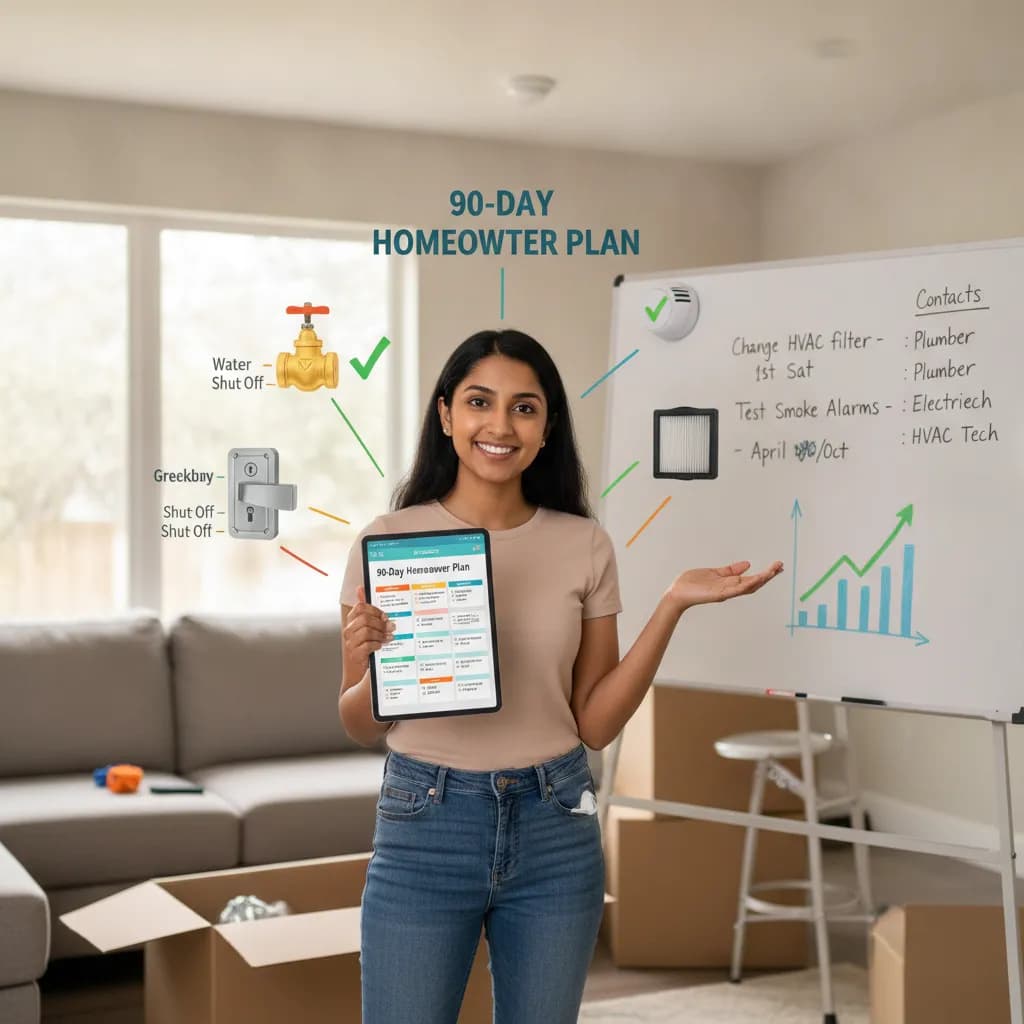
The boxes are in, the papers are signed, and the keys are in your hand. Welcome to homeownership! It’s an incredible milestone, but it can also be overwhelming. Beyond decorating and unpacking, what should you actually be doing?
Think of the first three months in your new home as a critical orientation period. The actions you take now will set the foundation for years of confident, proactive ownership, saving you from future stress and surprise expenses. Here is your game plan.
Your first 30 days are about learning the anatomy of your house and securing your environment. This is non-negotiable.
1. Locate and Label Your Lifelines: Before you do anything else, find your home's essential shut-offs. An emergency won't wait for you to find a flashlight.
2. Conduct a Safety Sweep:
3. Start Your Home Inventory: While the house is still relatively empty, walk through and video every room, opening closets and drawers. This is your secret weapon for any future insurance claim. Narrate what you’re seeing for extra detail.
Now that you’re safe and oriented, it’s time to understand the major systems that keep your home comfortable and functional.
1. Get Friendly with Your HVAC:
2. Run an Appliance Gauntlet:
3. Investigate the Water Heater: Find your water heater and look for a sticker with the installation or manufacturing date. If it's approaching 10-12 years old, it's living on borrowed time. Look for any signs of rust or slow drips at the base—a clear warning of impending failure.
4. Perform an Exterior Walk-Around: Take a lap around your property. Are the gutters clear and attached securely? Does the ground slope away from your foundation? Are there any cracks in the siding or peeling paint? You’re not fixing these things today, you’re just gathering intel.
With a solid understanding of your home, the final phase of your 90-day plan is to get organized for the long haul.
1. Re-Read Your Inspection Report: That pre-purchase inspection report is your personalized home manual. Now that you’ve lived in the house for a bit, the inspector's notes will make more sense. Use it to create a prioritized list of future repairs and improvements.
2. Build Your Financial Plan:
3. Assemble Your A-Team: Don't wait for a pipe to burst at 2 AM to find a plumber. Ask trusted neighbors, friends, or local social media groups for recommendations for a reliable plumber, electrician, and HVAC technician. Put their numbers in your phone now.
4. Set Your Calendar: Based on your observations, start building a recurring maintenance calendar. "Change HVAC filter first Saturday of the month." "Clean gutters in April and October." "Test smoke detectors every six months."
This is where owning a home shifts from being reactive and stressful to proactive and manageable.
Following this 90-day plan will transform your relationship with your new house. You’ll have a deep understanding of how it works, what it needs, and how to plan for its future. But you don't have to manage it all with a messy spreadsheet or a collection of sticky notes.
This is exactly why we built Properteer. After completing your initial 90-day deep dive, you can load all that valuable information—the age of your water heater, the size of your air filter, your prioritized repair list—into the app. Properteer then takes over, creating a personalized maintenance calendar, sending you smart alerts for critical tasks, and helping you build a realistic budget for those big-ticket replacements. It turns your 90-day sprint into a lifetime of smart, stress-free homeownership. Get started with Properteer today and make the next 90 days the beginning of a beautifully maintained investment.
Q: What is the absolute first thing I should do when I move into a new house? A: Before you even unpack a box, locate and know how to operate the main water shut-off valve, the main gas shut-off (if applicable), and your electrical breaker panel. An emergency won't wait for you to get settled, and knowing where these are can turn a catastrophe into a minor inconvenience.
Q: Why is changing the locks so important? A: You have no way of knowing who the previous owners gave keys to—contractors, neighbors, dog walkers, family members, etc. Changing the locks is a simple, inexpensive step that gives you complete control over who has access to your home, ensuring your family's safety and peace of mind.
Q: I have my inspection report. Isn't that enough to get started? A: The inspection report is a fantastic snapshot in time, but living in the home provides new context. After a month or two, re-read the report. Issues noted as minor might seem more significant, and you'll have a better understanding of the home's quirks, which will help you prioritize future repairs and maintenance tasks far more effectively.