Posted On: Sep 24, 2026
Author: Jason H.
indoor air quality healthy home hvac maintenance
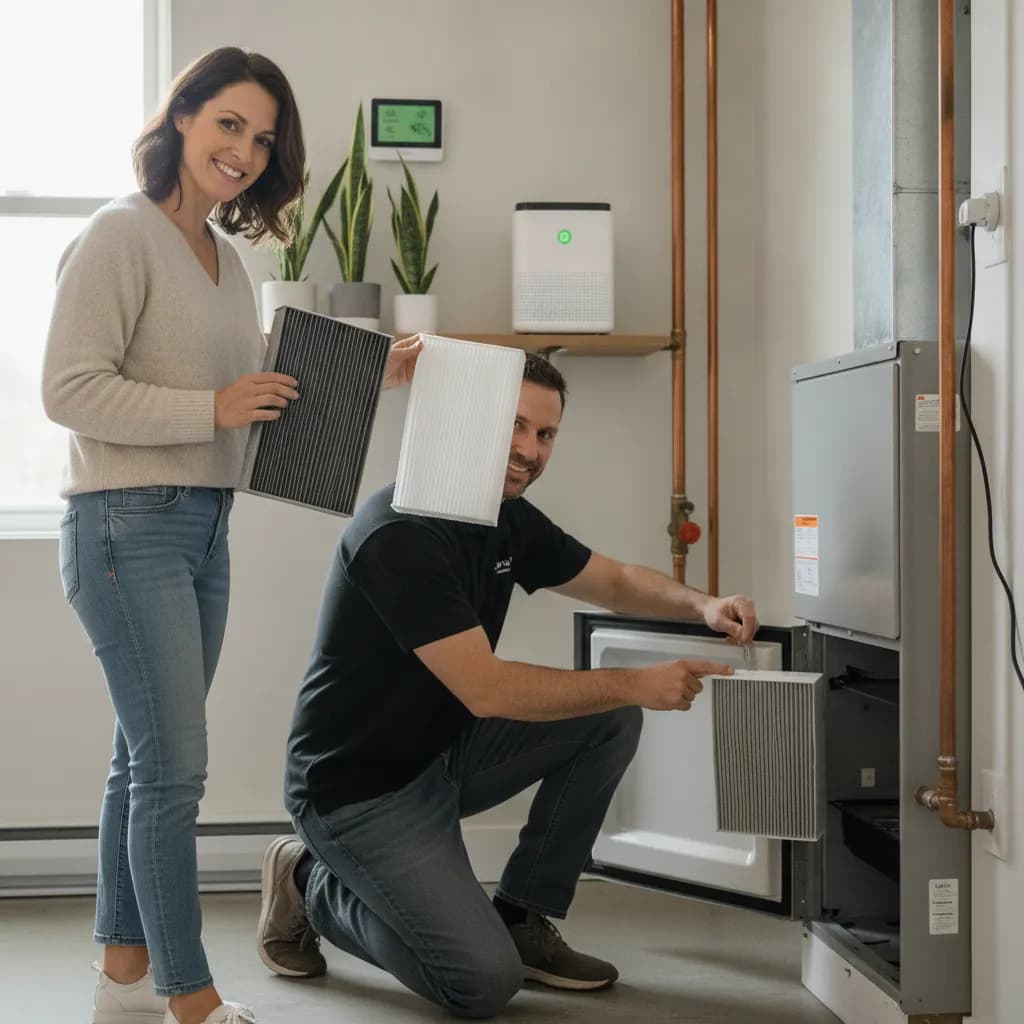
Most homeowners worry about a leaky roof or a flooded basement, but one of the biggest threats to your family's well-being and your home's health is completely invisible: the air you breathe every day. The Environmental Protection Agency (EPA) consistently ranks indoor air pollution among the top environmental risks to public health, with studies showing that indoor air can be two to five times more polluted than the air outside. For new homeowners, understanding and managing Indoor Air Quality (IAQ) is as fundamental as learning how to reset a circuit breaker.
This guide will transform you from an overwhelmed homeowner into a confident guardian of your home's environment. We'll demystify the common pollutants hiding in plain sight, introduce the five core pillars of air quality management, and provide actionable checklists and budget breakdowns. By the end, you'll have a complete playbook to test, improve, and maintain a healthy home, protecting your family and your biggest investment.
Before you can fix a problem, you have to understand it. Let's break down what IAQ is and why it's so critical for every homeowner.
Indoor Air Quality (IAQ) refers to the air quality within and around buildings and structures, especially as it relates to the health and comfort of occupants. It is a measure of how clean and free of pollutants the air inside your home is. Good IAQ has a low concentration of contaminants like dust, dander, mold spores, and chemical gases, while poor IAQ has high concentrations that can negatively affect health, comfort, and productivity. Because modern homes are built to be more airtight for energy efficiency, they can trap these pollutants inside, making proactive management essential.
Good indoor air quality is crucial because it directly impacts your family's short-term and long-term health. Poor IAQ can trigger or worsen a wide range of health issues, from immediate effects like eye irritation, headaches, dizziness, and fatigue to more severe, long-term conditions like respiratory diseases, heart disease, and even cancer. For vulnerable individuals, such as children, the elderly, and those with asthma or allergies, the effects of indoor pollutants are even more pronounced. A healthy indoor environment not only supports physical well-being but also contributes to better sleep and overall comfort in your own home.
The most common indoor air pollutants come from a variety of sources and include biological contaminants and chemical compounds. Key culprits include Particulate Matter (PM2.5) from cooking and burning candles; Volatile Organic Compounds (VOCs) off-gassing from paint, furniture, and cleaning products; Mold and Mildew spores thriving in damp areas; Radon, a radioactive gas seeping in from the ground; Carbon Monoxide (CO) from fuel-burning appliances; and common allergens like dust mites, pet dander, and pollen.
Improving your home's air doesn't have to be complicated. A comprehensive strategy is built on five key pillars. By addressing each one, you create a robust system for maintaining a healthy indoor environment.
The most effective way to improve indoor air quality is to eliminate or reduce the sources of pollutants in the first place. By being mindful of what you bring into your home and how you perform certain activities, you can stop pollution before it starts. This proactive approach is more efficient and cost-effective than trying to remove contaminants after they've been released into your air.
Your best defense against chemical off-gassing is to purchase products certified as low-VOC or zero-VOC whenever possible. Volatile Organic Compounds (VOCs) are chemicals released as gases from certain solids or liquids, and they are abundant in traditional paints, sealants, flooring, and pressed-wood furniture. When shopping, look for labels like GREENGUARD Gold, which certifies that products have low chemical emissions. Choosing these materials significantly reduces the long-term release of harmful pollutants into your home's air.
Off-gassing is the process by which new manufactured items release VOCs and other chemicals into the air. This is responsible for that "new car smell" or the strong odor from a freshly painted room or new carpet. While the smell often dissipates over time, the release of chemicals can continue for years. To minimize exposure, you can air out new furniture in a garage or well-ventilated space for a few days before bringing it inside. When renovating, plan for a period of high ventilation to allow the majority of off-gassing to occur before you spend significant time in the space.
Your daily activities can be a major source of indoor pollution, which makes targeted ventilation absolutely critical. Always use your kitchen range hood when cooking, especially on a gas stove, to exhaust particulate matter, carbon monoxide, and other combustion byproducts directly outside. Similarly, if you engage in hobbies that involve glue, solder, or strong chemicals, do so in a well-ventilated area, like a garage with the door open, or use a dedicated exhaust fan to protect the air quality in the rest of your home.
A consistent cleaning routine is a cornerstone of source control because dust is a magnet for other pollutants. Dust particles can harbor allergens like dust mites, pet dander, and pollen, as well as toxic chemicals that have settled out of the air. To effectively remove these contaminants, use a vacuum cleaner with a HEPA (High-Efficiency Particulate Air) filter, which can capture even the smallest particles. Dusting with a damp microfiber cloth traps dust instead of just pushing it back into the air, further reducing airborne pollutants.
Ventilation is the process of exchanging stale, polluted indoor air with fresh outdoor air. A well-ventilated home dilutes and removes pollutants, controls humidity, and improves overall comfort. Even the most airtight, energy-efficient homes require a strategy for introducing fresh air.
The simplest way to ventilate your home is by opening windows and doors to create cross-ventilation. This is most effective when outdoor air quality is good (check local air quality indexes) and pollen counts are low. Opening windows for even 15 minutes a day can significantly reduce the concentration of indoor pollutants that have built up overnight. It's a particularly good practice while cleaning or right after you've brought new furniture into the house.
Your home's exhaust fans are powerful ventilation tools designed to remove moisture and pollutants at their source. Always run your bathroom fan during and for at least 20 minutes after a shower to exhaust humidity and prevent mold growth. Similarly, your kitchen range hood should be ducted to the outdoors (not a recirculating model) and used every time you cook. These spot-ventilation systems are your first line of defense against the two biggest indoor pollution events: bathing and cooking.
Heat Recovery Ventilators (HRVs) and Energy Recovery Ventilators (ERVs) are whole-home mechanical ventilation systems ideal for modern, airtight homes. An HRV is a balanced system that exhausts stale indoor air while supplying fresh, filtered outdoor air, using a heat exchanger to transfer heat from the outgoing air to the incoming air in the winter (and vice versa in the summer). An ERV does the same thing but also transfers a level of humidity. These systems provide a constant supply of fresh air without the significant energy penalty of just opening a window, making them a premier solution for year-round air quality.
Filtration involves using a physical barrier or process to remove airborne particles from the air. From the filter in your furnace to standalone purifiers, these tools are essential for capturing the pollutants that source control and ventilation miss.
Your HVAC system's air filter is the single most important air quality tool in most homes because it cleans the air for the entire house every time the system runs. Its primary job is to protect the sensitive components of your furnace and air conditioner, but by choosing a high-quality filter, you can also dramatically improve your indoor air quality. Neglecting to change it not only leads to dirtier air but also restricts airflow, making your system work harder, increasing energy bills, and risking premature failure. Check your filter monthly and change it when it's dirty.
Choosing an HVAC filter requires understanding its rating system, which tells you how effective it is at capturing different-sized particles. MERV (Minimum Efficiency Reporting Value) is the industry standard, with ratings from 1 to 20; a higher number means finer filtration. For most homes, a filter in the MERV 8-13 range provides an excellent balance of air filtration and airflow. MPR (Microparticle Performance Rating) and FPR (Filter Performance Rating) are proprietary ratings from 3M and The Home Depot, respectively, and are not directly convertible to MERV, but they follow the same principle: a higher number is better.
| Rating | Captures Particles Like... | Recommended For | |-------------|-----------------------------------------------------------|-----------------------------------------------------| | MERV 1-4 | Pollen, Dust Mites, Sanding Dust | Basic protection for HVAC equipment, minimal IAQ benefit. | | MERV 5-8 | Mold Spores, Pet Dander, Hairspray, Dusting Aids | Good for most standard homes without specific sensitivities. | | MERV 9-12 | Legionella, Humidifier Dust, Lead Dust, Auto Emissions | Excellent for homes with pets, allergies, or smokers. | | MERV 13-16| Bacteria, Sneezes, Tobacco Smoke, All combustion smoke | Superior residential filtration; may require HVAC pro consult. | | MERV 17-20| Viruses, Carbon Dust, Sea Salt | Hospital-grade (HEPA); not suitable for most residential HVAC. |
The correct frequency for changing your air filter depends on the filter's type, your household, and your local environment. Standard 1-inch pleated filters should typically be changed every 1-3 months. If you have pets, smokers, or live in a dusty area, you should check it monthly. Thicker, 4- to 5-inch media filters have more surface area and can last much longer, typically between 6-12 months. The best rule is to physically inspect the filter every month. If it looks gray and clogged with dirt, it's time to replace it, regardless of the recommended schedule.
A standalone air purifier is an excellent solution for improving air quality in a specific room, especially for those with allergies, asthma, or other respiratory sensitivities. While your HVAC system filters air for the whole house, it only works when the system is running. A portable air purifier can run continuously in a bedroom, nursery, or home office to provide targeted, high-efficiency filtration. They are particularly effective at removing allergens like pet dander and pollen, as well as smoke and other fine particles, from the immediate breathing zone.
When choosing an air purifier, you will mainly encounter two types of filters: HEPA and activated carbon. A HEPA (High-Efficiency Particulate Air) filter is a mechanical filter that excels at trapping physical particles like dust, dander, pollen, and smoke, removing 99.97% of particles as small as 0.3 microns. An activated carbon filter, however, uses a porous form of carbon to adsorb gases, odors, and VOCs from the air. Many high-quality air purifiers contain both a HEPA filter for particles and a carbon filter for gases and odors, providing comprehensive air cleaning.
Controlling the moisture level in your home's air is a critical but often overlooked aspect of good IAQ. Air that is too damp or too dry can create a host of problems for both your health and your home's structure.
Humidity levels directly impact the growth and proliferation of key biological pollutants. High humidity creates the perfect breeding ground for mold, mildew, and dust mites, three of the most common indoor allergens. Conversely, air that is too dry can lead to dry sinuses, irritated throats, and cracked skin, making you more susceptible to colds and infections. Dry air can also damage wood floors, furniture, and plaster. Maintaining a balanced humidity level is key to controlling these threats.
The ideal indoor humidity level for both health and comfort is generally between 30% and 50% relative humidity. You can easily measure this with a small, inexpensive device called a hygrometer. In the winter, you might be closer to 30% to prevent window condensation, while in the summer you'll aim to stay below 50% to inhibit mold growth. Keeping your home within this Goldilocks zone is one of the most effective ways to maintain good IAQ year-round.
A dehumidifier is essential for controlling high humidity in problem areas like basements, crawl spaces, and bathrooms. These appliances work by pulling moisture out of the air, helping to keep the relative humidity below the 50% threshold that encourages mold growth. Running a dehumidifier in your basement during the humid summer months is a non-negotiable task for preventing that classic musty smell and the destructive mold that causes it.
In colder, drier climates, a whole-home humidifier that integrates with your HVAC system can be a valuable investment. During winter, forced-air heating systems can dry out the air significantly, dropping humidity levels below 30%. A whole-home humidifier adds a controlled amount of moisture back into the air as it circulates, helping to alleviate dry skin and sinuses, reduce static electricity, and protect your home's wooden elements from cracking. This provides a more comfortable and healthier living environment during the heating season.
You cannot manage what you do not measure. Testing and monitoring are what empower you to understand your home's specific air quality challenges and track the effectiveness of your improvement efforts. These tools make invisible pollutants visible, allowing for targeted and effective solutions.
For most homeowners, DIY testing for specific pollutants is a practical and affordable first step. In contrast, professional air quality testing is more comprehensive but also more expensive, making it best reserved for situations where you have a persistent, unidentified issue or health symptom that you suspect is tied to your home's environment. Professionals have advanced equipment to test for a wide range of pollutants and can provide a detailed report and remediation plan.
These two devices are non-negotiable life-safety requirements for every home. Smoke detectors provide the critical early warning needed to escape a fire. Carbon monoxide (CO) detectors are equally vital, as CO is an odorless, colorless gas produced by fuel-burning appliances (furnace, water heater, gas stove) that can be deadly. You should have detectors on every level of your home, especially outside sleeping areas, and test them monthly. Remember to replace the entire unit every 7-10 years, as the sensors have a limited lifespan.
Every homeowner should test for radon, a naturally occurring, invisible, odorless radioactive gas that enters homes from the ground and is the second leading cause of lung cancer. You can purchase an inexpensive short-term (2-7 days) or long-term (90+ days) DIY test kit online or at a hardware store. The process is simple: you open the kit, place it in the lowest lived-in level of your home, and mail it to a lab for analysis after the specified time. If your levels come back at or above the EPA's action level of 4.0 pCi/L, you should take steps to have a professional radon mitigation system installed.
For homeowners who want to stay on top of their IAQ, a smart air quality monitor is a fantastic tool. These devices provide real-time readings for key metrics like Particulate Matter (PM2.5), VOCs, carbon dioxide (CO2), humidity, and temperature, displaying the results on the device and an app on your phone. This data can help you identify patterns, such as a spike in VOCs when you use a certain cleaning product or a rise in PM2.5 when you cook, empowering you to take immediate action, like opening a window or turning on an air purifier.
Knowledge is only powerful when applied. This section provides a practical checklist and budgeting guide to help you put your new IAQ expertise into action.
| Season | Tasks | |-----------|-------------------------------------------------------------------------------------------------------------------------------------------------------------------| | Spring | ☑ Change HVAC filter after the high-pollen season starts.☑ Clean or open windows for natural ventilation.☑ Check and clean bathroom exhaust fan grilles.☑ Set up and run dehumidifier in the basement as weather warms. | | Summer | ☑ Check HVAC filter monthly (AC runs frequently).☑ Clean dust from ceiling fan blades.☑ Ensure dryer vent exhaust is clear of debris and plants. | | Fall | ☑ Change HVAC filter before turning on the heat for the first time.☑ Have furnace inspected and serviced by a professional.☑ Check and clean humidifier (if you have one).☑ Test smoke and CO detectors when you change your clocks. | | Winter | ☑ Monitor indoor humidity levels; use humidifier as needed.☑ Check HVAC filter monthly.☑ This is the best time to perform a long-term radon test. |
Improving your home's air quality can be done on any budget. Here are some typical cost ranges for common projects, from simple DIY tasks to professional installations. (Note: Costs are estimates and can vary significantly by location and project scope).
| Tier | Investment Range | Examples & Typical Costs | |------------------------|------------------|----------------------------------------------------------------------------------------------------------------------------------------------------------------| | Low-Cost Wins | $10 - $100 | • High-quality HVAC Filters ($20-$50)• Radon Test Kit ($15-$30)• Carbon Monoxide Detector ($20-$60)• Hygrometer ($10-$20)• Low-VOC Cleaning Supplies | | Mid-Range Investments| $100 - $1,000 | • High-Quality Portable Air Purifier ($150-$500)• Portable Dehumidifier ($150-$400)• Smart Air Quality Monitor ($100-$300)• Professional Duct Inspection/Cleaning ($450-$1,000) | | Major Upgrades | $1,000+ | • Radon Mitigation System ($800-$3,000)• Whole-Home Humidifier/Dehumidifier ($1,500-$3,500)• HRV/ERV Installation ($1,500-$4,000)• HVAC System Upgrade with advanced filtration (Varies) |
You should call a professional when you encounter issues that are beyond a simple DIY fix or pose a significant health risk. This includes situations like a suspected major mold problem (more than 10 square feet), persistently high radon test results that require a mitigation system, or the need to install complex equipment like an ERV or whole-home humidifier. If someone in your household is experiencing persistent health symptoms that you can't trace to a cause, a consultation with an IAQ specialist or environmental health professional is a wise investment.
Managing your home's air quality is a continuous process, not a one-time fix. It involves a series of small, consistent actions—changing filters, monitoring humidity, ventilating properly—that collectively create a safe and healthy environment for your family. The sheer number of these tasks, from remembering your specific HVAC filter size to budgeting for a future radon mitigation system, can feel overwhelming, especially for a first-time homeowner.
This is precisely where Properteer can transform your approach. Instead of relying on a scattered collection of notes and calendar reminders, Properteer provides a centralized, intelligent hub for your entire home. You can log the exact model of your HVAC filter and set a recurring reminder so you never forget a change. You can use the budgeting tools to start saving for a high-quality air purifier or an HRV system, turning a vague wish into a concrete financial plan. Properteer takes the mental load off of home maintenance, allowing you to move from worrying about invisible threats to confidently executing a plan that protects your home and your family's health.
Q: Can I just use an air purifier and call it a day? A: No, an air purifier is only one piece of the puzzle. While excellent for filtering particles in a specific room, it doesn't address pollutant sources, humidity issues, or the need for fresh air. The most effective strategy combines all five pillars: source control, ventilation, filtration, humidity control, and testing.
Q: How do I know if I have a mold problem? A: The most common sign of a hidden mold problem is a persistent musty or earthy smell, especially in damp areas like basements, bathrooms, or under sinks. You should also look for visible signs of growth (discoloration or fuzzy texture) or evidence of water damage, like peeling paint or stained ceilings. If you suspect a large problem, it's best to call a professional for an assessment.
Q: Is professional duct cleaning worth the money? A: According to the EPA, there is no conclusive evidence that duct cleaning improves air quality or reduces health problems for most homes. However, it is recommended if you have substantial visible mold growth inside your ducts, have a pest infestation, or see a large amount of dust and debris being released from your supply registers. Always choose a contractor certified by the National Air Duct Cleaners Association (NADCA).
Q: As a new homeowner, what is the most important first step for air quality? A: The most critical first step is to address life-safety issues. Immediately test for radon and ensure you have working smoke and carbon monoxide detectors installed in the correct locations. Your second step should be to locate your HVAC system's air filter, note its size, and set a recurring 90-day reminder to check and change it. These initial actions cover the biggest invisible threats.