Properteer logoProperteerAI
  • Home
  • How It Works
  • Pricing
  • Blog
  • Home
  • How It Works
  • Pricing
  • Blog
Properteer logoProperteerAI

Consent Preferences
  • Do Not Sell or Share My Personal information
  • Limit the Use Of My Sensitive Personal Information
Additional Products
  • TrueCost Analysis™ Report
  • For Realtors
  • Mobile App (iOS & Android)
  • API
Resources
  • Blog
  • FAQ
  • Home Maintenance Checklist
  • Pricing
Company
  • Home
  • About Us
  • Contact Us
  • Privacy Policy
  • Cookie Policy


© 2026 Properteer. All rights reserved.
Terms & Conditions-Privacy Policy

Clogged Gutters, Cracked Foundation: The $10 Fix for a $10,000 Problem

Posted On: Aug 15, 2026

Author: Jason H.

gutters water-damage seasonal-maintenance
Back to all blog posts
Your home's first line of defense against water damage is hanging off the roof.

Of all the jobs on a homeowner’s to-do list, cleaning the gutters is probably the least glamorous. It’s a messy, tedious task that’s easy to put off. But here’s a secret that seasoned homeowners know: ignoring that little channel of aluminum hanging off your roof is one of the single most expensive mistakes you can make.

Your gutter system isn’t just for decoration; it’s the carefully engineered water-management system for your entire home. Its one job is to collect the thousands of gallons of water that hit your roof each year and channel it safely away from your house. When it fails, that water declares war on your home's most vulnerable points.

The Cascade of Calamity: What Really Happens When Gutters Clog

A handful of wet leaves doesn't seem like a big deal, but it’s the start of a destructive chain reaction. Here’s how a simple clog can lead to a five-figure repair bill:

  • Rotting Roof and Fascia: Water that can’t drain through the downspout has to go somewhere. It spills over the sides, soaking the wooden fascia boards that hold the gutters up. Over time, this leads to wood rot, which can spread to the roof decking itself. Suddenly, you're not just cleaning gutters; you're looking at major roof repairs.
  • A Cracked Foundation: This is the big one. When water pours over the sides of the gutter, it saturates the ground directly next to your foundation. This creates immense hydrostatic pressure—literally, the weight of water pushing against your foundation walls. This pressure can cause cracks, bowing walls, and ultimately, a flooded basement. A foundation repair is one of the most expensive projects a homeowner can face.
  • Pest Paradise: Clogged gutters filled with damp, decomposing leaves are an open invitation for pests. Mosquitoes breed in the standing water, while ants, termites, and even rodents will happily make a home in the sludge, giving them a convenient bridge into your walls and attic.
  • Ice Dams in Winter: In colder climates, clogged gutters can lead to ice dams. Snow melts on the warmer parts of your roof, runs down, and then refreezes at the cold, clogged edge. This wall of ice forces water back up under your shingles, causing leaks directly into your attic and ceilings.

Your Twice-a-Year Gutter Maintenance Plan

The good news is that preventing all this chaos is simple and cheap. All it takes is a couple of hours, twice a year. The best times are in late spring (after trees drop their seeds) and late fall (after the leaves have fallen).

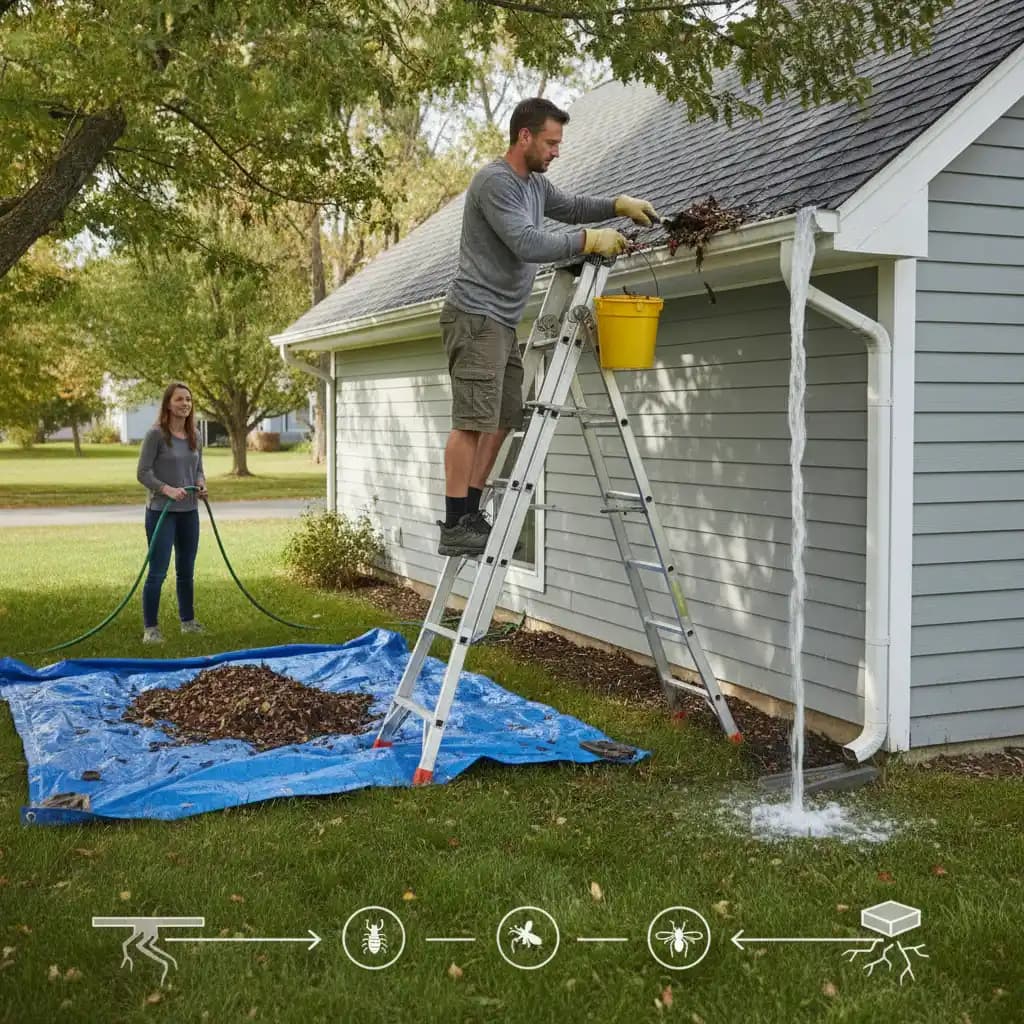
Safety First: This is non-negotiable. Always use a sturdy ladder and have someone spot you. Wear thick work gloves to protect your hands and non-slip shoes. Never work on a wet or windy day.

Your Toolkit:

  • A sturdy ladder
  • Thick gloves
  • A small trowel or gutter scoop
  • A bucket or a tarp on the ground to collect debris
  • A garden hose with a spray nozzle

The 4-Step Process:

  1. Scoop the Debris: Starting near a downspout, use your trowel to scoop out all the leaves, twigs, and gunk. Work your way along the gutter, dropping the debris onto your tarp or into your bucket.
  2. Flush it Out: Once the large debris is gone, use the garden hose to flush the gutters. Start at the end opposite the downspout and spray the water toward it. This will clear out any remaining small particles.
  3. Check the Downspout: Watch the flow of water. If it comes out as a strong, steady stream from the bottom of the downspout, you’re clear. If it only trickles out or backs up into the gutter, you have a clog. Try tapping on the side of the downspout to dislodge it. If that doesn't work, you can feed the hose up from the bottom to try and force the clog out.
  4. Inspect for Damage: As you flush the gutters, look for leaks, holes, or drips. Check that the gutters aren’t sagging or pulling away from the house. Make a note of any sections that need repair.

When to Leave It to the Pros

DIY is great, but there are times when it’s smarter to call a professional gutter cleaning service:

  • If your house is two or more stories high.
  • If you are not comfortable or steady on a ladder.
  • If your gutters have significant damage or are pulling away from the house.
  • If you have persistent clogs in your downspouts that you can't clear with a hose.

Remembering to clean your gutters, check your furnace filter, and test your sump pump can feel like a full-time job. It’s easy for a simple, crucial task to slip through the cracks, only to announce itself with an emergency and a huge bill.

This is exactly why we built Properteer. Properteer is like having a digital property manager for your home. It doesn’t just store your inspection report; it turns it into an actionable plan. The app automatically tracks the age and expected lifespan of your home's core components—from your gutters to your HVAC system—and sends you smart alerts when it's time for maintenance. Instead of worrying about what you might be forgetting, you get a clear, prioritized to-do list that protects your investment.

Don't wait for a disaster to remind you about maintenance. Let Properteer handle the scheduling and planning, so you can focus on enjoying your home, confident that it's being properly cared for. Learn more and get started at Properteer.ai.

Gutter Maintenance Q&A

Q: How often should I clean my gutters?

A: At a minimum, twice a year: once in late spring after trees have dropped their seeds, and once in late fall after all leaves are down. If you have many tall trees directly over your house, you may need to do it more frequently.

Q: Are gutter guards worth the money?

A: They can be a great investment, especially for homes with lots of overhanging trees. Gutter guards significantly reduce the amount of debris that gets in, but they don't eliminate maintenance entirely. You'll still need to occasionally clean smaller debris off the top of the guards themselves.

Q: What are the signs my gutters need to be replaced, not just cleaned?

A: Look for large cracks or holes, sections that are pulling away from the house, constant sagging that won't stay fixed, and visible rust. Peeling paint or water stains on your siding directly below the gutters are also clear signs they are consistently failing to do their job.