Posted On: Jul 31, 2026
Author: Andy H.
DIY home-repair safety
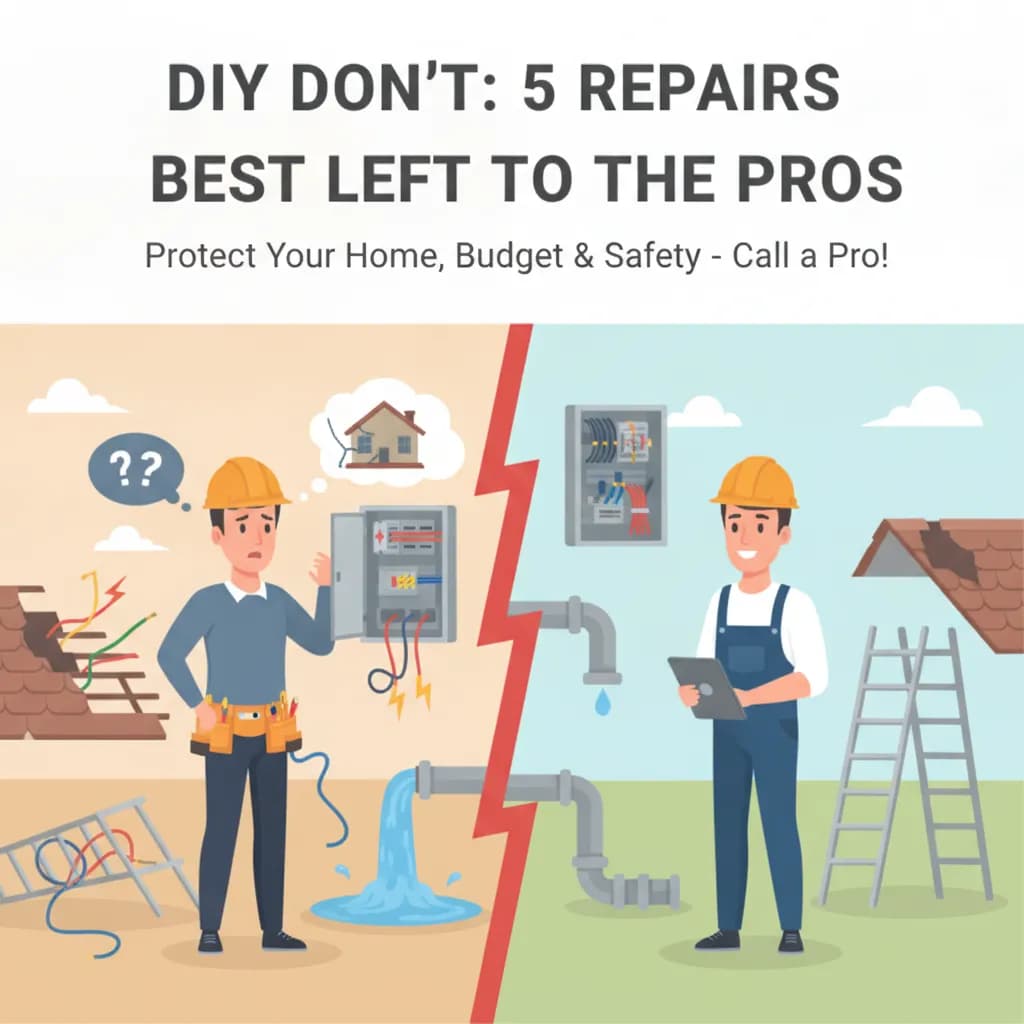
The satisfaction of a completed DIY project is hard to beat. You’ve saved money, learned a new skill, and have the bragging rights to prove it. For many home maintenance tasks, rolling up your sleeves is the smartest move you can make. But the wisest homeowners also know where to draw the line.
Some jobs carry risks that go far beyond a crooked picture frame or a mismatched paint job. A mistake on certain projects can lead to catastrophic floods, devastating fires, structural failure, or serious personal injury. Before you fire up that YouTube tutorial and break out the tools, it's crucial to understand which tasks are best left in the capable hands of a licensed professional.
Not sure if a project is in your wheelhouse? Ask yourself these questions first:
If you hesitate on any of these, it's time to call a contractor. Here are five areas where that call is almost always the right one.
Why it’s risky: One wrong connection can lead to a short that starts a fire behind your walls. There’s also the immediate and lethal danger of electrocution. Professional electricians understand load calculations, wiring codes, and safety protocols that keep your home and family safe.
Why it’s risky: A tiny, slow leak from a poorly sealed pipe can go unnoticed for months, rotting your subfloor and feeding a massive mold colony. A major mistake can cause an immediate flood, leading to tens of thousands of dollars in water damage.
Why it’s risky: The most obvious risk is personal safety—falls from roofs are a leading cause of injury for homeowners. Beyond that, roofing is a complex system of overlapping layers. An improper repair can trap water, leading to rot and leaks that only become apparent after significant damage has been done to your attic and ceilings.
Why it’s risky: Your home is an interconnected system designed to distribute massive weight. Removing a wall without knowing if it's load-bearing can cause your ceilings to sag or, in the worst case, lead to a partial collapse. This isn't just about aesthetics; it's about the fundamental integrity of your house.
Why it’s risky: This one is non-negotiable. Working with natural gas lines is incredibly dangerous. An improper connection can cause a gas leak, leading to a risk of explosion and fire. Even a small leak can release deadly, odorless carbon monoxide into your home.
Knowing your limits is the most important skill in a homeowner's toolkit. It’s not about admitting defeat; it’s about making a smart financial and safety decision for your biggest investment.
That's where Properteer comes in. The app helps you understand all the complex systems in your home, from your electrical panel to your HVAC. By tracking the age and condition of major components, Properteer helps you anticipate when you'll need professional help and build a budget for it. Instead of being surprised by a major repair, you can plan for it, find the right pro, and protect the value of your home without the stress. Take the guesswork out of homeownership and try Properteer today.
Q: Is it safe to change a light switch or outlet myself?
A: For many homeowners, yes, provided you take the proper safety precautions. The absolute most important step is to turn off the power to that specific circuit at your electrical panel and verify it's off with a voltage tester before you begin. If you are at all unsure, call an electrician.
Q: What plumbing tasks are generally safe for a beginner to DIY?
A: Good beginner plumbing projects include fixing a dripping faucet by replacing washers or O-rings, clearing a clogged sink or toilet with a snake, replacing a shower head, or replacing the internal components of a toilet tank (the fill valve and flapper). These tasks typically don't involve cutting or soldering pipes.
Q: How do I know if a wall is load-bearing?
A: While a structural engineer is the only one who can tell you with 100% certainty, there are clues. Generally, exterior walls are load-bearing. Interior walls that are perpendicular to the ceiling joists above them, or that have a wall or support beam directly above or below them on other floors, are often load-bearing. Because the consequences of being wrong are so severe, you should always consult a professional before removing any wall.
Q: Why is calling a pro for gas appliances so important?
A: Natural gas is highly flammable and mistakes can lead to leaks, which can cause explosions or fires. Furthermore, improper installation or repair can lead to incomplete combustion, creating carbon monoxide (CO), a colorless, odorless gas that is poisonous and can be fatal.