Posted On: Sep 26, 2026
Author: Jason H.
home-repair budgeting first-time-homeowner
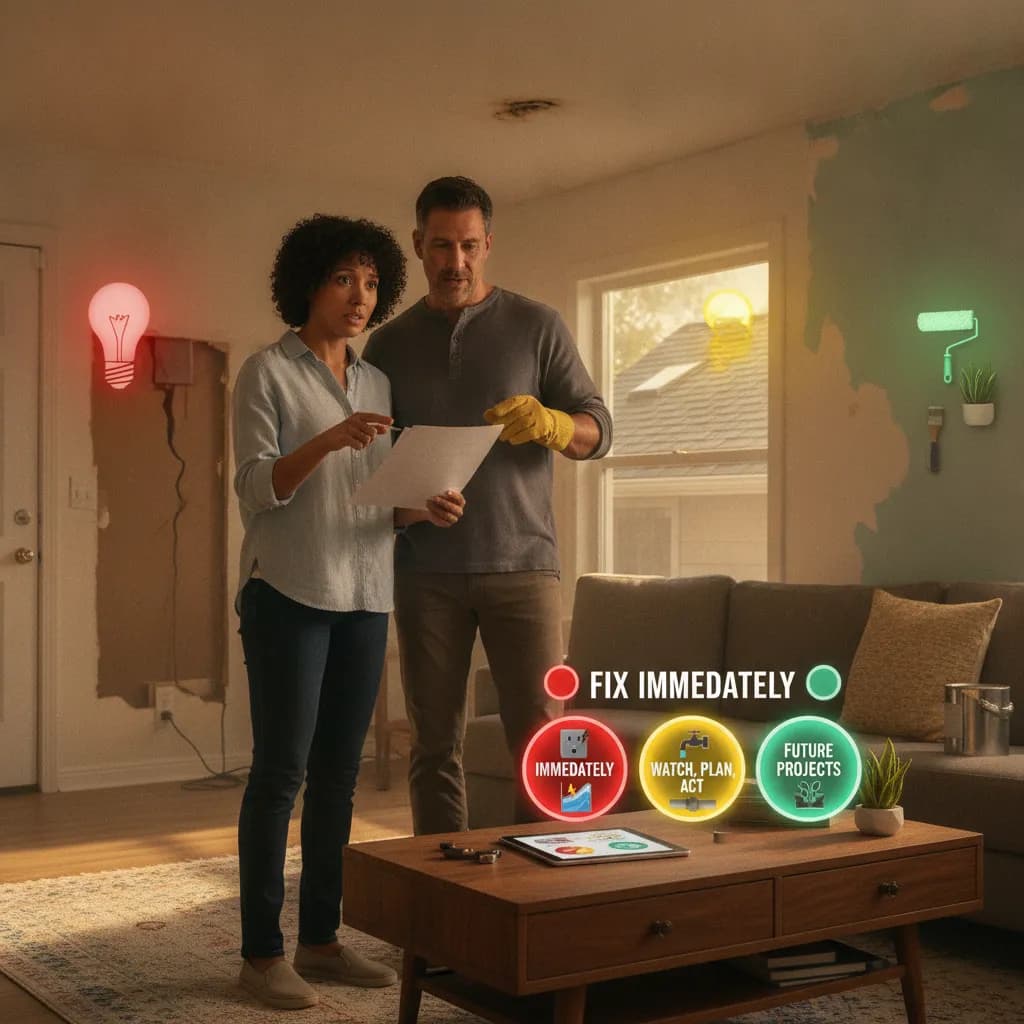
You did it. You navigated the market, won the bidding war, and now you have the keys. You also have a home inspection report that’s ten pages long and a to-do list that feels a mile long. That small crack in the driveway, the sticky window in the guest room, the water heater that’s “nearing the end of its useful life”—it’s enough to make your head spin.
For most new homeowners, the budget is tight after closing. The question isn't what to fix, but what to fix first. How do you decide between a cosmetic issue that drives you crazy and a hidden problem that could become a disaster?
Welcome to the art of home repair triage. Just like in an emergency room, the key is to assess the situation, identify the most critical issues, and create a plan of attack. Using a simple “Red Light, Green Light” framework, you can turn that chaotic list into a confident, actionable plan.
Think of every issue in your home as falling into one of three categories. This simple system helps you cut through the noise and focus your time and money where they will have the biggest impact.
These are the non-negotiables. Red Light issues pose an immediate threat to your safety, your home's structural integrity, or will cause rapid, catastrophic, and expensive damage if ignored. Delaying these repairs is not an option.
Criteria for a Red Light issue:
The Bottom Line: If a problem fits this description, stop what you're doing and call a professional. This is what your emergency fund is for.
Yellow Light issues are the silent threats. They aren't emergencies today, but they have the potential to become Red Light problems if you ignore them. These are the classic victims of the “I’ll do it later” mindset, and they represent the biggest opportunity for a savvy homeowner to save money through proactive maintenance.
Criteria for a Yellow Light issue:
The Bottom Line: These problems require a plan. Get a quote for the repair, set a deadline (e.g., “fix within 3 months”), and budget for it. Don’t let a $100 fix fester into a $5,000 disaster.
Green Light items are the “want-to-dos,” not the “have-to-dos.” These are primarily cosmetic upgrades, minor annoyances, or efficiency improvements that can be tackled as your time and budget allow.
Criteria for a Green Light issue:
The Bottom Line: These are the projects you can schedule for a weekend or save for over time. They improve your enjoyment of the home and can add value, but they won’t cause damage if you wait.
So, how do you keep this all straight? The key is moving from a chaotic list to an organized system. But tracking dozens of Yellow Light items, remembering when you last checked the sump pump, and trying to save for a water heater that might fail in two years is exactly where homeowners get overwhelmed.
This is where a modern approach becomes your secret weapon. Instead of a messy spreadsheet or a pile of sticky notes, you need a system that thinks for you.
Properteer is designed to be your home’s new brain. It helps you log every single issue from your inspection report and categorize it. More importantly, it helps you manage all those crucial Yellow Light items by tracking the age and typical lifespan of your home’s core components—like your HVAC, roof, and appliances. Properteer provides smart alerts, helps you build a realistic replacement budget, and transforms that feeling of overwhelm into one of confident control. You'll know what needs attention, when, and how much to set aside, ensuring a Yellow Light issue never catches you by surprise and turns red.
Ready to turn your repair list into a confident plan? Get started with Properteer today.
Q: What's the most important category of repairs to address first?
A: Always prioritize "Red Light" repairs. These involve immediate safety risks (electrical, gas, structural) or are causing active, compounding damage, like a water leak. They represent a clear and present danger to your family and your investment.
Q: My home inspector noted a slow drip under the sink. Is that a "Red Light" repair?
A: It's a high-priority "Yellow Light" that borders on red. While not an immediate flood risk, a constant drip can lead to cabinet rot, mold, and damaged flooring in a matter of weeks or months. It should be fixed as soon as possible to prevent more costly secondary damage.
Q: Are cosmetic issues ever a priority?
A: Generally, they are "Green Light" items. However, an issue that looks cosmetic, like peeling exterior paint or a hairline crack in drywall, could be a symptom of a "Red Light" or "Yellow Light" problem, like a water leak or foundation settling. Always investigate the root cause before labeling it a low priority.
Q: How do I budget for all the "Yellow Light" repairs?
A: Once you've identified them, the first step is to get a rough quote from a professional for each repair. This gives you a target. Then, you can create a dedicated savings fund and prioritize the list based on which items are most likely to worsen. Plan to tackle them within a specific timeframe (e.g., 3-12 months) before they have a chance to escalate.