Posted On: Nov 6, 2026
Author: Jason H.
roofing maintenance budgeting
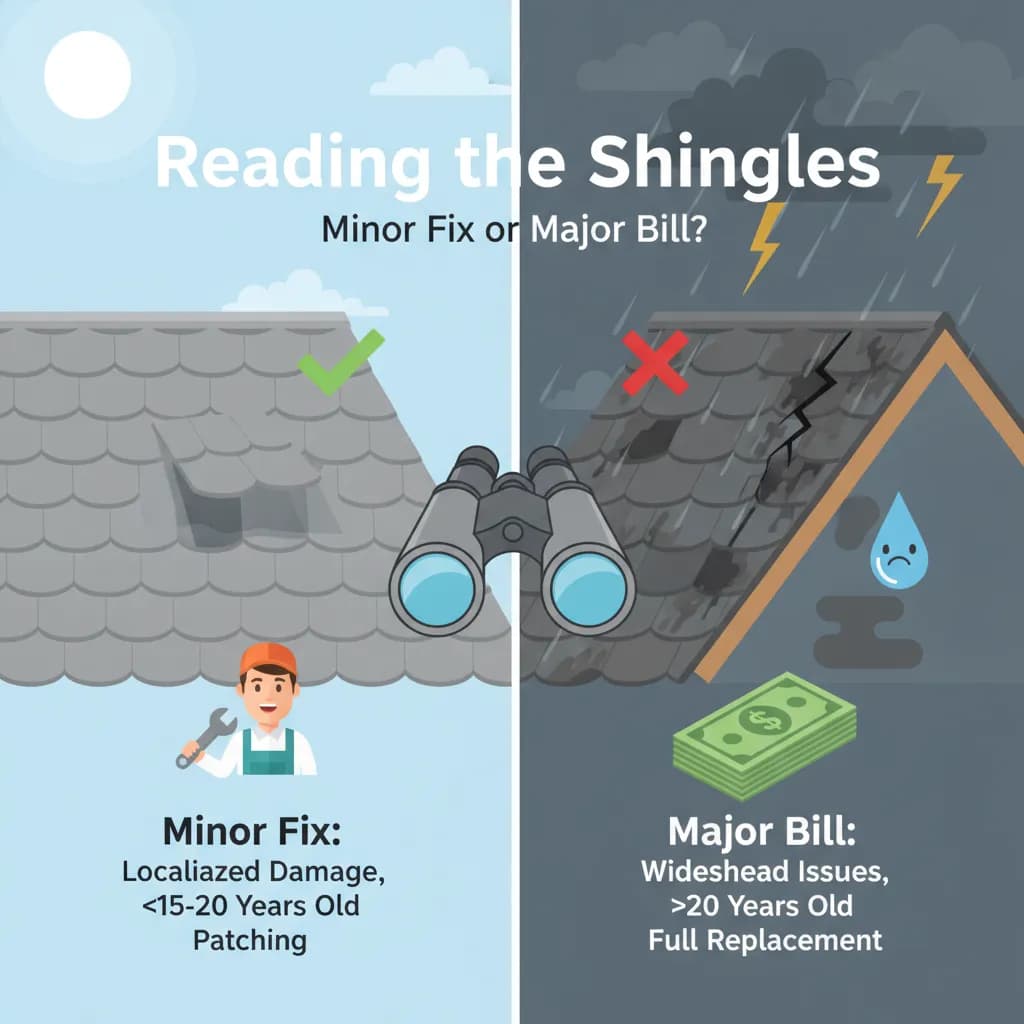
Of all your home's major components, the roof is perhaps the easiest to ignore. It’s out of sight, out of mind... until a water stain appears on your ceiling. Suddenly, that silent protector becomes a source of major anxiety. Is it a small leak or a sign that you need to shell out five figures for a full replacement?
For a first-time homeowner, this uncertainty can be terrifying. But understanding your roof isn't as complicated as it seems. By learning to 'read the shingles' and spot the early warning signs, you can turn panic into a proactive plan, saving yourself thousands in the process.
You don't need to be a professional roofer to get a sense of your roof's health. A thorough inspection can be done twice a year (spring and fall) and after any major storm, right from the safety of the ground and your attic.
From the Ground: Grab a pair of binoculars and scan every section of your roof. Look for:
From the Attic: On a bright day, head into your attic with a flashlight (and be careful where you step!).
Not every issue means you need a new roof. The right choice depends on the age of your roof and the extent of the damage.
When a Repair Makes Sense: If your roof is less than 15-20 years old and the damage is localized, a repair is often the most cost-effective solution. This includes replacing a few shingles blown off in a storm, sealing flashing around a chimney, or fixing a single, isolated leak.
Signs It's Time for a Replacement:
A new roof is one of the most expensive investments you'll make in your home, often costing anywhere from $8,000 to $20,000 or more. No one wants that kind of surprise bill. The key is to plan for it years in advance.
This is where creating a long-term home maintenance budget is non-negotiable. By knowing your roof's approximate age and its expected lifespan, you can start setting aside money each year. A roof that costs $15,000 and is expected to last 25 years means you should be saving around $600 per year ($50 per month) specifically for its replacement. This transforms a future financial catastrophe into a manageable, predictable expense.
Don't let your roof be a source of stress. A little proactive attention goes a long way in protecting your home and your wallet.
Feeling overwhelmed trying to track the age of your roof, your water heater, and everything in between? You're not alone. Guesswork leads to expensive surprises. Properteer lists your home's parts, their age and what each costs to replace, then reminds you when each is due. 30 days free, no credit card.
Q: How often should I inspect my roof? A: You should do a visual inspection from the ground twice a year, ideally in the spring and fall. It's also wise to check it after any major weather event like a hailstorm or high winds.
Q: What are those black streaks on my roof? A: Those streaks are typically a type of algae called Gloeocapsa magma. While it's mostly a cosmetic issue, it can slowly degrade your shingles over a long period. It can be cleaned with a 50/50 solution of water and bleach, but it's often best to hire a professional to do this safely.
Q: How long does a typical asphalt shingle roof last? A: The lifespan depends on the quality of the shingle, the climate, and the quality of the installation. On average, you can expect a 3-tab asphalt shingle roof to last 15-20 years and an architectural shingle roof to last 25-30 years.
Q: Can I repair my own roof? A: While replacing a single shingle might seem simple, working on a roof is inherently dangerous. For your safety and to ensure the repair doesn't void any warranties, it is almost always recommended to hire a licensed and insured roofing professional.
