Posted On: Sep 29, 2026
Author: Jason H.
safety fire-prevention maintenance
There’s nothing quite like the crackle and warmth of a real wood-burning fireplace. It’s the centerpiece of countless cozy evenings and holiday memories. But while you’re focused on the hearth, the long column of brick and mortar running up through your house is often completely forgotten. And that neglect can have devastating consequences.
Your chimney isn't just a passive tunnel for smoke; it’s an active system that contains extreme heat and corrosive byproducts. Ignoring it is like never changing the oil in your car—it’ll seem fine for a while, right up until a catastrophic failure. From house fires to carbon monoxide poisoning, a poorly maintained chimney poses a serious threat to your home and your family.
But don't panic. Understanding the risks and establishing a simple maintenance routine can turn this source of anxiety back into a source of comfort.
Most chimney problems fall into three main categories. Understanding them is the first step to preventing them.
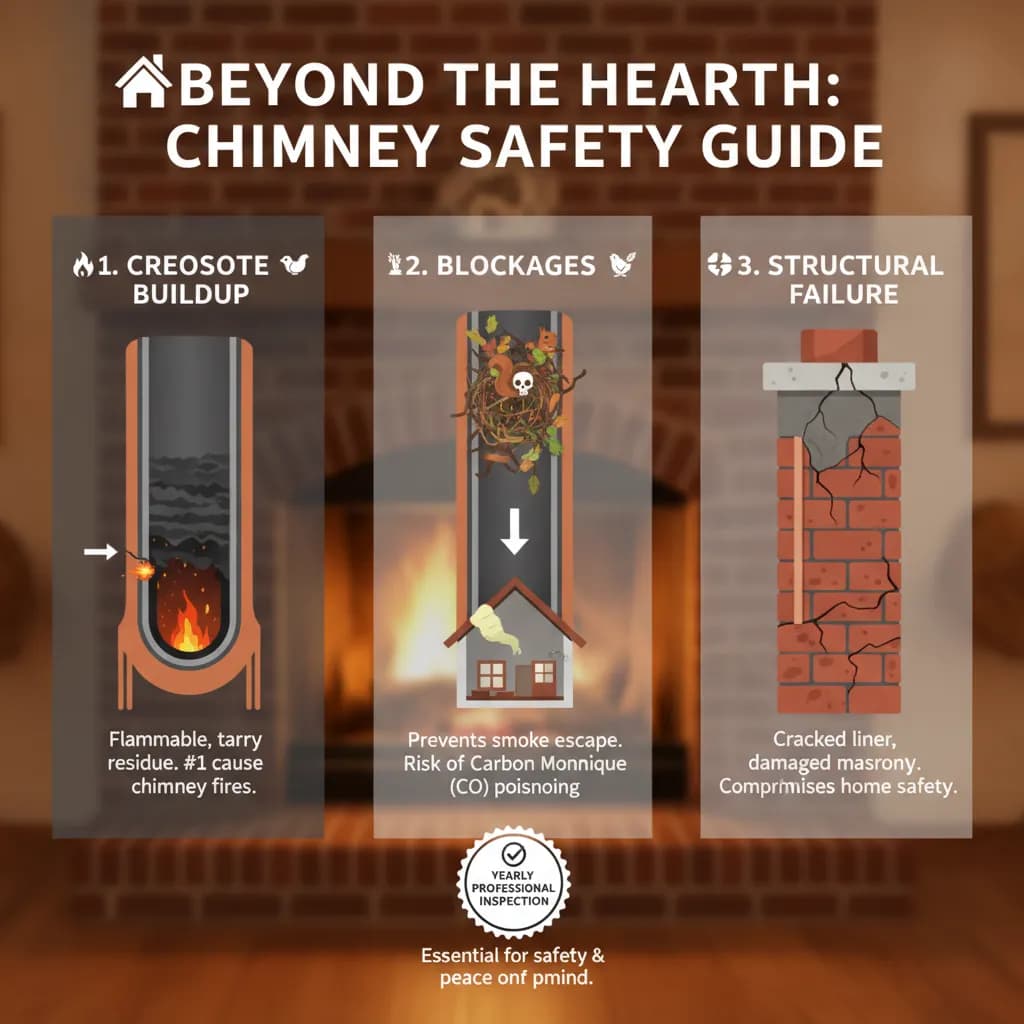
1. Creosote Buildup: The Fire Starter
Every time you burn wood, it releases more than just smoke. Unburned particles travel up the flue and condense on the cooler surfaces inside, forming a dark, tar-like substance called creosote.
Why does it matter? Creosote is highly flammable. A stray spark or high heat can ignite it, starting a violent chimney fire that can reach over 2,000°F. These fires can crack the chimney flue and spread to the wooden structure of your home in minutes. The #1 cause of chimney fires isn’t a stray log—it’s a dirty flue.
2. Blockages: The Silent Threat
Your chimney is a tempting home for birds, squirrels, and other critters, who can build large nests inside. Add in falling leaves and debris, and you can get a serious blockage.
A blocked flue prevents smoke and dangerous gases from escaping. Instead, they back up into your home. This includes carbon monoxide (CO), an odorless, colorless gas that can be lethal. If you notice smoke filling the room or a persistent, smoky smell even when the fire isn't lit, a blockage is a likely culprit.
3. Structural Failure: The Slow Collapse
Your chimney is constantly exposed to the elements outside and intense heat and corrosive gases inside. This dual assault can lead to serious structural problems:
Unlike many home maintenance tasks, this is one area where DIY has its limits. Your primary job is to be a smart manager of your chimney system.
The Non-Negotiable Annual Task: The Professional Sweep
This is not a job for a shop vac and a brush. A Certified Chimney Sweep from an organization like the Chimney Safety Institute of America (CSIA) is an essential part of your home safety team. Once a year (or more if you use your fireplace heavily), you should have them perform a full inspection and cleaning. They have the specialized tools to remove dangerous creosote and the cameras to inspect the flue liner for hidden cracks you'd never see.
What You Can Do: Smart Habits & Simple Checks
By treating your fireplace and chimney with the respect they deserve, you ensure they remain a safe and wonderful feature of your home for years to come.
Managing annual tasks like a chimney inspection, seasonal gutter cleaning, and HVAC tune-ups can be a real headache. Did you get the chimney swept last October or the year before? When was the last time you budgeted for a new chimney cap? This is where homeowners get overwhelmed.
Properteer is designed to solve this exact problem. You can log your chimney inspection report, set an annual reminder for your next sweep, and even start budgeting for long-term repairs like a new flue liner. Instead of letting critical safety tasks fall through the cracks, Properteer helps you build a proactive plan, turning homeownership anxiety into confidence. Protect your home and your peace of mind by letting technology handle the scheduling and planning.