Posted On: Nov 12, 2026
Author: Jason H.
home-maintenance new-homeowner organization
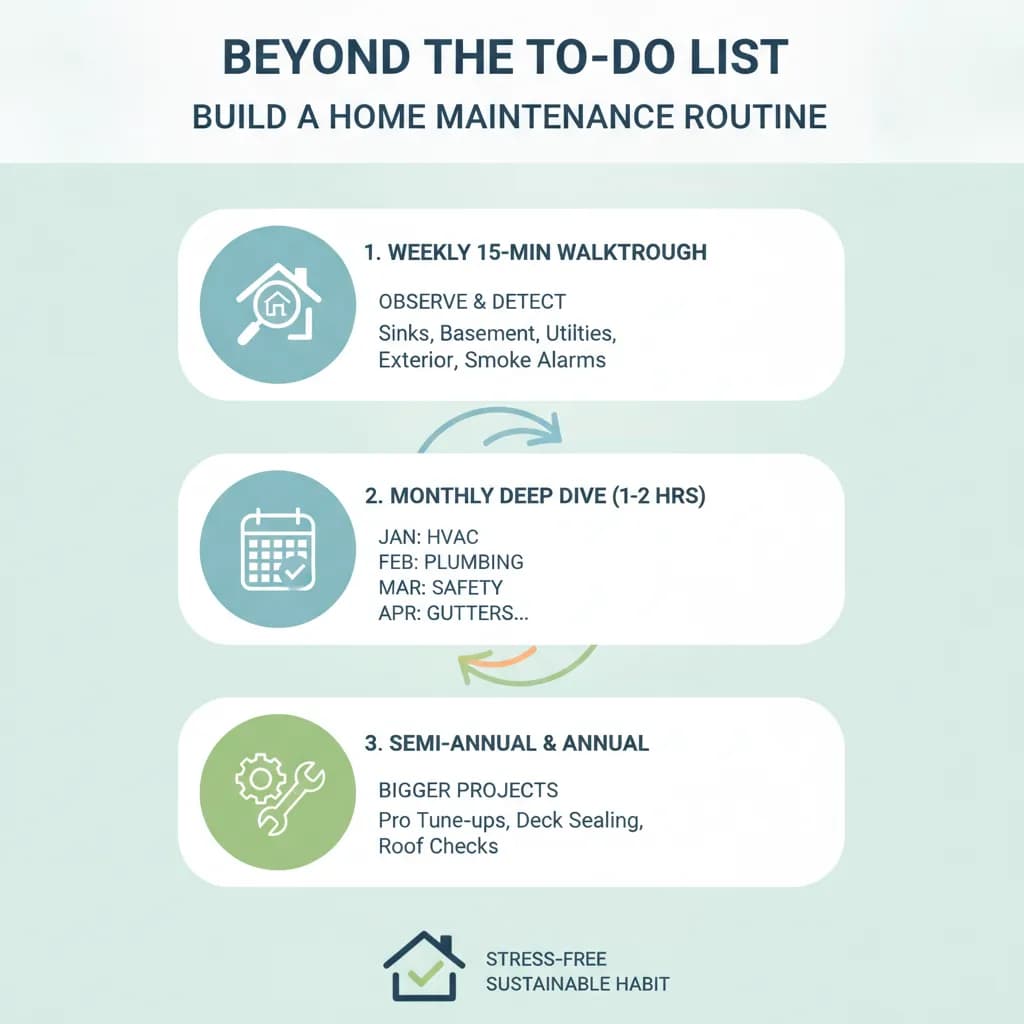
Welcome to homeownership! Along with the keys, you've inherited a new role: you are now the property manager, the landlord, and the chief of maintenance. For many first-time homeowners, this is the most daunting part of the transition. When you were a renter, a leaky faucet or a strange noise from the furnace meant a simple phone call. Now, it’s on you.
The natural reaction is to search for a “home maintenance checklist.” What you find is often a hundred-item, multi-page document that induces more panic than peace of mind. The secret isn’t in the list itself, but in turning that list into a manageable, consistent routine.
A checklist is a static document; a routine is a living habit. The goal isn't to do everything at once, but to create a system that makes proactive care a natural part of owning your home. Consistent, small actions are what prevent small issues from becoming five-figure disasters. This isn't about adding more chores to your life; it's about protecting your single biggest investment.
To do this effectively, you need a smart maintenance plan that breaks tasks down into manageable chunks. Let's build a system that works, using a three-tiered approach.
This is the foundation of your entire maintenance habit. Once a week—perhaps every Sunday morning with your coffee—take a quick 15-minute walk around and through your home with the sole purpose of observation. Don't bring tools or plan to fix anything. Just look.
This simple habit trains you to spot anomalies. Catching a tiny drip under the sink today saves you from replacing a rotted cabinet, subfloor, and dealing with mold in six months.
This is where you tackle one specific system or area of your home for an hour or two. Instead of trying to do everything every season, you assign a focus to each month. This makes the work far less intimidating.
Here’s a sample schedule you can adapt:
...and so on. The key is to have a single, achievable goal for each month. Put it on your calendar like a doctor's appointment.
These are the bigger ticket items that often require more time or a professional. Because you’ve been handling the smaller things all year, you'll have the mental and financial bandwidth to plan for these.
These are appointments you schedule for your home. By planning them months in advance, you avoid the autumn rush for a furnace technician or the spring scramble for a roofer.
Building this three-tiered habit transforms home maintenance from a source of anxiety into a feeling of control. You’ll know your home better, spot problems sooner, and have a clear, predictable plan for its care.
Building a maintenance routine from scratch can feel like a lot of work. That's where technology can give you a major head start. Properteer lists your home's parts, their age and what each costs to replace, then reminds you when each is due. 30 days free, no credit card. Start your free trial.
Q: I'm a new homeowner and feel totally overwhelmed. Where do I even start? A: Start with the 15-minute weekly walkthrough. Don't try to fix anything. Just get into the simple habit of looking at your home's core systems (under sinks, in the basement, around the exterior) once a week. This is the easiest and most effective way to begin.
Q: How do I remember all the different monthly tasks? A: Create a simple calendar. Use a digital calendar or a physical one and assign one major system (like HVAC, plumbing, or appliances) to each month. Setting a recurring monthly appointment like "Home Maintenance Hour" can help solidify the habit.
Q: What's the single most important maintenance habit to build? A: Regular, active observation. The weekly walkthrough is critical because catching problems when they are small (a tiny leak, a loose shingle, a fraying wire) is the key to preventing catastrophic and expensive repairs down the line.
Q: Does building a routine mean I have to do everything myself? A: Absolutely not. An effective maintenance routine includes knowing when to call a professional. The goal is to manage your home's health, which involves doing simple DIY tasks yourself and scheduling and budgeting for experts to handle jobs like annual HVAC tune-ups, chimney sweeping, or major electrical work.
