Posted On: Oct 1, 2026
Author: Jason H.
contractors home-improvement budgeting
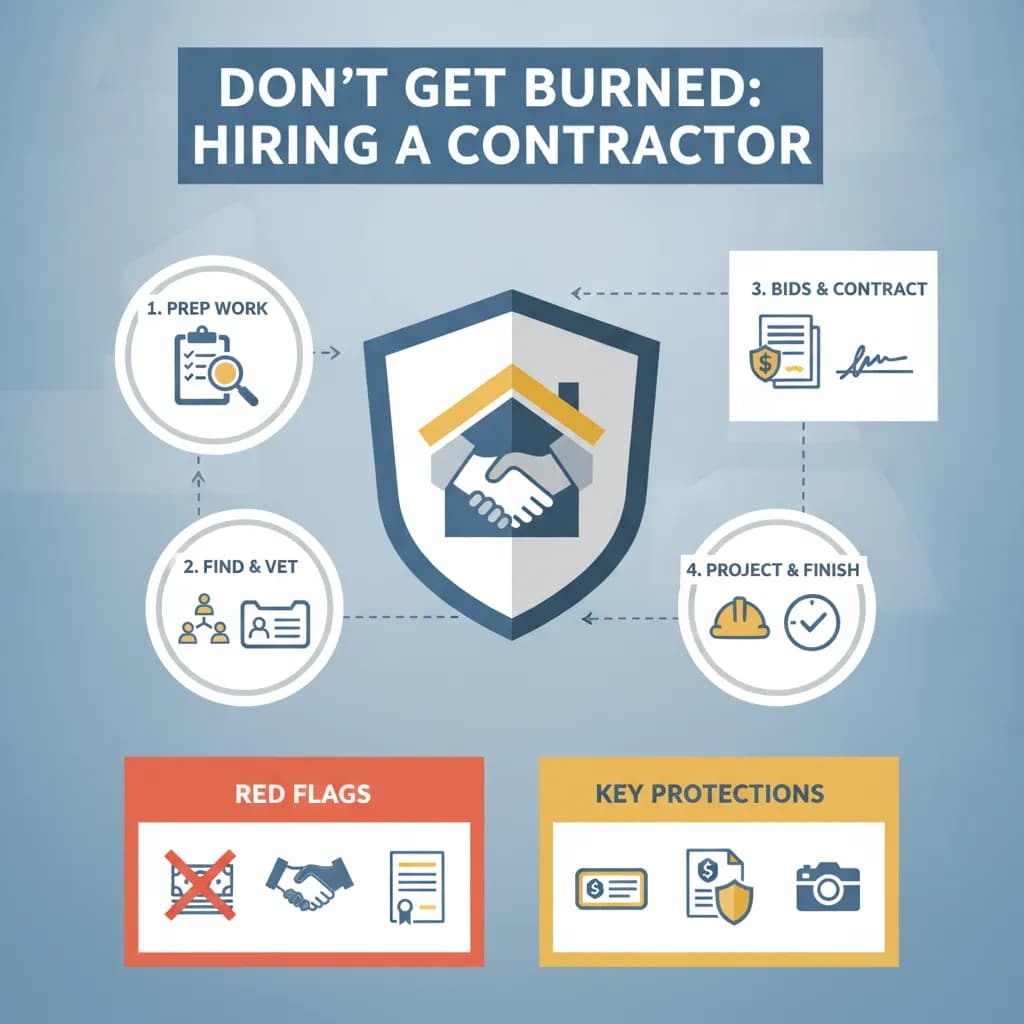
Hiring someone to work on your home is one of the most high-stakes decisions you'll make as a homeowner. It's an act of trust, a significant financial investment, and the difference between a dream renovation and a months-long nightmare. For first-time homeowners, the process can feel especially daunting, filled with unfamiliar jargon and the fear of making a costly mistake.
But it doesn't have to be a leap of faith. With a structured process, the right questions, and a little bit of diligence, you can confidently hire a qualified professional who will respect your home, your budget, and your timeline. This guide is your step-by-step playbook for navigating the entire process, from a vague idea to a completed project you can be proud of.
Great outcomes start with great preparation. Before you even think about searching for a contractor, you need to have a clear understanding of what you want, what you can spend, and what rules you need to follow.
Defining your project scope means creating a detailed written description of exactly what work you want done. This is the single most important step because it forces you to think through the details and creates a baseline document you can share with every potential contractor, ensuring they are all bidding on the same job. Be as specific as possible. Instead of "remodel the bathroom," write down "replace 12x24 inch floor tile with similar-sized porcelain tile, replace 30-inch vanity with a new 30-inch single-sink vanity (owner-supplied), install new toilet, reglaze the existing tub, and paint walls with two coats of Sherwin-Williams 'Sea Salt'."
A realistic budget is the foundation of a successful project, preventing financial stress and difficult compromises later. Your budget should account for all anticipated costs, including materials, labor, permits, and any design fees. It's crucial to be honest about what you can afford and to communicate that number clearly to potential contractors.
To create a realistic budget, you must research the typical cost for your type of project in your specific region. Start by using online cost estimators from sites like HomeAdvisor or Remodeling Magazine's "Cost vs. Value" report, which provides national and regional data. For more accurate numbers, talk to friends or neighbors who have had similar work done. A well-researched budget prevents sticker shock and helps you identify bids that are either suspiciously low or unreasonably high.
A contingency fund is a portion of your budget set aside specifically for unexpected problems, and it is absolutely essential. No matter how well you plan, renovations often uncover hidden issues like old water damage behind a wall, outdated wiring, or structural problems. A contingency fund of 15-20% of your total project cost provides the financial cushion to handle these surprises without derailing the project or forcing you to compromise on quality elsewhere.
Building permits are official approvals issued by your local government that allow you or your contractor to proceed with a construction or remodeling project. They are necessary to ensure that the project plans comply with local standards for land use, zoning, and construction, protecting the safety of the occupants and the integrity of the building. Generally, you'll need a permit for any project that involves changing the structure of your home, adding or removing walls, modifying plumbing or electrical systems, or changing the footprint of your house. Your contractor should be responsible for pulling the necessary permits, and their willingness and ability to do so is a key sign of a legitimate professional.
With your plan in hand, it's time to find the right person for the job. This vetting phase is where you separate the true professionals from the rest.
Finding a reputable contractor requires looking in the right places, as a simple online search can be a minefield. The best contractors are often busy and may not invest heavily in advertising, so you need to be proactive and tap into reliable networks.
Personal referrals from friends, family, neighbors, or coworkers you trust are the gold standard for finding a contractor. You get an honest, firsthand account of their experience, the quality of the work, the contractor's communication skills, and whether they stayed on budget and on time. When asking for a referral, ask specific questions like, "How did they handle problems?" and "Would you hire them again?"
Websites like Angi, Houzz, and Thumbtack can be useful tools for finding local contractors, but they should be used with a critical eye. These platforms provide a starting point with reviews and photos, but remember that reviews can sometimes be manipulated. Use them to generate a list of potential candidates, but always follow up with your own independent vetting process, including checking licenses and calling references directly.
The pros behind the counter at your local lumberyard or specialty building supply store see contractors all day, every day. They know who pays their bills on time, who buys quality materials, and who has a good reputation among their peers. Building a relationship with them and asking for recommendations can often lead you to highly skilled, under-the-radar professionals.
Before you waste time on a full-blown site visit and estimate, conduct a brief phone screen with potential contractors. This 10-minute call can quickly weed out those who aren't a good fit. Key questions include:
Verifying a contractor's license and insurance is a non-negotiable step that protects you from liability and incompetence. A professional contractor will readily provide this information; any hesitation or refusal is a major red flag. This step ensures they are legally authorized to perform the work and that you are protected if an accident occurs on your property.
A general contractor's license is proof that the contractor has met the minimum requirements of experience, financial stability, and knowledge set by a state or local authority. It signifies a level of professionalism and accountability. You can typically verify a license number online through your state's licensing board website. Never hire an unlicensed contractor, as you will have little to no recourse if the work is poor or they abandon the job.
You must obtain a Certificate of Insurance (COI) from the contractor that lists you as an additional insured. This certificate should show two key types of coverage: General Liability, which covers damage to your property, and Worker's Compensation, which covers injuries to the contractor or their employees while on your job site. Without worker's comp, you could be held financially responsible if a worker gets hurt in your home.
Checking references is your best window into what it's actually like to work with a contractor. It's not enough to just get a list of names; you need to have meaningful conversations and critically evaluate their past work to ensure it meets your standards.
When calling references, go beyond the simple question of "Were you happy?" and ask probing questions that reveal the contractor's process and professionalism. Ask about their communication, how they handled unexpected issues, whether the final cost matched the estimate, and if the crew was respectful of their home and cleaned up daily. If possible, ask to see the finished work in person to assess the quality of the craftsmanship for yourself.
When reviewing a contractor's online presence, look for consistency and authenticity. A portfolio with only a few professional, highly-staged photos might be a red flag; you want to see a variety of real-world projects. With online reviews, pay less attention to the occasional negative review (disputes happen) and more to how the contractor responds. A professional, solution-oriented response is a good sign, while a defensive or aggressive reply is a major red flag.
Once you've narrowed your list to a few qualified candidates, it's time to get detailed bids. The goal here isn't just to find the lowest price, but to understand exactly what you're getting for your money.
Getting at least three written bids is critical because it gives you a clear sense of the market rate for your project and protects you from overpaying. According to Properteer platform data, homeowners who obtain three or more bids for major projects like kitchen remodels or roof replacements save an average of 15-25% compared to those who only get one. This process also highlights differences in how contractors approach the job, their level of detail, and their professionalism.
A professional bid is more than just a single number on a piece of paper; it should be a detailed, itemized document. Look for a clear breakdown of costs for labor, materials (with specific brands or quality levels noted), permit fees, and any subcontractor costs. It should also reference your detailed scope of work, include a proposed payment schedule, and provide an estimated start and completion date.
To properly compare bids, you must ensure you're comparing apples to apples. Create a simple spreadsheet to line up the key details from each bid side-by-side. Look at the total price, but also scrutinize the details. One contractor might be more expensive because they've included higher-quality materials or a more comprehensive scope of work, which could represent better long-term value.
Understanding the split between labor and materials can be very revealing. A bid with unusually low labor costs might indicate the contractor is using less-skilled workers or cutting corners. Conversely, extremely high labor costs could mean the contractor is inefficient or overcharging. This breakdown helps you ask pointed questions about the team's experience and the quality of the materials being proposed.
An allowance is a placeholder amount a contractor puts in a bid for items you haven't selected yet, such as light fixtures, tile, or faucets. Be wary of bids with low allowances, as this is a common tactic to make the total bid seem lower initially. If the fixtures you ultimately choose cost more than the allowance, that extra cost will be added to your final bill. Always ask for a detailed list of all allowances and research whether they are realistic for the quality of finish you desire.
A bid that is significantly lower than all the others is a major red flag, not a stroke of luck. It often indicates that the contractor has misunderstood the scope, is planning to use substandard materials, is uninsured, or is desperate for work. In the worst-case scenario, it could be a setup for a scam where they take a large deposit and disappear. Always be skeptical of an outlier bid and ask detailed questions to understand why it's so low.
The contract is the legally binding document that protects both you and the contractor. Never proceed with a project of any significant size on a handshake alone. The contract should be detailed, clear, and reflect everything you've discussed and agreed upon.
A strong contract is your project's roadmap and safety net, leaving no room for ambiguity. It should be a comprehensive document that includes the full names and contact information for both parties, the property address, and a detailed description of every facet of the project.
This section should incorporate the detailed project scope you created in the beginning, along with a complete list of materials and model numbers to be used. It should be so specific that another contractor could theoretically pick it up and understand exactly what is required. Vague descriptions like "install new window" should be replaced with specifics like "install one (1) Andersen 400 Series 35.5" x 47.5" wood casement window per manufacturer's instructions."
The payment schedule should be tied to the completion of specific project milestones, not arbitrary dates. A typical structure might be 10% at signing, 30% after demolition and rough-ins, 30% after drywall and flooring, and the final 30% upon final completion and your sign-off on the punch list. Never pay more than 10-20% upfront (and check your state's legal limit, as some cap deposits). A contractor who demands a large upfront payment may have financial problems.
The contract must include a projected start date and a "substantial completion" date. While delays can happen, having these dates in writing provides a baseline for progress and holds the contractor accountable. Some contracts may also include a "time is of the essence" clause or penalties for unexcused delays, which can be useful for time-sensitive projects.
This clause is crucial, as nearly every project has changes. It should clearly define how changes to the original scope of work will be handled. A proper change order process requires that any change (whether it adds or subtracts cost) must be documented in a written "change order" that is signed by both you and the contractor before the new work begins.
A lien waiver is a document from your contractor (and their subcontractors and suppliers) stating that they have been paid and they waive any future right to place a lien on your property. Your contract should specify that you will receive lien waivers from the general contractor and all major subcontractors as you make payments. This protects you from a subcontractor putting a lien on your home because the general contractor failed to pay them.
This section should outline the process for resolving any disagreements, such as mediation or arbitration. It must also clearly state the contractor's warranty on their workmanship, including what is covered and for how long. A standard workmanship warranty is typically for at least one year.
With the contract signed, the work begins. Your role now shifts to communication, documentation, and oversight to ensure the project stays on track.
Before work starts, establish a clear communication plan with your contractor. Agree on a preferred method (text, email, phone call) and a regular time for updates, perhaps a brief check-in at the end of each day or a weekly progress meeting. Good communication prevents misunderstandings and allows you to address small issues before they become big problems.
Keep a simple project log where you note daily progress, conversations with the contractor, and any decisions that were made. Take photos regularly to document the work as it proceeds, especially before walls are closed up to capture plumbing and electrical work. This documentation can be invaluable if a dispute arises later.
If a disagreement occurs, refer back to your contract and the detailed scope of work. Approach the conversation calmly and professionally, focusing on finding a solution rather than placing blame. For any changes, follow the change order process outlined in your contract. Get everything in writing to avoid "he said, she said" arguments about costs or scope later on.
Once the contractor says the job is done, it's time for the final walk-through. Go through the project area with a fine-toothed comb and a roll of blue painter's tape. Create a "punch list" of every remaining item that needs to be corrected, from a paint drip to a misaligned cabinet door. Do not make the final payment until every single item on the punch list has been completed to your satisfaction.
Navigating the world of contractors can be complex, but a methodical approach makes all the difference. Here are the most important takeaways in a digestible format.
| Step | What to Do | Why It Matters | | -------------------------- | --------------------------------------------------------------------------------------------------------- | ---------------------------------------------------------------------------------- | | Get Referrals | Ask trusted friends, family, and local supply stores for recommendations. | Provides firsthand accounts of a contractor's reliability and quality. | | Check License | Verify their state/local contractor license online. | Ensures they meet minimum legal and professional standards. | | Verify Insurance | Get a Certificate of Insurance (COI) showing General Liability and Worker's Compensation. | Protects you from liability for property damage or worker injuries. | | Call References | Speak with their three most recent clients and ask detailed questions about their experience. | Gives you a true picture of their work process, communication, and problem-solving. | | Review Portfolio | Look for examples of work similar to your project. | Confirms they have the specific skills and experience required for your job. | | Get 3+ Itemized Bids | Have at least three contractors provide detailed, written bids based on your defined scope. | Establishes a fair market price and helps you compare quality and approach. | | Sign a Detailed Contract | Ensure every detail is in a written contract, including scope, payment schedule, timeline, and more. | Your single most important legal protection that prevents misunderstandings. |
| Red Flag | What It Likely Means | | ------------------------------------------- | ---------------------------------------------------------------------------------------------------------------- | | Asks for a large cash deposit upfront | The contractor may be financially unstable or, in the worst case, planning to take the money and run. | | No written contract / pushes for a handshake deal | This is highly unprofessional and leaves you with zero legal protection. They are avoiding accountability. | | Cannot provide license or insurance info| They are operating illegally and putting all the risk and liability on you, the homeowner. Run, don't walk. | | Pressure tactics / "special price today only" | A reputable contractor will give you time to review bids and make a considered decision. This is a sales tactic. | | Vague answers or poor communication | If they can't communicate clearly during the bidding process, it will only get worse once they have your money. | | A bid that's drastically lower than others| They are likely cutting corners on materials, using unskilled labor, or don't truly understand the project. |
Hiring the right contractor for a big project is a massive part of smart homeownership. But what about the other part? Knowing when those big projects are coming. A water heater doesn't last forever. A roof has a finite lifespan. Waiting for something to fail before you find a contractor is a recipe for stress, overpayment, and rushed decisions.
This is where Properteer changes the game. Our platform helps you understand the expected lifespan of every core component in your home, from the furnace to the deck stain. We help you build a personalized, long-term budget for maintenance and replacement costs, so you're never caught by surprise. Instead of reacting to a broken appliance, you'll be proactively planning for its replacement, giving you plenty of time to research, budget, and vet the perfect contractor using the steps in this guide.
Take the chaos and anxiety out of homeownership. Sign up for Properteer today to build your home's financial fortress and turn your maintenance plan from a question mark into a confident checklist.
Q: What's the difference between a contractor, a subcontractor, and a handyman? A: A general contractor (GC) manages the entire project, hiring and overseeing other specialists. A subcontractor is a specialist hired by the GC for a specific job, like plumbing or electrical. A handyman is typically best for smaller repair jobs and may not be licensed for larger renovation projects.
Q: How much should I pay as a down payment? A: You should never pay more than 10-20% of the total project cost as a down payment. Many states have laws that cap the legal maximum for a contractor's deposit. A demand for a large upfront sum is a major red flag.
Q: Is the lowest bid always the worst option? A: Not always, but it requires extreme scrutiny. If a bid is significantly lower, you must do extra diligence to confirm the contractor is using comparable materials, is fully licensed and insured, and hasn't misunderstood the scope of work. Often, it's a sign that corners are being cut.
Q: What should I do if a contractor asks me to pay in cash? A: Be very wary. While a small cash discount might seem tempting, it often means the contractor is trying to avoid paying taxes or isn't operating a legitimate business. Paying with a check or credit card creates a paper trail that protects you. Always get a receipt for every payment you make.
Q: How do I handle a contractor who does poor work or disappears? A: First, document everything—take photos of the poor work and log all communication attempts. Send a formal letter (certified mail) outlining the issues and referencing your contract, giving them a reasonable deadline to fix the problems. If they don't respond, you may need to consult with an attorney or file a complaint with your state's contractor licensing board.