Posted On: Aug 6, 2026
Author: Jason H.
electrical safety home-maintenance
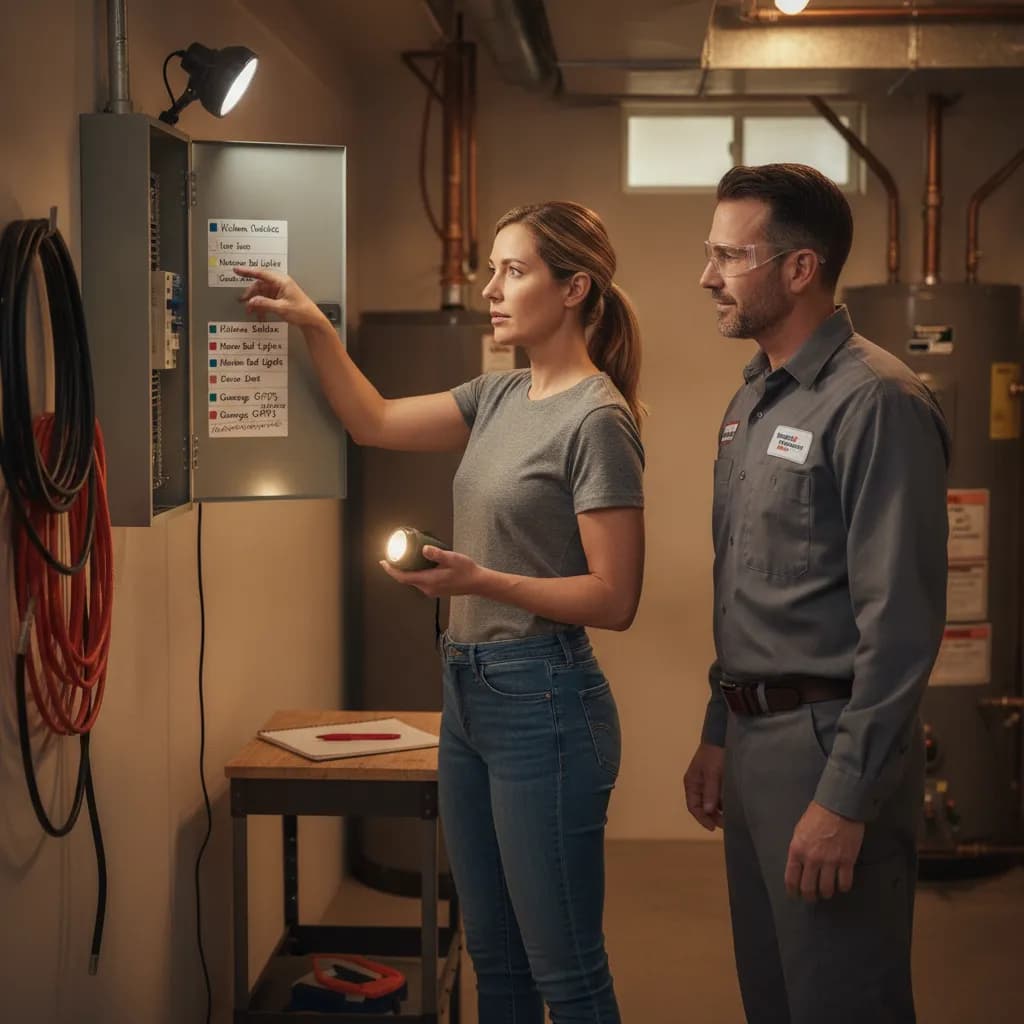
To many new homeowners, the electrical panel is the mysterious gray box in the basement, garage, or closet that you only think about when the lights go out. But this box is the nerve center of your home. Understanding its basic functions is a fundamental homeowner skill that empowers you to handle minor hiccups safely and recognize when a problem needs a professional.
Let’s demystify your home's electrical system, one switch at a time.
Open the little metal door, and you'll see a collection of switches. It might look intimidating, but it’s organized logically.
Your First Electrical Project: Take 30-60 minutes to create an accurate map of your breakers. Grab a friend, a notepad, and a small lamp. One person stays at the panel while the other goes from room to room, plugging the lamp into every outlet. The person at the panel flips breakers off one by one until the lamp goes out, and you note exactly what lost power. A clear, accurate legend is invaluable during an outage.
A breaker trip is not a sign of failure; it’s a sign the system is working correctly to protect your home. A trip is usually caused by one of three things:
Here’s the 3-step process to safely reset a tripped breaker:
When NOT to reset a breaker and to call an electrician:
Your home has other electrical safety devices built right into the outlets.
GFCI (Ground Fault Circuit Interrupter): These are the outlets with the “TEST” and “RESET” buttons, found in areas where electricity and water might mix (kitchens, bathrooms, garages, outdoors). They monitor for ground faults and can shut off power in a fraction of a second—fast enough to prevent a serious electrical shock. Test them monthly by pressing the “TEST” button (which should cut power to the outlet) and then “RESET” to restore it.
AFCI (Arc-Fault Circuit Interrupter): This technology protects against a different danger: fires. AFCIs detect tiny, dangerous electrical arcs—sparks that can happen in damaged or frayed wiring behind your walls. Often, AFCI protection is built into the circuit breaker itself (it will have its own test button on the breaker). These are now required in bedrooms and living areas in new construction.
Understanding your electrical panel transforms it from a source of anxiety into a tool. Knowing how to locate your main shut-off, reset a breaker, and test your GFCIs are essential skills that enhance your safety and confidence as a homeowner.
Knowing how to handle a tripped breaker is one thing, but what about the long-term health of your entire electrical system? An aging panel, outdated wiring, or an undersized service can pose significant risks and lead to five-figure replacement costs you never saw coming.
This is where proactive planning becomes critical. Properteer helps you look beyond the daily fixes by creating a comprehensive plan for your home's core systems. Our platform helps you understand the typical lifespan of components like your electrical panel, water heater, and HVAC, allowing you to build a realistic replacement budget over time. Instead of being surprised by a sudden, expensive failure, you can plan for it financially. Visit Properteer.ai to turn your home maintenance anxiety into a confident, long-term strategy.