Posted On: Nov 16, 2026
Author: Jason H.
HVAC maintenance homeowner-tips
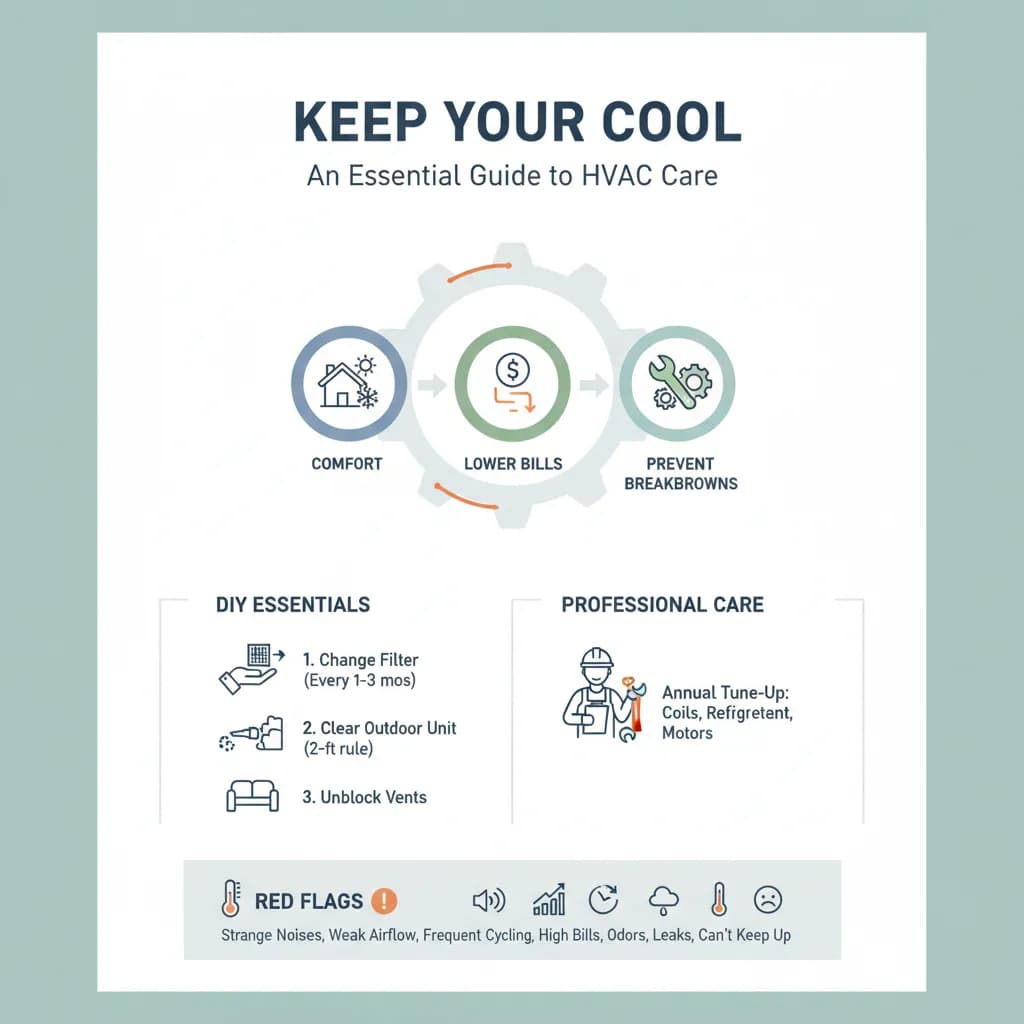
Think of your home's HVAC (Heating, Ventilation, and Air Conditioning) system as its lungs. It breathes air in, filters it, heats or cools it, and circulates it to every room, keeping you comfortable year-round. It’s also one of the most expensive and complex components you own, with a replacement cost that can easily top $10,000.
Ignoring your HVAC is like skipping oil changes in your car; you might get away with it for a while, but a catastrophic—and expensive—failure is almost inevitable. The good news is that a little preventative care can dramatically extend its lifespan, improve its efficiency, and save you a fortune on both utility bills and emergency repairs.
You don’t need to be an expert to perform the most crucial HVAC maintenance tasks. These simple steps, performed regularly, are your first line of defense against system failure.
1. Change Your Air Filter (Religiously) This is the single most important thing you can do for your HVAC system. A clogged filter forces the system to work harder to pull in air, leading to reduced efficiency, increased energy costs, and unnecessary strain on critical components like the blower motor.
2. Keep the Outdoor Unit Clear Your outdoor air conditioning unit (the condenser) needs to breathe. It works by pulling heat from your home and releasing it outside. If its airflow is blocked, it can't do its job efficiently.
3. Check Your Vents and Registers Walk through your home and ensure all supply and return vents are open and unblocked by furniture, rugs, or drapes. Closing vents in unused rooms might seem like a smart way to save money, but it can actually disrupt the pressure balance in your system, causing it to work harder and less efficiently.
While DIY tasks are vital, they can't replace an annual professional inspection. Think of it as a wellness check for your system. A qualified technician performs critical tasks that go beyond a simple filter change.
During a tune-up, a pro will typically:
This preventative service catches small problems before they become major breakdowns, ensuring your system runs safely and at peak efficiency.
Your system will often tell you something is wrong before it quits completely. If you notice any of these signs, it's time to call a professional.
Taking a proactive approach to your HVAC system is one of the smartest investments you can make as a homeowner. By combining simple DIY tasks with an annual professional tune-up and a long-term budget for its eventual replacement, you can ensure your home stays comfortable for years to come without any costly surprises.
How often should I really change my HVAC filter? For a standard 1-inch filter, every 1-3 months is a good rule of thumb. If you have pets that shed, live in a dusty area, or have family members with allergies, you should check it every month and replace as needed.
Can I just clean my outdoor AC unit myself? Yes, you can do a basic cleaning. First, turn off the power to the unit at the breaker. Clear away any leaves, grass, or debris from around the unit. Then, use a regular garden hose to gently spray the outside of the unit from the top down to wash away dirt from the fins. Do not use a pressure washer.
What are the most common signs my HVAC system needs professional repair? Look out for unusual noises (grinding, squealing), weak airflow from your vents, the system turning on and off more frequently than usual, a sudden increase in your energy bills, or water leaking around the indoor unit.
Is an annual professional tune-up really worth the cost? Absolutely. A tune-up costs a fraction of an emergency repair. A technician can spot failing parts, clean critical components to improve efficiency, and ensure the system is operating safely, which can lower your monthly energy bills and prevent a sudden breakdown on the hottest or coldest day of the year.
Keeping track of your home’s many systems is a challenge. When was the furnace filter last changed? How old is the water heater? What's the budget for a new roof? Properteer was built to solve this. Properteer lists your home's parts, their age and what each costs to replace, then reminds you when each is due. 30 days free, no credit card. Start your free trial.
