Posted On: Nov 17, 2026
Author: Jason H.
attic home maintenance energy efficiency
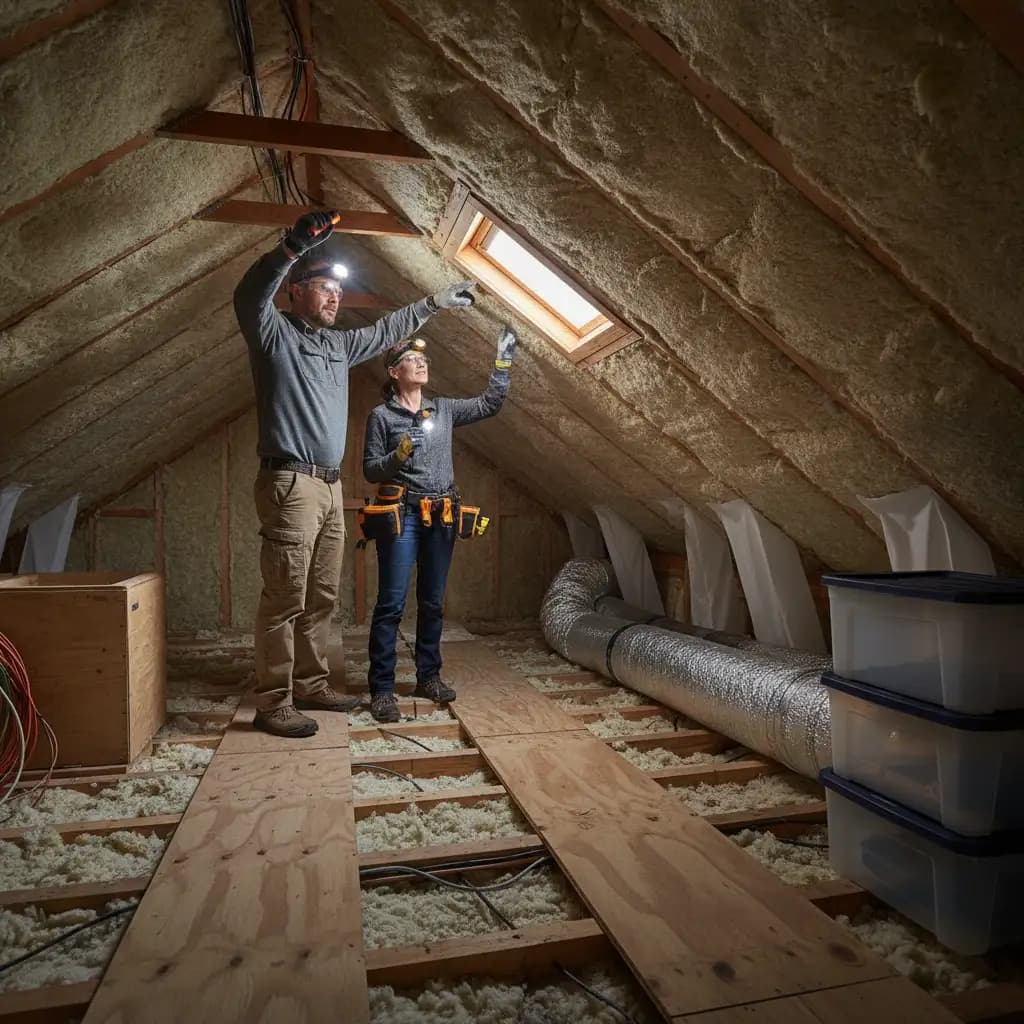
Your attic is more than just a dusty storage space; it's the invisible workhorse of your home, playing a critical role in energy efficiency, structural integrity, and indoor air quality. For many homeowners, especially those new to the game, the attic is an out-of-sight, out-of-mind area. However, neglecting this crucial space can lead to high energy bills, damaging ice dams, pest infestations, and even premature roof failure. Understanding how to properly inspect and maintain your attic is one of the most impactful things you can do to protect your investment.
This guide will walk you through everything you need to know, transforming the attic from a mysterious, intimidating space into a manageable part of your home. We'll cover insulation, ventilation, leak detection, pest control, and more, giving you the confidence to take control of your home's health from the top down.
Attic maintenance is critically important because the attic acts as your home's primary defense against the elements, directly impacting energy costs, roof lifespan, and indoor air quality. A well-maintained attic with proper insulation and ventilation keeps your home warmer in the winter and cooler in the summer, significantly reducing the workload on your HVAC system and lowering your utility bills. It also prevents moisture buildup, which can lead to mold growth and rot in your home's wooden structures. By including your attic in your regular maintenance plan, you can proactively address small issues like minor leaks or pest entry points before they escalate into catastrophic and expensive repairs, ultimately preserving your home's structural integrity and value.
Before entering your attic, you must prioritize safety by wearing protective gear, ensuring proper lighting, and knowing exactly where it is safe to step. Always wear a long-sleeved shirt, pants, gloves, and an N95-rated dust mask to protect yourself from dust, debris, and insulation fibers. A headlamp is essential as it frees up your hands, and you should also have a bright flashlight to inspect dark corners. Most importantly, only step on the wooden joists or designated flooring. The drywall ceiling below is not designed to support your weight, and stepping between the joists can result in a serious fall and costly damage to your home. Move slowly and deliberately, always testing a surface before putting your full weight on it.
Insulation is a material designed to resist the flow of heat, and it matters because it's the primary barrier that keeps your conditioned indoor air from escaping and outside temperatures from getting in. In the winter, insulation keeps the warm air generated by your furnace inside your living space. In the summer, it prevents the intense heat that builds up in your attic from radiating down into your home, forcing your air conditioner to work overtime. Without adequate insulation, you are essentially paying to heat and cool the outdoors. Proper insulation not only improves comfort and drastically cuts energy bills but also helps prevent the formation of ice dams in the winter by keeping the roof surface cold.
The R-value of insulation measures its ability to resist heat flow; the higher the R-value, the better its insulating performance. The recommended R-value for your attic depends entirely on your home's climate zone, as defined by the U.S. Department of Energy. For example, homes in colder northern climates (like Minnesota or Maine, Zone 6-7) may need an R-value of R49 to R60, while homes in hot southern climates (like Florida or Texas, Zone 1-2) might only require R30 to R49. You can find your specific zone and recommendation on the Energy Star website. Achieving the correct R-value is one of the most effective ways to maximize your home's energy efficiency and reduce utility spending year-round.
You can determine if you need more insulation by visually inspecting its level and condition; if you can easily see the tops of your ceiling joists, you almost certainly need to add more. Take a tape measure into your attic and measure the depth of the insulation. Compare this measurement to the recommended R-value for your region. For example, common fiberglass or cellulose insulation provides about R-3 per inch, so to achieve an R-49 rating, you would need approximately 16 inches of insulation. Other signs that your insulation is underperforming include high heating and cooling bills, rooms that are difficult to keep at a comfortable temperature, and the rapid melting of snow on your roof compared to your neighbors' homes.
The three main types of attic insulation are batt-and-roll (or blankets), loose-fill (or blown-in), and spray foam, each with unique properties and installation methods. Batt-and-roll insulation, typically made of fiberglass, comes in pre-cut sections and is often a DIY-friendly option for attics with standard joist spacing and few obstructions. Loose-fill insulation, made of cellulose or fiberglass, is blown into the attic using special equipment and is excellent for filling irregular spaces and adding insulation on top of existing layers. Spray foam insulation is a chemical product that expands to create an airtight seal, offering the highest R-value per inch, but it is also the most expensive and requires professional installation.
| Insulation Type | Avg. R-Value (per inch) | Avg. Installed Cost (per sq. ft.) | DIY Friendly? | Pros | Cons | | ----------------------- | ----------------------- | --------------------------------- | ------------- | ----------------------------------------------------------------- | ------------------------------------------------------------ | | Fiberglass Batts | R-2.9 to R-3.8 | $0.65 - $2.00 | Yes | Inexpensive, widely available, easy to install in open spaces | Difficult to fit around obstructions, air gaps can reduce effectiveness | | Blown-In Cellulose | R-3.1 to R-3.8 | $1.00 - $2.50 | Possible | Excellent at filling gaps, made from recycled materials, good sound dampening | Can settle over time, requires rental equipment, messy installation | | Blown-In Fiberglass | R-2.2 to R-3.3 | $1.00 - $2.80 | Possible | Fills gaps well, naturally fire-resistant, won't settle as much as cellulose | Can be an irritant, requires rental equipment | | Open-Cell Spray Foam| R-3.5 to R-3.8 | $1.30 - $2.50 | No | Creates an air seal, expands to fill every crack, great for soundproofing | Not a moisture barrier, lower R-value than closed-cell | | Closed-Cell Spray Foam| R-6.0 to R-7.0 | $1.50 - $3.50+ | No | Highest R-value, creates air and moisture barrier, adds structural rigidity | Expensive, requires professional installation, difficult to remove |
Yes, in most cases, you can and should add new insulation directly on top of old insulation, as long as the existing material is dry and not compacted or contaminated. If your old insulation is moldy, wet, or heavily infested with pests, it must be completely removed by a professional before new insulation is installed. When adding new insulation, it's best to use loose-fill material, as it will easily fill any gaps and create a seamless blanket over the old layer and the tops of the joists. If you use batts, lay them perpendicular (at a 90-degree angle) to the joists and the old batts to cover the wood and minimize heat loss through thermal bridging.
Proper attic ventilation is crucial because it creates a continuous flow of outdoor air through the attic, which removes excess heat and moisture year-round. In the summer, ventilation allows super-heated air to escape, preventing it from radiating into your living space and reducing your cooling costs. This also extends the life of your roof shingles, which can be damaged by excessive heat. In the winter, ventilation removes moisture that rises from your living space, preventing condensation on the underside of your roof sheathing. This is critical for stopping mold growth, wood rot, and the formation of destructive ice dams along your eaves.
Attic vents work as a system, typically consisting of intake vents to draw cool, fresh air in and exhaust vents to push hot, moist air out. Intake vents are usually located in the soffits (the underside of your roof's eaves) or near the lower edge of the roof. Exhaust vents are placed at the highest point of the roof to allow hot air to rise and escape. Common exhaust vents include ridge vents (which run along the entire peak of the roof), turbine vents (which spin in the wind), gable vents (on the walls at the ends of the attic), or powered attic ventilators (fans).
You can check for blocked vents by visually inspecting them from both outside and inside the attic. From the outside, ensure that gable vents, ridge vents, and turbines are clear of debris, nests, or peeling paint. The most common blockage occurs at the soffit intake vents. Inside the attic, go to the eaves and look to see if insulation has been pushed up against the soffits, blocking the airflow. You should be able to see daylight through the soffit vents. If they are blocked, use a rake or a stick to pull the insulation back. Proper airflow often requires installing baffles, which are plastic or cardboard chutes that create a channel for air to flow from the soffit past the insulation.
Common signs of poor attic ventilation include moisture, frost, or dark stains on the underside of your roof sheathing, which indicates that warm, moist air is condensing instead of being exhausted. In the winter, look for thick ice dams forming at the edges of your roof. In the summer, an overly hot second floor or shingles that look warped, cracked, or deteriorated are clear indicators of heat buildup. A musty or moldy smell in the attic is another red flag that moisture is not being properly removed. Addressing poor ventilation is key to preventing long-term structural damage.
The best way to spot a roof leak is to inspect your attic during or immediately after a heavy rainstorm, looking for active drips, wet insulation, and damp spots on the wood framing. Turn off the lights and use a powerful flashlight to scan the underside of the roof deck for dark stains, water streaks, or discoloration on the wood, as these are telltale signs of past or present leaks. Pay close attention to areas around roof penetrations like chimneys, vent pipes, and skylights, as these are the most common failure points. Even if the attic is dry, stained wood and compressed, clumpy insulation are clear evidence of a past leak that needs to be addressed before it causes serious damage.
When inspecting your attic, you should look for structural problems such as sagging roof decking, cracked or broken rafters, and signs of stress in the roof trusses. Look down the length of the roof from one end of the attic to the other; the ridge line should be straight, not bowed or sagging. Examine the wooden framing members (rafters and trusses) for any cracks, splits, or knots that have popped out. If your home has trusses (pre-fabricated triangular wood structures), check the metal connector plates to ensure they are secure and not pulling away from the wood. Any signs of structural distress warrant an immediate call to a professional structural engineer or qualified roofer.
You can check for attic pests by looking and listening for common signs of infestation, such as droppings, nests, chewed materials, and unusual noises. Scan the insulation and floor for rodent droppings, which look like small black pellets. Look for nests made of shredded insulation, fabric, and other debris. Carefully inspect electrical wires for any signs of chewing, which is a serious fire hazard. Also, look for gaps around the exterior of your home, especially where the roof meets the walls, as these are common entry points. Sounds of scurrying, scratching, or chirping are clear indicators that you have unwanted guests that need to be dealt with by a pest control professional.
Common fire hazards in an attic include faulty electrical wiring, recessed lighting fixtures that are not rated for direct contact with insulation, and junction boxes that are buried or have improper connections. Visually inspect any visible wiring for signs of damage, such as chewed insulation (from pests) or frayed cords. If you have recessed can lights in the ceiling below, check to see if they are rated "IC" (Insulation Contact). Non-IC rated fixtures require a certain amount of clearance from insulation to prevent overheating. Furthermore, ensure that any bathroom or kitchen exhaust fans are vented all the way to the outside of the home, not terminating inside the attic, as this can pump moist, flammable, lint-filled air into the space.
You can safely store items in your attic that are not sensitive to extreme temperature swings and humidity, such as holiday decorations, old luggage, and durable plastic storage bins. Avoid storing anything that can be damaged by heat, cold, or moisture. This includes photographs, important documents, electronics, candles, delicate fabrics, flammable liquids, and wooden furniture, which can warp or crack. The intense heat of a summer attic can easily exceed 140°F (60°C), which can ruin many common household items. Always use airtight plastic containers to protect your stored belongings from dust, moisture, and pests.
You should organize attic storage by ensuring weight is distributed evenly over the ceiling joists and that you do not block any ventilation pathways. If your attic does not have a dedicated floor, you must install plywood decking over the joists to create a safe platform for storage and walking. Never place heavy items directly on the drywall between joists. Keep all stored items away from vents, fans, and recessed lighting fixtures to maintain proper airflow and prevent fire hazards. Creating clear walkways will allow you to access your belongings safely and make future inspections of the attic much easier.
A consistent inspection schedule is the best way to catch attic problems early. Use this checklist as a guide for twice-yearly inspections.
Spring Checklist (After the Thaw)
Fall Checklist (Before the First Snow)
Beyond basic maintenance, several upgrades can improve your attic's performance and your home's efficiency. Costs are estimates and can vary significantly based on your location, attic size, and the contractor you hire.
| Project | Average Cost Range | Primary Benefit | | ------------------------------ | ---------------------- | ------------------------------------------------------------------ | | Air Sealing | $350 - $1,500+ | Stops conditioned air from leaking into the attic; huge energy saver. | | Adding Insulation (Blown-in) | $1,500 - $3,500 | Improves thermal barrier, lowers utility bills, increases comfort. | | Installing a Radiant Barrier | $500 - $2,500 | Reflects radiant heat, keeping the attic cooler in summer. Best for hot climates. | | Installing an Attic Fan | $300 - $900 | Actively pulls hot air out of the attic, reducing cooling costs. | | Professional Pest Removal | $200 - $600+ | Safely removes infestations and helps identify and seal entry points. | | Mold Remediation | $1,500 - $6,000+ | Professionally removes mold and addresses the underlying moisture issue. |
Keeping track of your attic’s condition, insulation levels, and ventilation status can feel like a lot to manage on top of everything else your home requires. That's where having a digital partner can make all the difference. Properteer lists your home's parts, their age and what each costs to replace, then reminds you when each is due. 30 days free, no credit card. Start your free trial.
Q1: How often should I inspect my attic? You should perform a thorough inspection of your attic at least twice a year, typically in the spring and fall. These seasonal checks allow you to spot winter damage before summer heat hits and prepare your attic for the coming cold before the first snowfall.
Q2: Is it safe to walk in my attic? It is only safe to walk in your attic if you step directly on the wooden joists (the thick beams) or on a designated plywood floor. The area between the joists is just the top of your ceiling's drywall and cannot support your weight.
Q3: My attic has some mold. Can I clean it myself? For very small spots of surface mold (less than 10 square feet), you may be able to clean it yourself with a detergent solution. However, mold is often a sign of a larger moisture problem. For widespread mold or if you are unsure, it is always safest to call a professional mold remediation company to address both the mold and its source.
Q4: What's that black stuff on the wood in my attic? Black staining on the wood sheathing in your attic is often a sign of moisture and potential mold growth, caused by warm, moist air from your home condensing on the cold roof deck due to poor ventilation or air leaks. It could also be dirt or residue, but it warrants a closer look by a professional.
Q5: What is an ice dam and how does my attic cause it? An ice dam is a ridge of ice that forms at the edge of a roof, preventing melting snow from draining off. It's caused by a warm attic that melts the underside of the snowpack on the roof. This water runs down to the cold eaves and refreezes, creating a dam. Proper insulation and ventilation keep the attic cold in winter, preventing the snow from melting in the first place.
Q6: Does my attic need a fan? While a properly balanced passive ventilation system (soffit and ridge vents) is often sufficient, an attic fan (powered ventilator) can be beneficial in very hot climates or in homes with complex rooflines where passive ventilation is challenging. It actively pulls hot air out, but it must be paired with adequate intake vents to avoid pulling conditioned air from your home.
